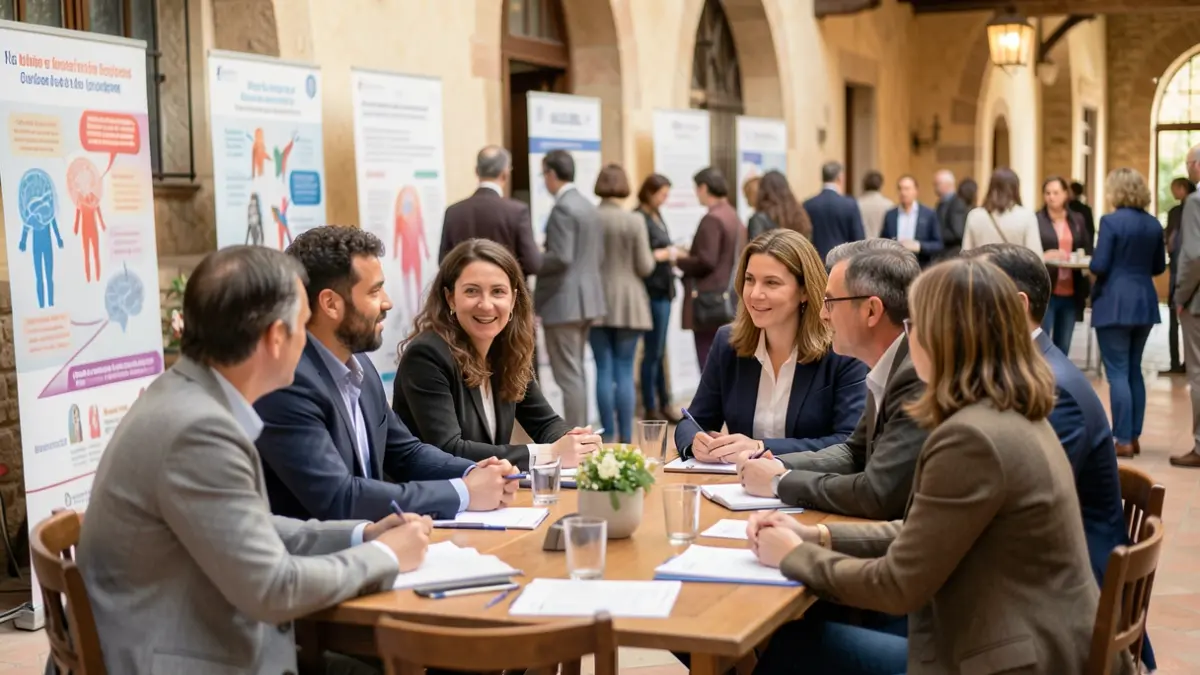
The event, titled ‘Metabolic diseases: from health challenge to multisectoral action’, brought together researchers, business representatives, professional associations, and patient associations with diabetes. The aim was to showcase IATA's capabilities in offering innovative solutions to current challenges.
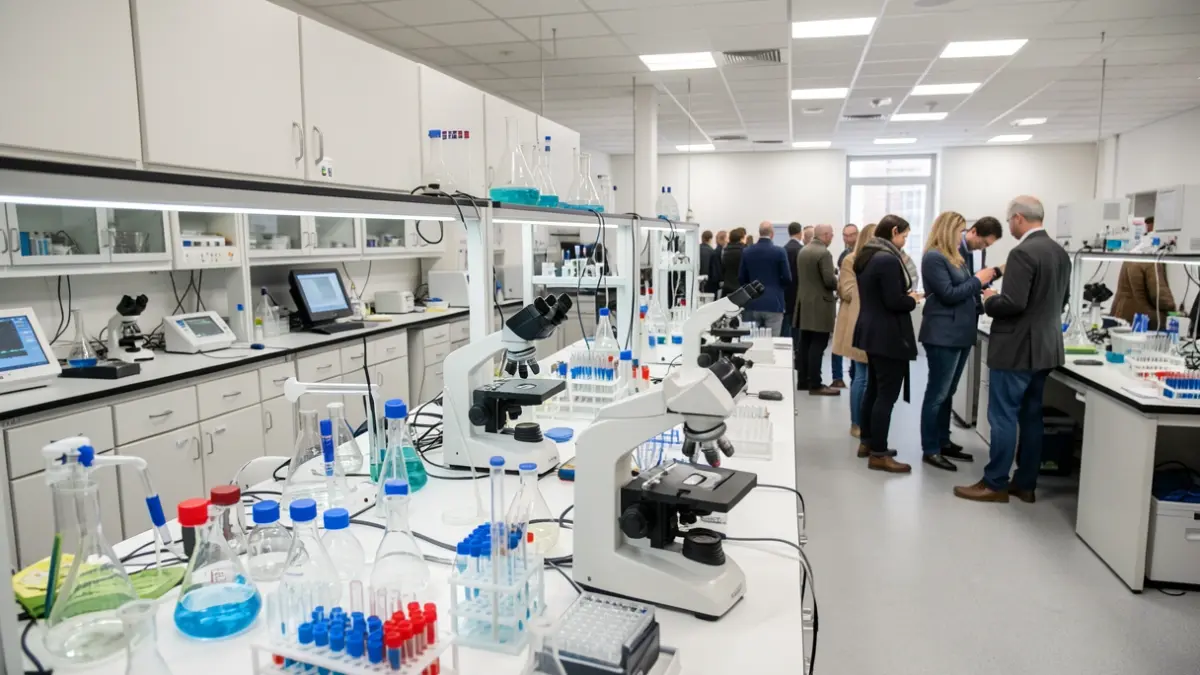
The day began with an institutional welcome from Amparo López, director of IATA, followed by a tour of the facilities. Attendees visited the laboratory of the Microbiome and Innovation in Nutrition and Health (Innobiome) group, led by researcher Yolanda Sanz, also a member of the COMETA Connection. Lab staff detailed their current lines of work and the phases of the research process, with participation from researchers Yolanda Sanz and Marta Olivares, and technical staff María Tamayo, Leticia Ortí, Carlos Pomares, and Sergio Romera.
Subsequently, the group visited IATA's tasting room, managed by Elizabeth Carrillo. This recently renovated space is part of the Sensory Analysis service, which assists researchers and companies in selecting appropriate sensory tests for their projects.
The tour concluded at the Biotechnology Pilot Plant, where Cristina Alcántara explained the available technologies for medium-scale production. This service facilitates collaboration with companies and entities in the food and biotechnology sectors.
Following the visit, a scientific-technical colloquium took place with six perspectives on metabolic diseases: the socioeconomic impact of obesity, lipids and inflammation, intestinal microbiota, rapid diagnostic design, personalized diets, and nanomaterial-based therapies for precision medicine.
Researcher Yolanda Sanz highlighted the link between gut bacteria, diabetes, and obesity, explaining how her research aims to understand the mode of action of specific bacteria associated with a healthy metabolism. She detailed the discovery of a strain of phascolarctobacterium faecium that mitigates the adverse effects of an obesogenic diet.
The Innobiome laboratory uses predictive metabolic models to establish interactions between gut bacteria and form a functional and stable ecosystem. Sanz emphasized that identifying cooperating bacteria and the dietary components that favor them will enable the development of more effective dietary strategies against obesity.
Other speakers included Diego Ramiro (Institute of Economy, Geography and Demography) on obesity, Jesús Balsinde (Biomedicine and Molecular Genetics Institute of Valladolid) on lipids, María Monsalve (Sols-Morreale Biomedical Research Institute) on personalized nutrition, and Valeria Grazú (Institute of Nanoscience and Materials of Aragon) on precision medicine. A video by Laura Lechuga (Catalan Institute of Nanoscience and Technology) on biosensor devices for rapid diagnostics was also shown.
Marta Casado, a researcher at the Institute of Biomedicine of Valencia (IBV) and coordinator of the Itinerary alongside Marc Liesa (Institute of Molecular Biology of Barcelona), stressed that the six perspectives summarize the COMETA dimension: 'connect to understand; understand to transform'.
The Cicerón Itineraries are an initiative of the CSIC's Converge program, launched in 2023, aiming to connect science with society through thematic days to address social challenges in health, digital technologies, and food or energy production.