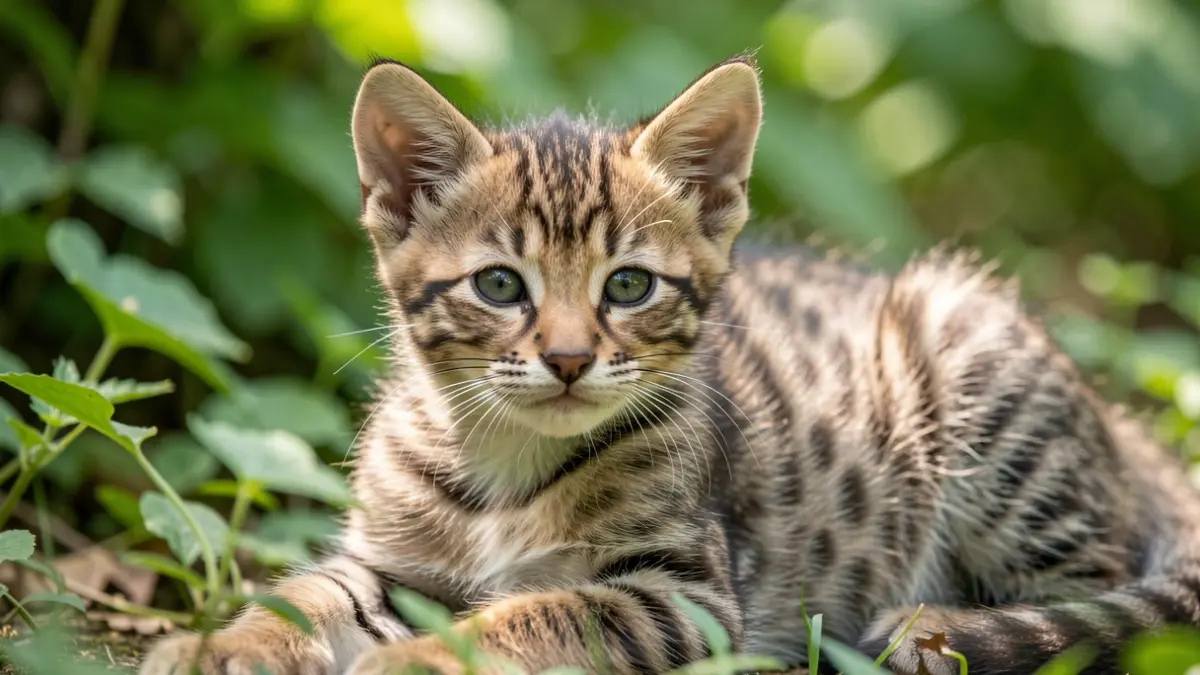
Terra Natura Benidorm park has announced a significant reproductive success with the first-ever birth of a margay, a small feline native to Latin America. The species is classified as near-threatened by the International Union for Conservation of Nature (IUCN). The cub was born on September 10th, and both it and its mother, named Lecia, are reported to be in optimal health, according to park sources.
Park officials have not yet determined the cub's sex or assigned a name. The park's team has stated that the current priority is to ensure the well-being of both the mother and the cub during these initial weeks, a period considered particularly critical for the species' survival.
This birth represents a significant advancement in the margay conservation efforts undertaken by the Benidorm park. The species is part of the European Endangered Species Programme (EEP), managed by the European Association of Zoos and Aquaria (EAZA), which coordinates breeding efforts for endangered animals across various institutions.
According to the latest data (2024), the margay population within the EEP consists of 70 individuals: 29 males, 40 females, and one individual of undetermined sex, distributed among 32 European centers. Terra Natura Benidorm is the sole Spanish institution actively participating in this margay program. The park emphasizes the crucial role of modern zoos in conservation strategies, facilitating the maintenance of populations under human care and generating knowledge for their protection.
The gestation period for a margay typically lasts between 76 and 84 days, usually resulting in the birth of a single cub, although occasionally twins may be born.
The technical team at Terra Natura Benidorm has conducted thorough monitoring of the breeding pair, consisting of Lecia and the male Goose, tracking their reproductive cycles and mating periods. Observations of physical changes in Lecia reinforced the suspicion of a possible pregnancy. To minimize interference, camera traps were installed, allowing for documentation of the animals' behavior during the night.
Park officials confirm that the cub is developing well and gaining weight rapidly. However, discreet and constant monitoring is maintained, acknowledging the sensitivity of the early weeks of life. For Lecia, this is her first experience as a mother, and while she is doing well, she exhibits some signs of nervousness, typical of first-time mothers.
The relationship between Lecia and Goose has been positive since their pairing. Nevertheless, the male remains separated from the mother and cub during birth and the initial stages of development. This measure, recommended by conservation programs, aims to minimize any potential risks to the young margays during this vulnerable early phase.