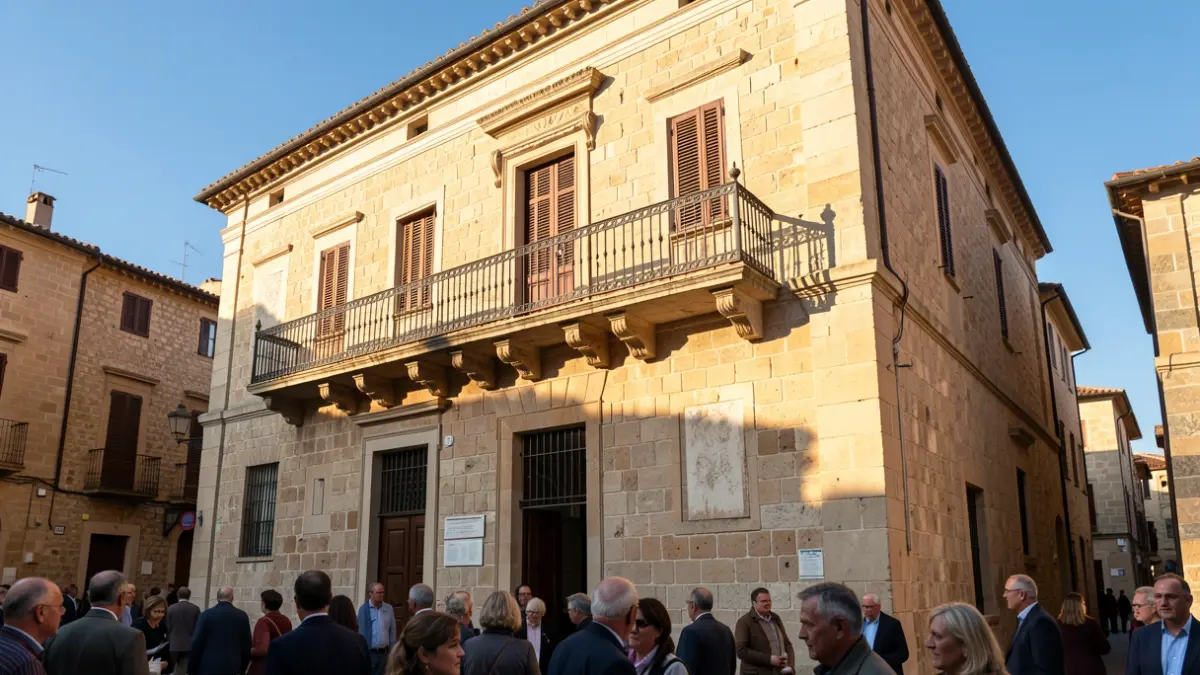
Excavations at the Cova del Comte in Pedreguer have revealed new data on Paleolithic art, pushing its age back to 29,350 years. These findings, resulting from eleven years of research, were presented by archaeologists at an international congress to specialists from various countries.
Radiocarbon datings, along with stratigraphic analysis and discoveries of lithic industry and graphic manifestations, place the origin of these vestiges in the Upper Paleolithic, specifically the Gravettian period. This confirms that the first inhabitants of the settlement left their artistic mark over 29,000 years ago.
At the congress, organized by the Forum Gallicum Research Laboratory, archaeologists Ferran Lloret and Joaquim Bolufer highlighted the significance of the Cova del Comte as a fundamental site for studying the earliest artistic traditions of the Mediterranean Upper Paleolithic. The spatial and chronological coincidence between human occupation, tools, and graphic manifestations makes it a valuable resource for understanding a still poorly known historical period.
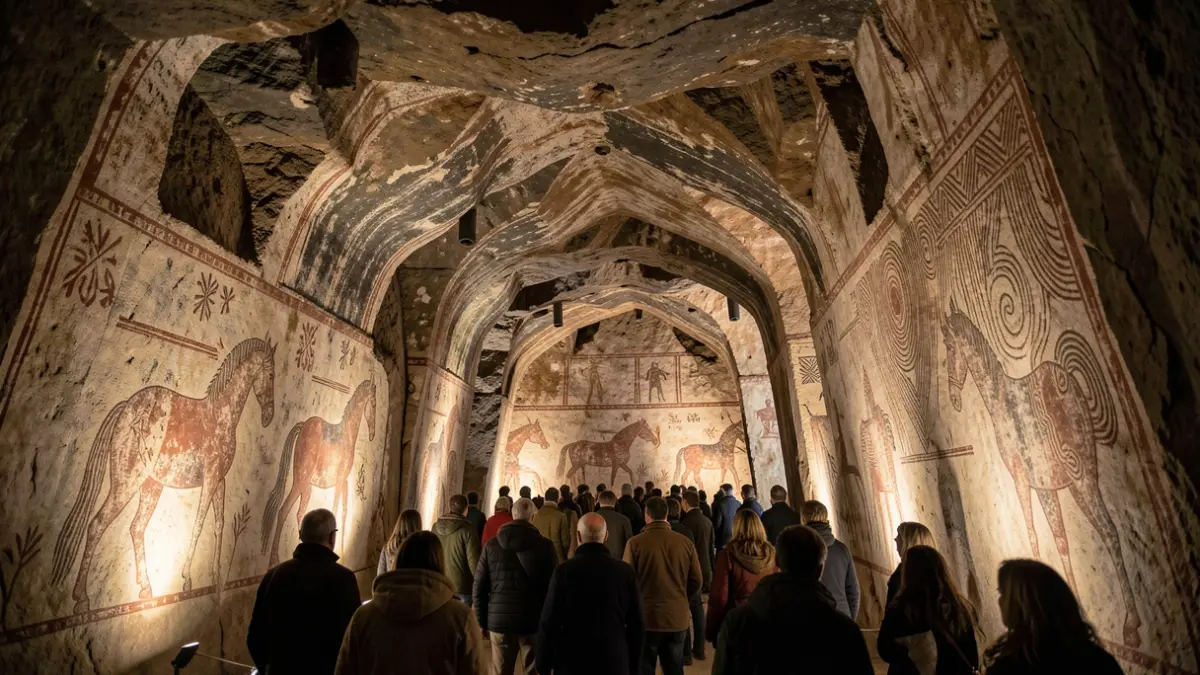
The cave contains approximately one hundred painted or engraved motifs, including spirals and zoomorphic representations, with a notable presence of horses. These works are distributed across nineteen panels, as well as two engraved plaquettes and a third with ochre traces.
The research team, which also includes Josep Casabó, Pasqual Costa, Joan de Déu Boronat, Marco Aurelio Esquembre, and Enric Martínez, has described the site as a complex that combines parietal art (engravings and paintings) with archaeological levels that have yielded lithic and bone industry, ornaments, and portable art.
The scientific prestige of these investigations, supported by the Pedreguer Town Council and the Cirne Foundation, has grown over the years. As early as 2015, the discovery of a piece depicting a horse was considered one of the oldest art manifestations in Valencian history. International experts have underscored the exceptional nature of the site.
Excavations are ongoing, with pigment analyses and three-dimensional documentation still pending, suggesting that the Cova del Comte still holds many secrets from the remote past.