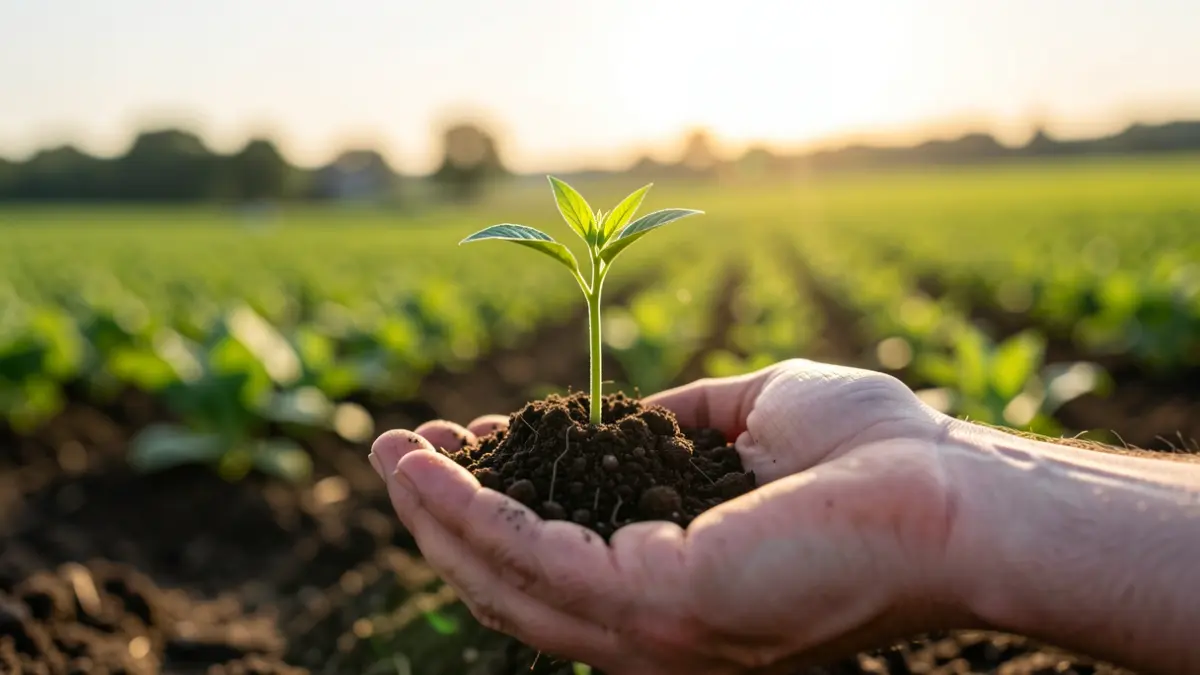
The headquarters of the Valencian Institute of Agricultural Research (IVIA) hosted the 'Cultivating the Future' conference, organized by the Committee of Organic Agriculture of the Valencian Community (CAECV) to commemorate European Organic Farming Day. The event focused on training, innovation, and especially generational change as fundamental pillars for the future of organic production.
The inaugural ceremony was attended by Alejandro Tena, director of IVIA, who highlighted the institution's work in improving organic farming. Vicente Faro, president of CAECV, underscored the importance of sustainability for the sector's continuity, stating, 'The sector must have continuity through sustainability because what is sustainable is what endures over time'.
For her part, M.ª Ángeles Ramón-Llin, Director General of Agricultural and Livestock Production, congratulated CAECV for its certification and promotion efforts. She noted that over 80% of Valencian municipalities have certified organic land and emphasized the importance of generational change: 'Cultivating the future means conserving resources, offering opportunities, and caring for our municipalities'.
The program included presentations on digitalization, with the participation of Patricia Chueca (IVIA), and on the educational field, with contributions from Miguel Ángel Monteagudo and Francesc Giron (CIPFP of Cheste), and Constanza Rubio (ETSIAMN-UPV).
From an economic perspective, Andrés Pedreño, economist and co-founder of Torre Juana IA Hub, highlighted the role of artificial intelligence in crop management, stating, 'AI will not replace the farmer, it will replace their loneliness; returning to the field will no longer mean going backward'.
Young talent had a prominent space with the Technovation Girls challenge, where three teams presented proposals to promote organic production. The award went to Bioma, the first patented game on organic production, defended before a jury chaired by Pedro Pernías.
The conference also featured testimonials from young organic producers such as Héctor Garcerá (Finca el Rebolloso), Raúl García (Penya Fresh), and Pau Sos (Mos de Bresca). In a debate panel, Elena Picó (Conselleria de Agricultura), Eugenia Bononad (CEEI Valencia), and Ana Ibáñez (AVA-Asaja) discussed opportunities and aid for young people entering the primary sector.
Miguel Barrachina, Minister of Agriculture, Water, Livestock, and Fisheries, closed the event, reaffirming the Consell's support for organic production as an 'economic, social, and territorial cohesion driver'. He praised the incorporation of young talent and regional aid programs, emphasizing the sector's contribution to biodiversity and the environment, stating: 'There is no more honorable work than producing food; it is not just an economic motivation, it is an environmental one'.