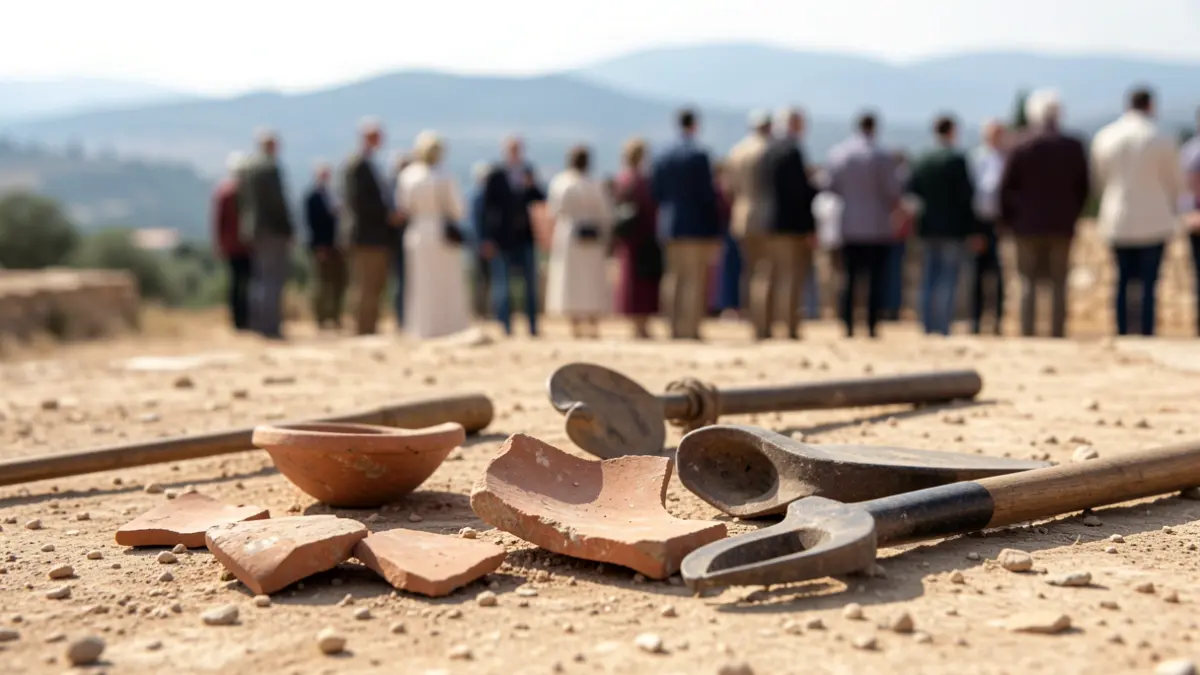
The MARQ has presented the Plan for archaeological excavations and research to be carried out at six sites in Alicante province. This initiative, with a budget of 140,000 euros, aims to contribute to the enhancement and preservation of historical and cultural heritage.
The Deputy of Culture, Juan de Dios Navarro, accompanied by the Museum's director, Manuel Olcina, detailed the campaign, stating that “the Provincial Council maintains its firm commitment to archaeological research through this extensive program at half a dozen sites, located in the north, south, and center of the province. These sites cover periods from prehistory to the late Middle Ages and provide us with excellent tools to delve into our past as a territory and understand our history”.
The plan, coordinated by Manuel Olcina, aims to document and conduct comprehensive scientific research of the findings, as well as advance the knowledge of the ancient civilizations that inhabited various sites in the territory.
The work includes the Tossal de Manises in Alicante (Roman period, 1st century AD), focusing on the interior of Building 5 and the Punic city of Ákra Leuké, with a duration of 4 or 5 weeks and a budget of 25,000 euros. At La Alcudia in Elche (Iberian and Roman city), an emergency plan will be implemented to document structural damage to the Western Baths of Ilici, with a budget of 21,000 euros.
At the Illeta dels Banyets in El Campello (Iberian period, 4th-3rd centuries BC), the excavation of the second module will continue to clarify its function, with a budget of 25,000 euros. At the Peñón d'Ifach in Calp (late medieval period, 14th century), the 21st intervention, with 25,000 euros, will focus on delimiting buildings and searching for remains of the walled enclosure.
Other included sites are El Cabezo Molino in Rojales (Ermita period, 8th-9th centuries), with 19,000 euros to continue excavation in already initiated sectors, and El Tabayà in Aspe (Prehistory, El Argar culture), with 25,000 euros, to complete the archaeological documentation of the Argaric society.