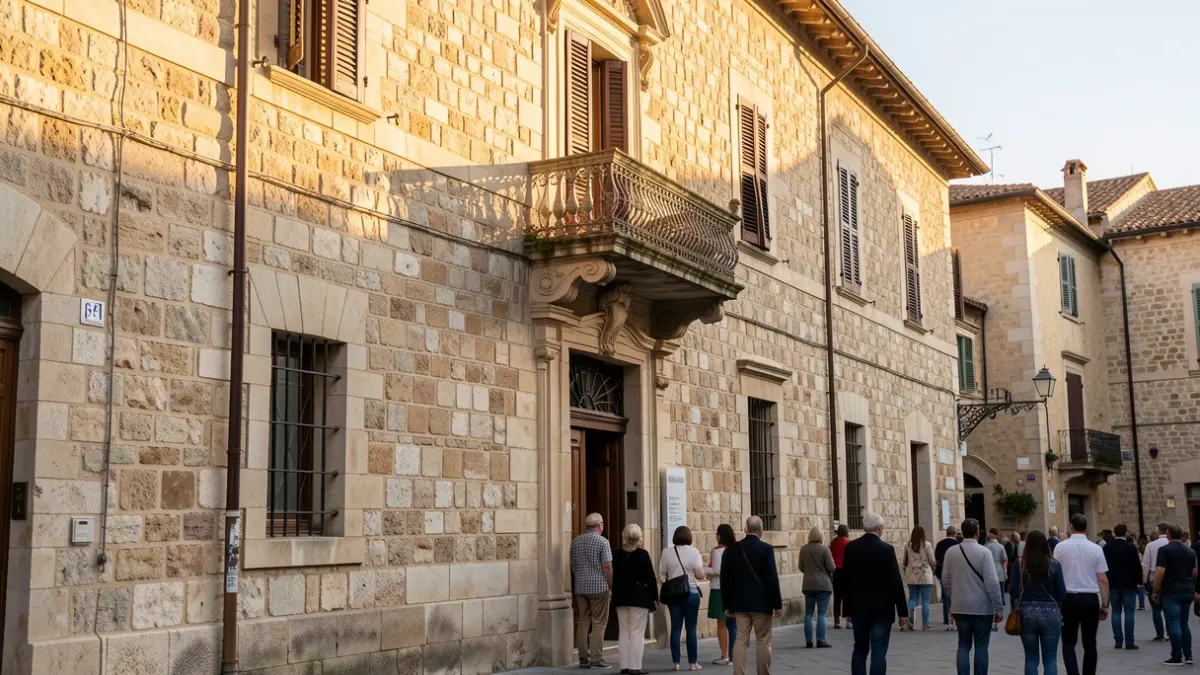
The Alcoy Pinacotheque is scheduled to open in the first half of November, fulfilling a historic demand from the city. The new art museum will launch with a significant retrospective exhibition of the Alcoyano painter Antonio Gisbert, a show currently on display at the Museum of Fine Arts of Alicante (MUBAG). This collection will later travel to Alcoy and Valencia.
This new exhibition complex is complemented by the La Capella exhibition hall, which will be integrated into the museum to showcase works of religious themes, and the Camilo Sesto Museum. All these spaces will share the same building, creating a unified cultural area.
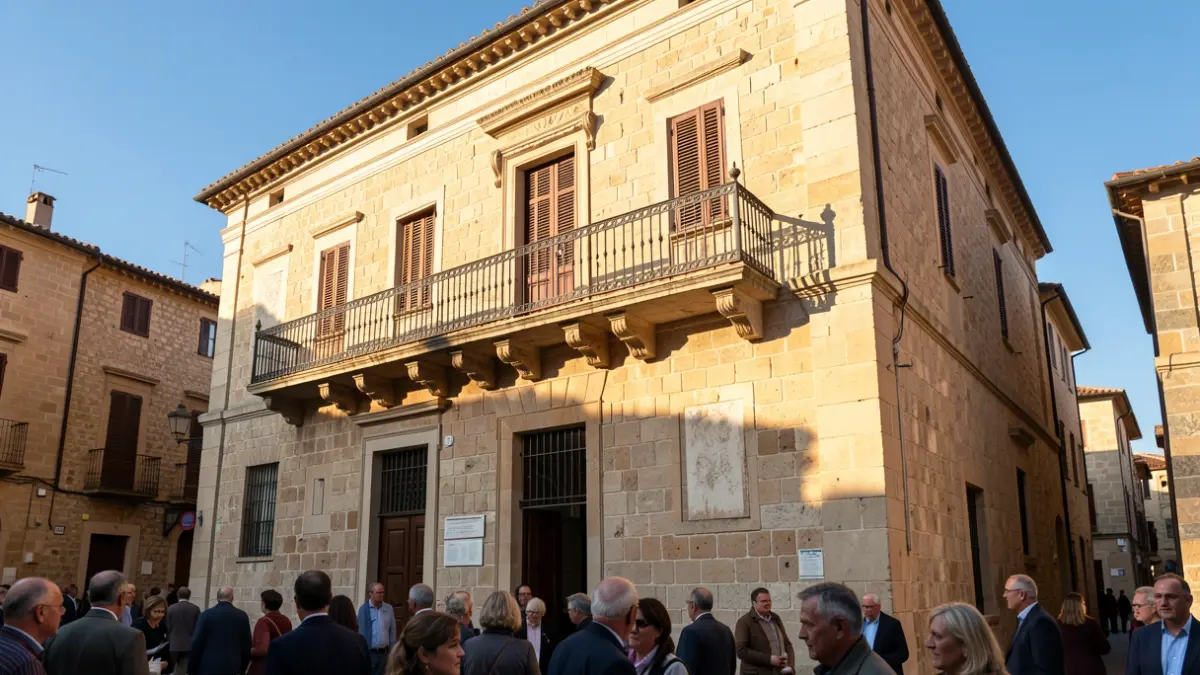
The creation of the Pinacotheque has enabled the restoration of a historic building located on El Camí street. This property, dating back to 1880 and formerly the San José Asylum, has been closed and unused since 1979. Designated as a Site of Cultural Interest, the three-story building with a basement, designed by master builder José Moltó Valor, features a ashlar stone facade.
The rehabilitation works, awarded to the UTE Promed Consulting and Patrimonio Inteligente SL for just over 1.5 million euros (VAT included), have received European funding from the Next Generation funds (1.1 million euros). Recently, the PP denounced an overrun of nearly 155,000 euros and delays in the opening, as the initial plan was to inaugurate it a year earlier.
The museographic project for the Pinacotheque, awarded to Visual Producciones SL and in the final stages of execution, is conceived as a "large practicable exhibition display." It is planned that the building's three floors will house up to five rooms, with temporary and permanent exhibitions. Collaboration with other museums will also be sought to enrich the displays.
Sculptural pieces will be exhibited in the rooms and communication spaces. The municipal art collection originates from the late 19th and early 20th centuries, following a fine arts competition and exhibition organized by the Elementary Industrial School. This initiative led to others, such as the creation of museums and painting contests.
The Councilor for Historical and Cultural Heritage, Ignacio Trelis, indicated some time ago that the collection exceeds 800 works and continues to grow with donations and loans. It includes paintings, graphic works, sculptures, posters, engravings, and video art pieces.
The collection is also motivated by the prominence of artists such as Antonio Gisbert, Fernando Cabrera, Emilio Sala, Francisco Laporta, Lorenzo Casanova, and Adolfo Durá, whose works will be featured. The project includes about a hundred pictorial works and around fifty sculptures, with artists like Peresejo, Sento Masiá, Roc Candela, Antoni Miró, Manolo Boix, and Ramón Castañer, with some pieces dating back to the 17th century.
Until now, the collection could not be adequately displayed due to a lack of space. The new Pinacotheque will offer facilities with optimal conservation and exhibition conditions "to enhance the value of the collection," with an exhibition design that highlights the uniqueness of each work and provides alternative, innovative content for better understanding.