Alzira will complete the genetic identification of the remains of 211 individuals repressed during the post-Franco war era this year, thanks to a final contribution of 56,000 euros from the Provincial Council of Valencia. This economic injection will allow for the conclusion of biological analyses in the laboratory, completing a project that has exceeded 300,000 euros between 2023 and 2026.
The Association for the Recovery of Historical Memory Fossar d’Alzira anticipates that the identification work will conclude this year. The association's president, Josep Bermúdez, has expressed hope of providing a “dignified” burial for the victims in 2027, either in the municipal pantheon or at a location each family deems appropriate if living relatives are found.
The vice-president of the Provincial Council, Natàlia Enguix, has described the operation at Alzira's municipal cemetery as one of the “most complex and ambitious” democratic memory projects in the province of Valencia. Funding has been structured in several phases, including the demolition of the old pantheon, the extraction and anatomical individualization of remains, and genetic analysis.
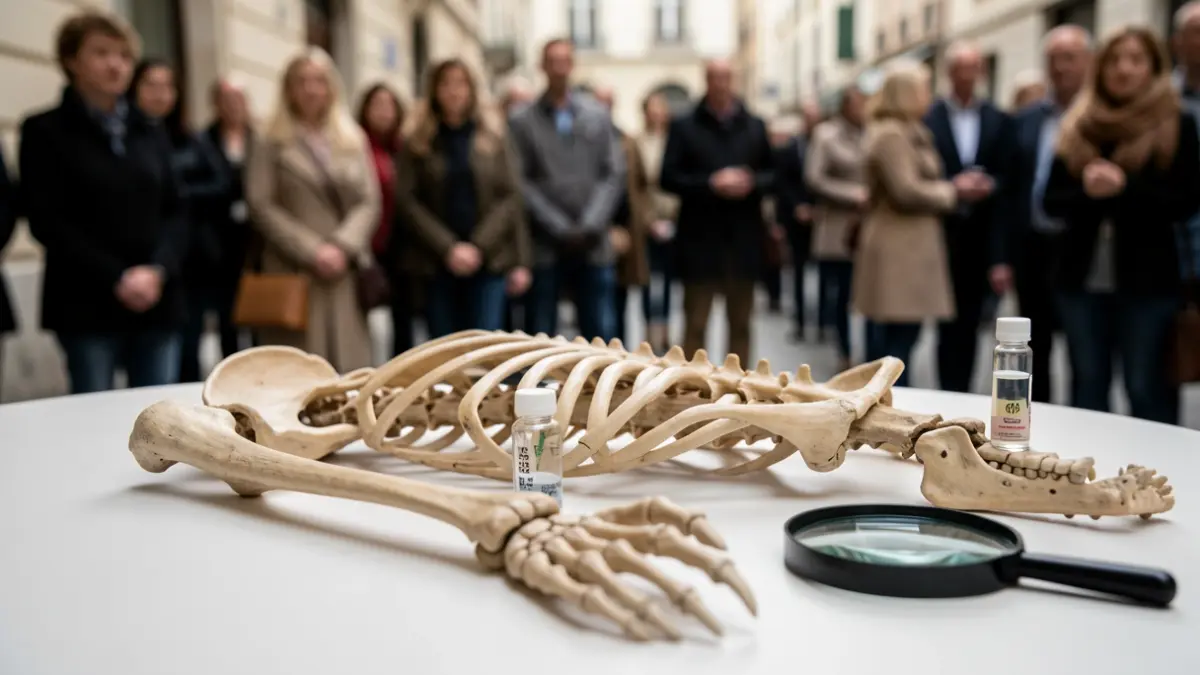
The technical difficulty of the project lies in the initial treatment of the victims, as the remains were exhumed from mass graves without scientific guarantees, ending up deposited in fifty bags within a memorial crypt. The scientific team had to meticulously classify and separate each body before taking bone samples for DNA testing.
The Fossar d’Alzira, which holds executions of residents from various nearby towns such as Alzira, Algemesí, Carcaixent, and Guadassuar, includes remains of diverse origins. The Provincial Council is confident that the genetic analyses will put an end to over eighty years of uncertainty for the descendants.