
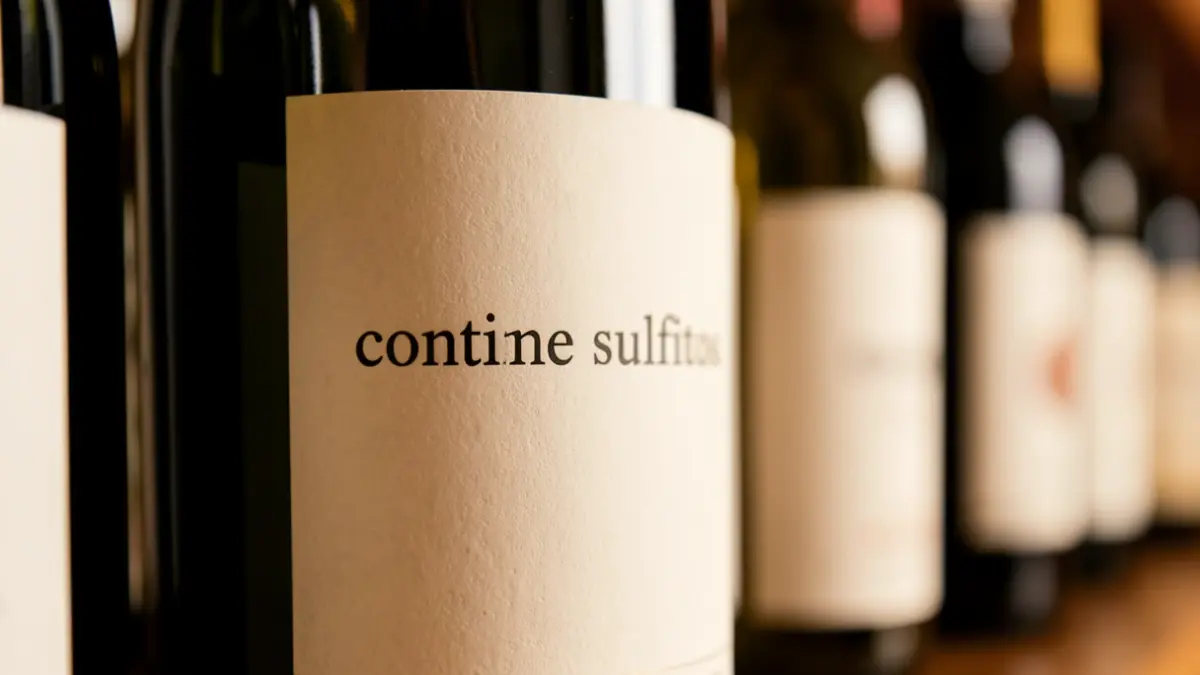
Wine without added sulfites is an option, but completely sulfite-free wine doesn't exist, as fermentation generates them naturally. All bottles carry the 'contains sulfites' label, but this doesn't always indicate they were added.
Sulfites, derived from sulfur dioxide (SO₂), act as antioxidants, protecting wine from oxidation, and as antimicrobials, inhibiting undesirable bacteria and yeasts. Without them, wine would be a very fragile beverage.
European regulations require indicating 'contains sulfites' when wine exceeds 10 mg/l of total SO₂. Alcoholic fermentation naturally produces sulfites, often exceeding this threshold. Therefore, even natural and organic wines carry the warning.
Legal maximum limits are 150 mg/l for red wines and 200 mg/l for whites and rosés. Organic wines have stricter limits (100 and 150 mg/l respectively). The general industry trend is to reduce their quantity.
The myth that sulfites cause headaches is unfounded, as white wines, which contain more sulfites, are rarely associated with this symptom, unlike reds. Sulfite sensitivity exists in a minority of people, but with different symptoms.
Sulfites are found in many other foods like dried fruits, without generating the same distrust as in wine. Their bad reputation is specific to wine, suggesting a cultural rather than chemical issue.
Wines without added sulfites are an option involving minimal intervention, but they are more unstable, evolve faster, and are more sensitive to transport and heat. They should be drunk young and stored properly.
Winemakers can explain their criteria regarding SO₂ use. Asking at the winery is a way to better understand the process.