
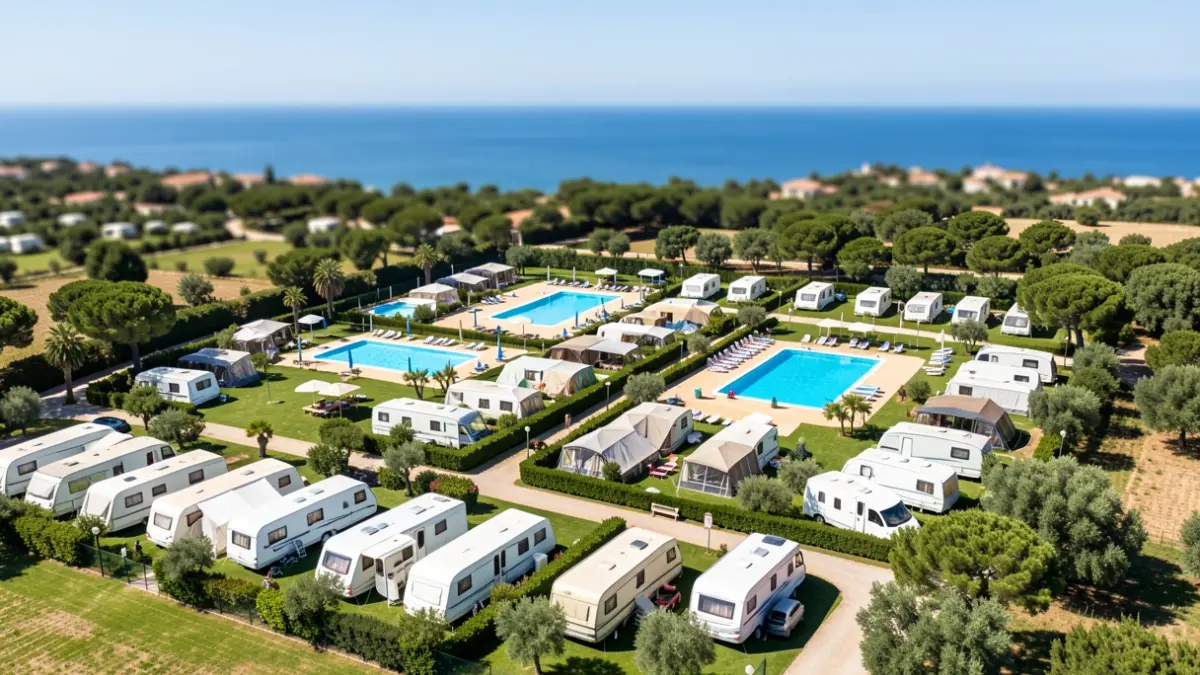
The camping sector in the province of Castellón continues its positive trend, with a significant increase in employees, visitors, overnight stays, and the initiation of new business projects planned for 2026. Eva Pastor, owner of the Riberamar campsite in Cabanes and president of the Association of Camping Companies of Castellón, highlights the sector's expansion, which is increasingly attracting major foreign investors.
Currently, several proposals are in progress for new outdoor accommodation establishments in locations such as Onda, Peñíscola, Oropesa, and Ribera de Cabanes. According to INE data, the province has gone from 40 campsites with 21,541 places in June 2025 to 45 establishments with 22,705 available places in June 2026, demonstrating consistent growth.
Eva Pastor points out that this year's summer campaign has exceeded expectations, with occupancy rates close to 100%, even in the face of high temperatures. August has slightly improved upon last year's figures, although the heat poses a challenge for some pitch customers. The eclipse on August 12 coincided with one of the weeks of highest attendance, but occupancy was already high beforehand.
In June 2026, a total of 38,047 visitors were registered, a 20.3% increase compared to the previous year, with 29,329 domestic tourists and 8,718 foreign tourists. Overnight stays totaled 183,836, an 18.5% increase. Domestic tourists primarily come from Madrid, Valencia, the Basque Country, and Aragon, and are characterized by their loyalty, long stays, and family trips, with many customers returning annually.
Pastor emphasizes that the 'sun and beach' model is working, but urges collaboration between the administration and entrepreneurs to maintain quality and prevent saturation. Furthermore, she highlights high occupancy during the low season, with establishments reaching maximum occupancy in January, February, and March, and around 80% in November and December, often surpassing August occupancy.
This habit of traveling outside the summer months contributes to the de-seasonalisation of tourism. The quality of facilities, the climate, and competitive prices, along with the year-round opening of establishments on the Costa del Azahar, explain this phenomenon. The profile of the low-season tourist is predominantly foreign (German, Belgian, French, Swiss, and Dutch).
Pastor anticipates a promising future for the sector, which no longer relies solely on sun and beach tourism, predicting a new wave of visitors towards the end of the year after a brief interim period.