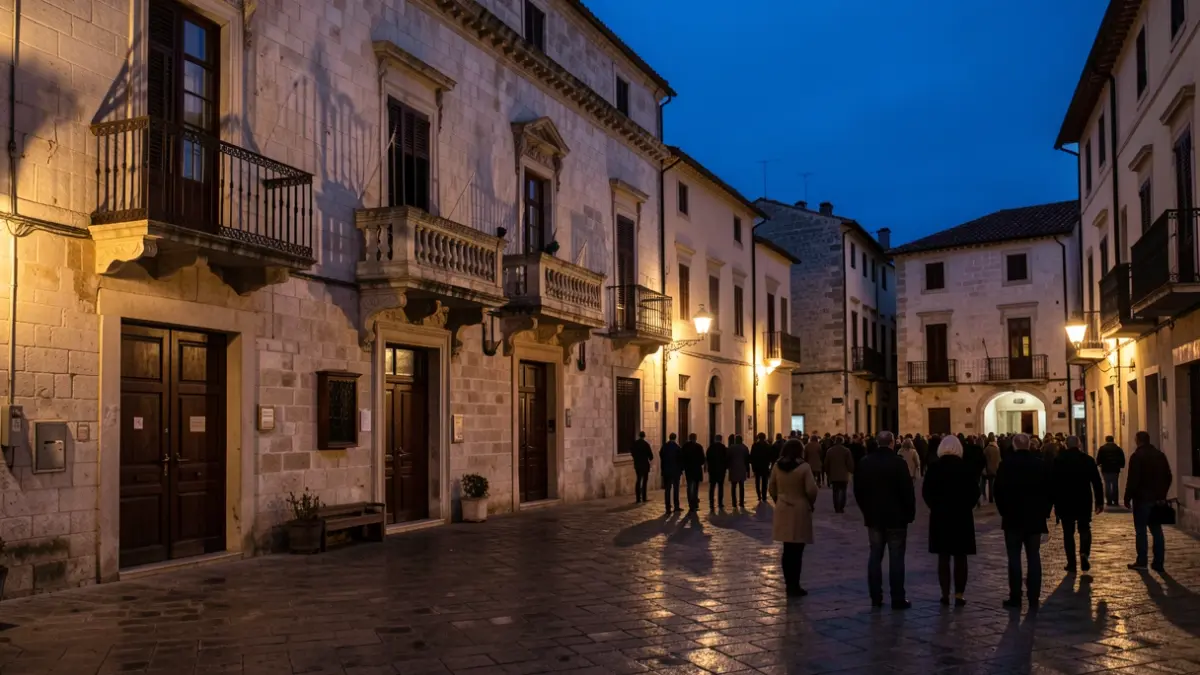
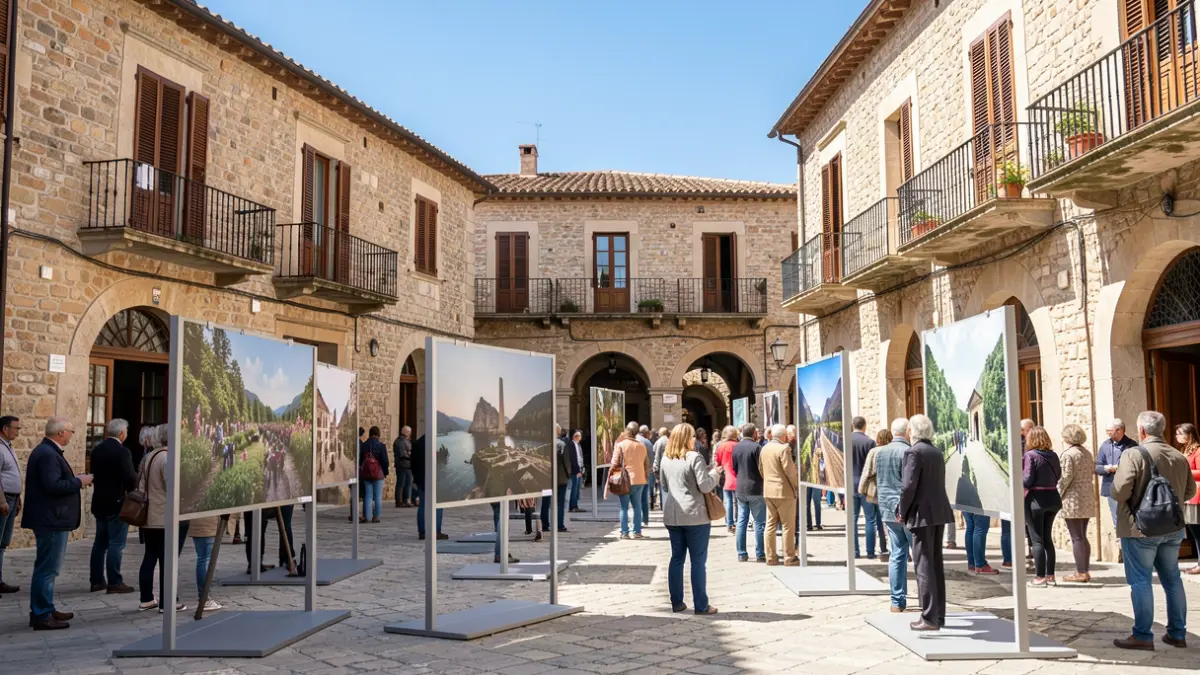
The exhibitions of the Ojos Rojos Festival are displayed both in closed municipal facilities and in open urban spaces in Dénia and Xàbia. This year, the novelty in Dénia is the incorporation of María Hervás square as an exhibition space, which is added to the Consell square. Two other exhibitions will be installed in the Centre d’Art l’Estació and, from November 6, in the Casa de Cultura.
In the Consell square, the work of Marcos López is showcased, featuring photographs from his series “Pop Llatí,” characterized by the use of striking colors, artifice, and kitsch to reinterpret popular culture.
María Hervás square hosts the well-known project “Back to the future” by Argentine photographer Irina Werning. This project invites individuals to recreate photographs from their childhood or youth years later, accurately imitating the original pose, clothing, objects, lighting, and environment.
Tomorrow, Friday, October 30, at 5:00 PM, photographer Irina Werning will offer an open talk to the public at the Juan Chabás library about the creation process of “Back to the future”.
Also tomorrow, the exhibition “Quadern de camp” by Matías Costa opens its doors at the Centre d’Art l’Estació, showcasing the evolution of his photographic work over three decades.
We will have to wait until November 6 to enjoy the multimedia exhibition “Goals for Hope” by Ofelia de Pablo and Javier Zurita at the Casa de Cultura. This participatory project combines art and football, where young migrants and women share their stories through photographs, audiovisual pieces, and texts.
For the third consecutive year, the Festival collaborates with the Matria Women's Association. The “Goals for Hope” project will be taken to schools in Dénia to raise awareness about migration, combat negative stereotypes, and show paths to integration through sport and equality.
The eighth edition of the Ojos Rojos Festival was presented today in María Hervás square with the participation of organizers Mili Sánchez and Mike Steel (Ojos Rojos), the mayor of Dénia, Rafa Carrió, the Councilor for Culture, Raúl García de la Reina, and the president of Matria, Mari Huertas López Rubio.