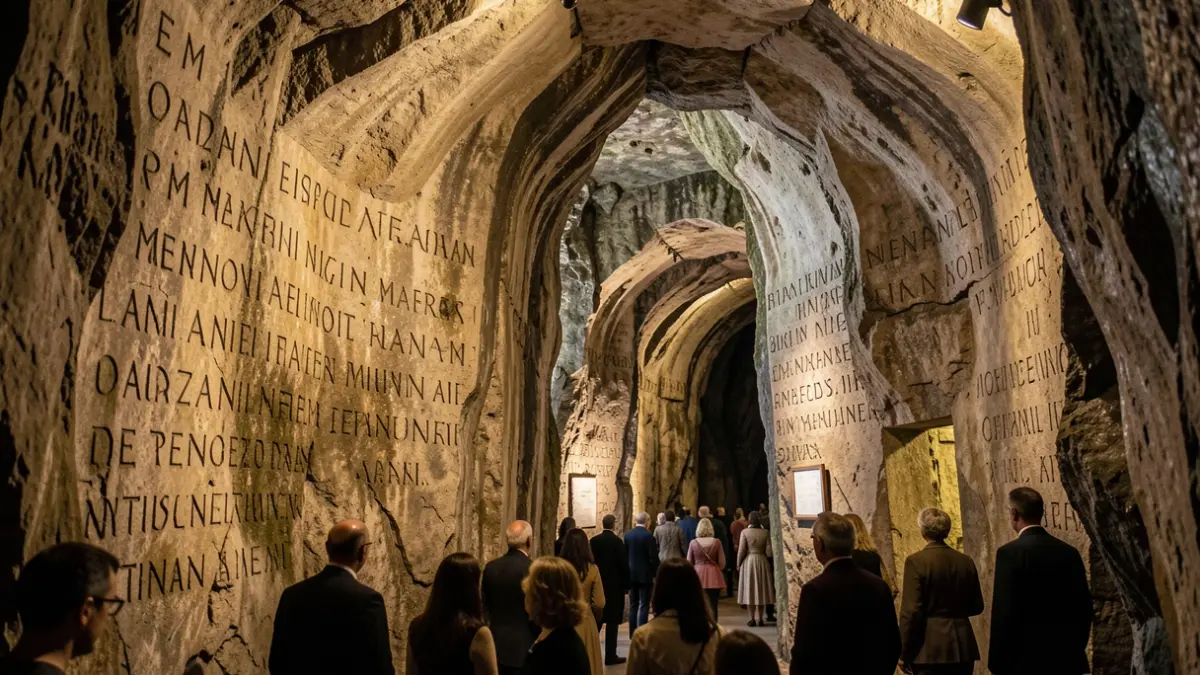
Fieldwork conducted during May and June has identified a volume of epigraphy far exceeding what was previously known. The inscriptions, mostly dating from the 1st and 2nd centuries AD, are concentrated in an underground chamber located more than two hundred meters deep, discovered in 2024.
Analysis of the texts confirms the leading role of women in the sanctuary's ritual life. According to researchers, the presence of female names and textile offerings, such as spindle whorls, corroborates active participation in the worship of a specific deity. Notable findings include the invocation of a goddess named Domina and a previously unknown goddess referred to as MALACI.
The concentration of texts in a specific area of the cave, far from the entrance, indicates that it was a space organized for religious practice. Visitors deposited their offerings in small natural pools, known as gours, which retain water from the underground galleries.