The mayor of Cheste, José Morell, met on September 22nd with the deputy director of the Generalitat's Commissioner for DANA Recovery to detail the work to be carried out through TRAGSA. This meeting is part of an autonomous initiative for cleaning reeds and renaturalizing riverbeds.
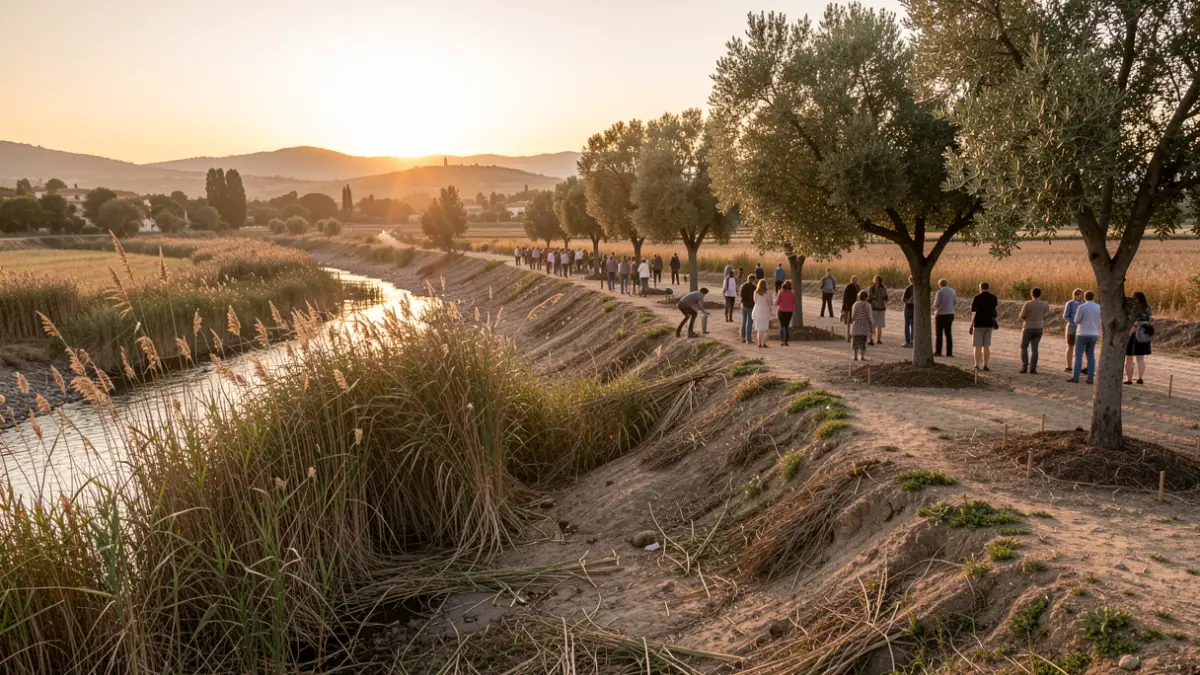
The main objective is to replace the invasive reed (Arundo donax) with native riparian forest vegetation. This action aims to increase the channel's hydraulic capacity, improve water infiltration, reduce fire risk, and restore the ravine as a natural space accessible to residents.
Interventions will focus on the section of the Poyo ravine between Charquico Palomo and the gas station bridge, as well as the Sechara ravine around the Speed Circuit. In addition to planting native species, new trails will be created.
Cheste is one of eleven municipalities in the Poyo basin benefiting from this plan, along with Chiva, Riba-roja de Túria, Quart de Poblet, Aldaia, Alaquàs, Torrent, Picanya, Paiporta, Catarroja, and Massanassa. The Poyo ravine was one of the main areas affected by the flood of October 29, 2024, with reed accumulation worsening its downstream effects.
“"We have learned firsthand about a project that is fundamental to Cheste's safety. The Poyo ravine reminds us daily of what we experienced during the DANA, and acting in its course is prevention."
The autonomous plan, with an initial budget of 56.4 million euros, will cover 160 kilometers of riverbeds and approximately 400 hectares in the Poyo, Túria, Magro, and Picassent ravine basins, encompassing 53 municipalities. Around 400,000 native trees and plants are planned to be planted, with technical support from public companies TRAGSA and VAERSA.