The MUPOMAT group from the Institute of Molecular Science (ICMol) at the University of Valencia, located at the UV Science Park, is developing new materials capable of contributing to the detection and elimination of polluting substances in wastewater, potable, and reclaimed water. These investigations are being carried out within the BATEC and AIDA projects, which bring together universities, technology centers, and companies, with a combined budget exceeding 1.6 million euros.
The BATEC and AIDA projects aim to address challenges such as detecting contaminants that go unnoticed in conventional analyses, eliminating chemical substances that persist for years in the environment, or improving the treatment of hospital wastewater. To advance these solutions, they combine new materials, advanced treatment systems, and artificial intelligence.
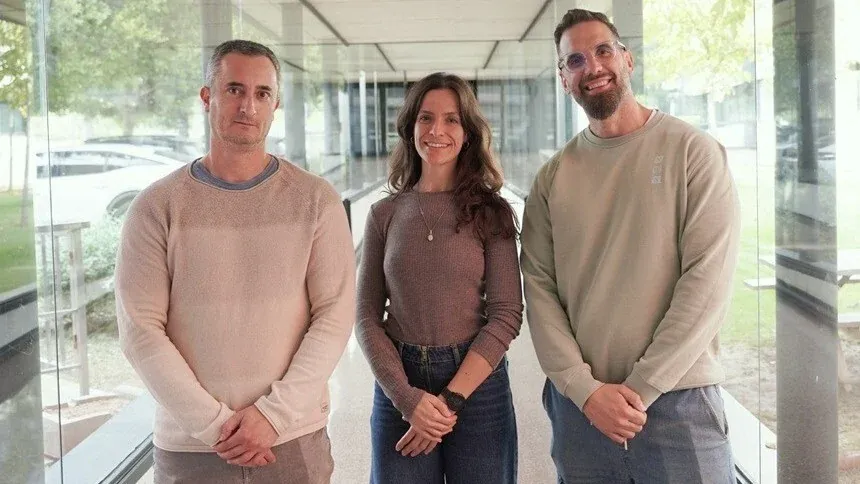
The MUPOMAT group, led by Emilio José Pardo and Jesús Ferrando, researchers from the Department of Inorganic Chemistry at the UV, specializes in coordination chemistry and multifunctional materials, with a focus on developing porous metal-organic frameworks (MOFs).
With a joint budget of €1,629,357.88, the projects are funded by the European FEDER Comunitat Valenciana 2021-2027 Program and involve the institutional participation of the Generalitat Valenciana and Ivace+i.
The BATEC project, with a budget of €823,633.03, focuses on treating hospital wastewater through an integrated technology combining MOF materials for selective adsorption, advanced oxidation processes, and artificial intelligence. It will also study methods for detecting bacterial resistance genes.
Meanwhile, the AIDA project, with a budget of €805,724.85, investigates technologies to detect, monitor, and eliminate per- and polyfluoroalkyl substances (PFAS), known for their high environmental persistence, in potable and reclaimed water. Sensors, preconcentration systems, and predictive digital tools will be developed.
Scientific and business collaboration is key to both projects, which aim to advance from research towards applicable solutions for more sustainable water management.