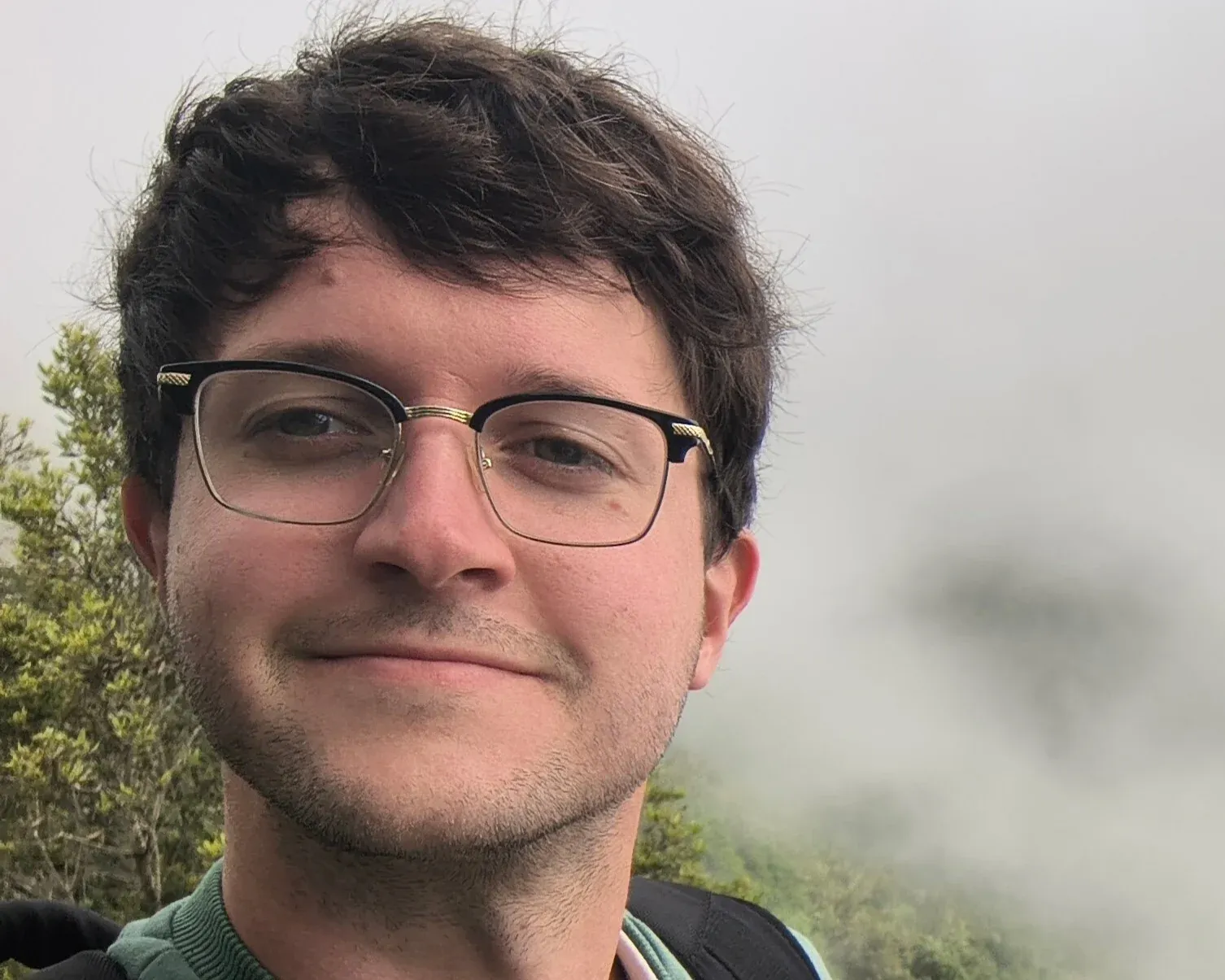
The research, developed within the VEGA group at IFIC and defended in November 2025, addresses fundamental questions about whether unknown neutrino interactions exist, potentially extending beyond the Standard Model of particle physics. The work has been recognized for its scientific quality and contributions to data analysis in international experiments.
The award, presented by the Global Neutrino Network (GNN), acknowledges the thesis's contribution to neutrino astronomy. Lazo shares the prize ex aequo with two other researchers from the universities of Bologna and Copenhagen.
The thesis, titled "Neutrino oscillations and search for Non-Standard Neutrino Interactions with KM3NeT/ORCA", analyzes neutrino behavior based on observations from the KM3NeT/ORCA detector, located in the Mediterranean. The objective is to find evidence of interactions not accounted for in the conventional model, which could expand knowledge of fundamental particles.
A key contribution of the research is the first application of a Bayesian statistical approach within the KM3NeT collaboration to study neutrino oscillations and search for potential non-standard interactions. This method allows for the simultaneous analysis of numerous parameters by combining experimental data with prior scientific knowledge, with relatively low computational cost.
The results obtained are among the most competitive in the field to date and demonstrate the potential of the KM3NeT/ORCA detector to explore still little-known phenomena as more data becomes available. Some of these findings have been published in the scientific journal Journal of Cosmology and Astroparticle Physics.
The GNN Dissertation Prize recognizes doctoral theses for their scientific contribution and the clarity of their results. The evaluation committee highlighted the "very high quality" of Lazo's work, encompassing contributions to both high-level and low-level analysis.
“"It is an honor to be distinguished with this award. It is enormously gratifying to be recognized in this way, and it is a great stimulus to keep going for a scientist at the beginning of their career, like myself."
Alfonso Lazo Pedrajas studied Physics at the University of Seville and pursued a Master's degree in Advanced Physics at the Universitat de València. His thesis was supervised by Juan Zúñiga Román, a professor at the Universitat de València, and Juan José Hernández Rey, a Research Professor at the CSIC. Lazo is currently continuing his scientific career as a postdoctoral researcher at the Inter-University Institute for High Energies in Brussels, participating in the international JUNO collaboration.