
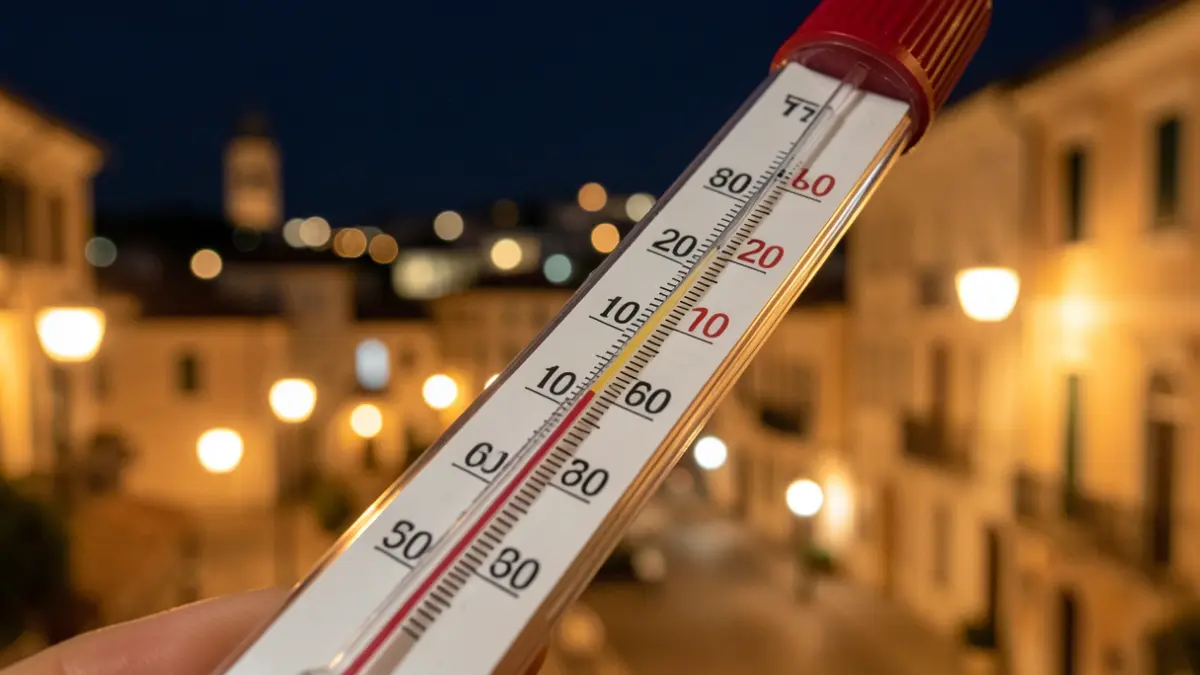
The increase in night temperatures, exacerbated by climate change, is causing a rise in insomnia worldwide. An analysis by the platform 'Climate Central' estimates that since 1970, the rise in night temperatures has doubled the hours of lost sleep. In Spain, this situation already leads to the loss of up to 42 hours of sleep per person per year. Experts consider this phenomenon a growing public health problem affecting the well-being of millions.
The study is based on data from 1,338 large cities globally between 1970 and 2025, analyzing the relationship between night temperatures and insomnia rates. The results indicate a global increase in insomnia linked to high temperatures, with losses of up to 90 hours annually in some cities.
In Spain, cities like Barcelona, Madrid, Valencia, Zaragoza, and Malaga report sleep losses ranging from 30 to 42 hours annually. Valencians top this ranking, losing up to 42 hours of sleep due to global warming. The study calculates that the climate crisis is directly responsible for up to 16% of lost sleep hours in these metropolises.
Experts denounce that the loss of sleep hours due to night heat has significant implications for public health, increasing the risk of cardiovascular diseases, diabetes, hypertension, accidents, and mental health problems. Night heat hinders the body's temperature reduction during rest, making it harder to fall asleep and achieve restorative sleep.
Cities are particularly affected by the 'urban heat island' effect. Furthermore, vulnerable households, often lacking air conditioning or the resources to use it, are the most disadvantaged. Sleep deprivation can worsen pre-existing conditions and increase the risk of long-term physical and mental health problems, especially for older adults, children, and pregnant women.
Courtney Howard, president of the Climate and Health Alliance, states that sleep loss due to warm nights is a growing concern for public health and productivity. She advocates for more climate adaptation measures and the urgent reduction of greenhouse gas emissions to protect global health and prosperity.