
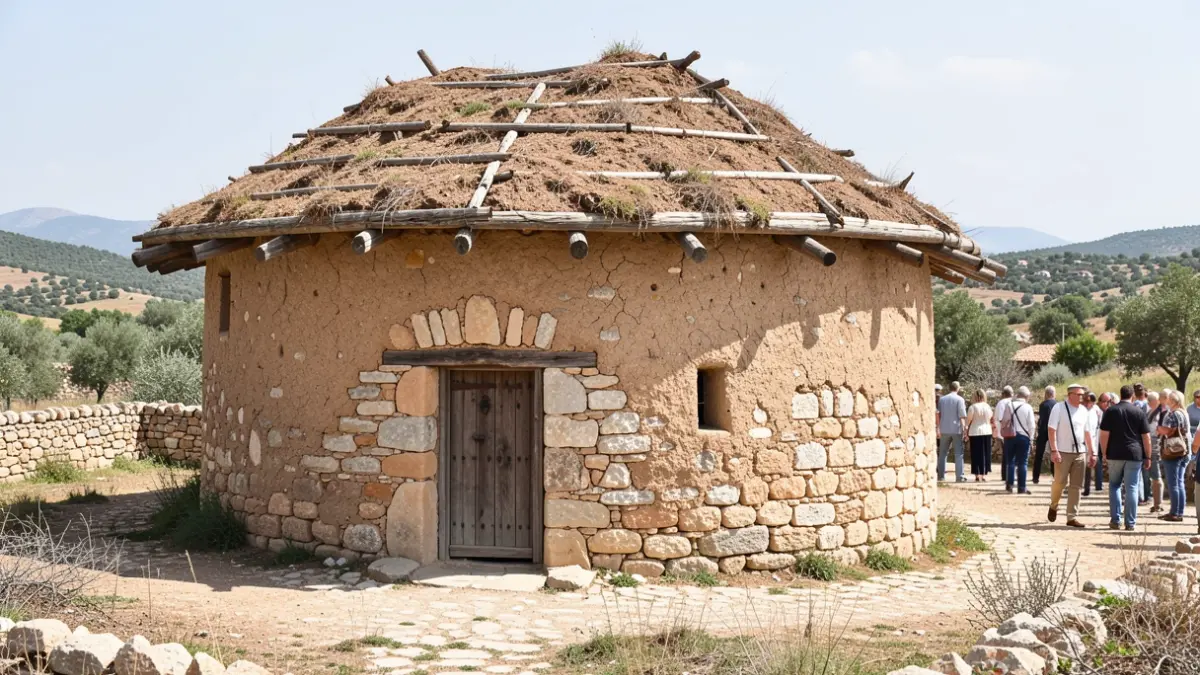
The work has primarily focused on restoring the roof of the lime workers' hut, which was in an advanced state of deterioration with water leaks and humidity-affected wooden elements. Deteriorated materials were removed, the interior was cleaned, and the dry stone walls were consolidated, especially in areas where the crowning had been lost.
The roof has been recovered using traditional construction techniques, incorporating wooden logs, planking, and an earth finish. A breathable waterproofing system has also been added to improve protection against water and prevent future deterioration.
Regarding the lime kiln itself, interventions included the careful removal of vegetation that had grown on the walls, thus avoiding damage to the original dry stone structures.
The project also involved the installation of an informative panel for visitors. This panel explains the characteristics of dry stone construction, the traditional operation of lime kilns, and the uses of the different parts of the complex, contributing to its interpretation and valorization.
With this initiative, the Culla City Council underscores its commitment to the conservation of local historical and ethnological heritage. It thanks the Generalitat Valenciana for its support through the Plan Restaura, which helps preserve these unique elements of the municipality's cultural and landscape identity for future generations.