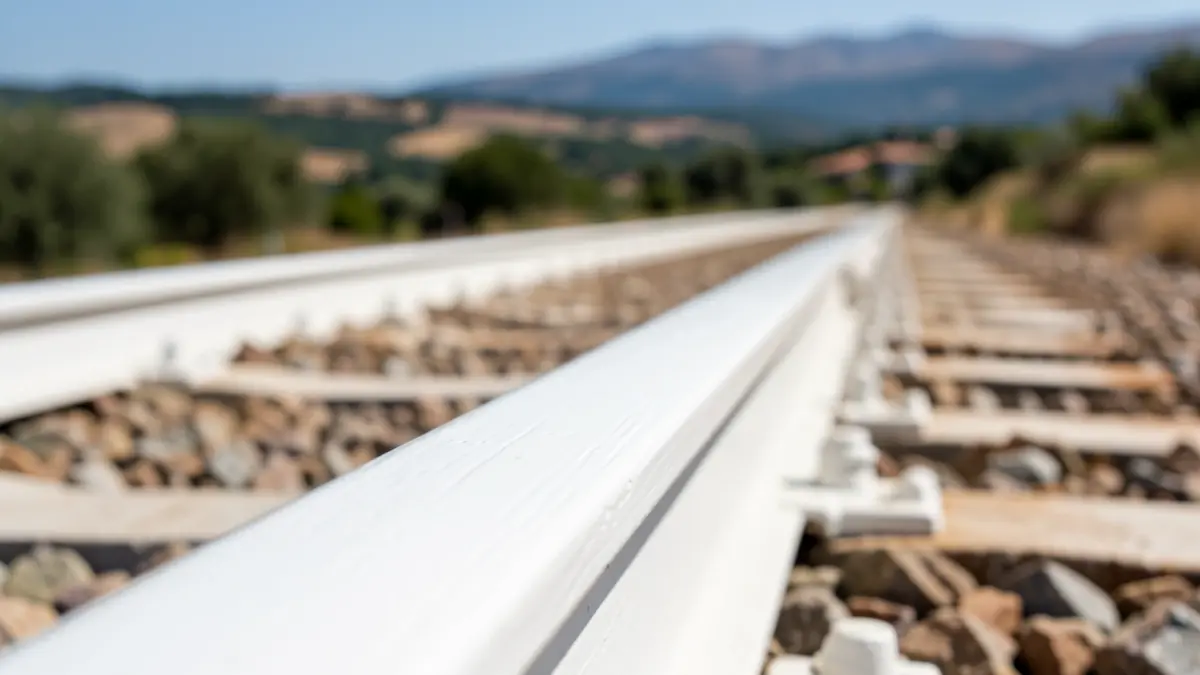
The initial actions are taking place on different sections of the Line 9 of the TRAM d’Alacant, which connects Benidorm and Dénia. The objective is to verify the benefits of painting certain track sections white to reduce potential track deformations caused by thermal expansion.
The research, driven by the Vialobra Railways Chair, analyzes the capacity of reflective paint to reduce the surface temperature of the rail steel. So far, work has been done on curves with a radius of less than 200 meters on ballast track, where the paint has managed to reduce the temperature by 8 to 10 °C, increasing the safety margin.
More than five kilometers of track in Alicante have already been painted, and FGV plans to extend these efforts to surface sections of the Metrovalencia network. This initiative is significant given the lack of rigorous information on the results of this methodology, already used by other railway administrations.
In response to increasingly extreme weather conditions, FGV employs various measures to ensure the preservation of its infrastructure, which combines long surface routes with underground and tram sections. These actions include reinforcing the platform, removing weakened trees, cleaning ditches, and fire prevention.