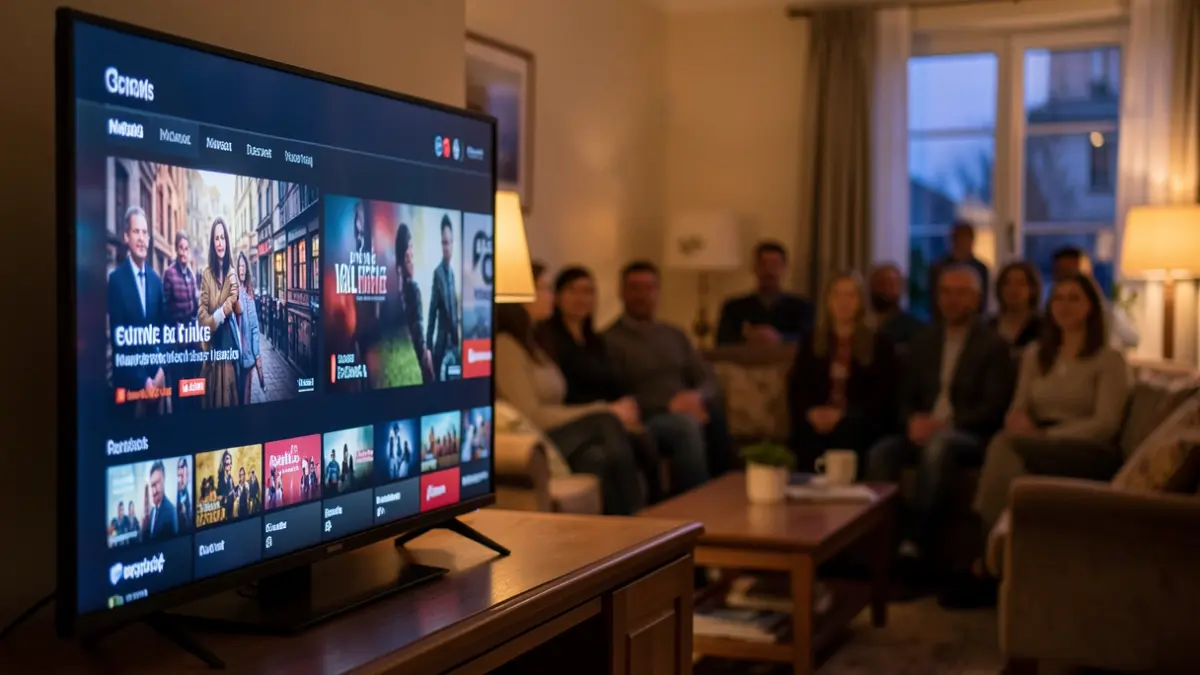
The research, published in the journal Communication & Society, analyzes the relationship between the eight main digital platforms in Spain and linear television. The authors, doctoral candidate Jorge Abad and professor Tatiana Hidalgo, examined 325 fiction series released between 2020 and 2024.
The findings indicate that while releasing full seasons remains the majority strategy for platforms, weekly releases maintain significant weight. Platforms like Movistar+ are evolving towards this model, while Atresplayer clearly favors it. Weekly released productions receive a slightly higher average rating on IMDb and Filmaffinity (6.8 points) compared to those offered in full (6.6 points), suggesting that the episodic model fosters greater emotional engagement and a better perception of narrative quality.
The study also identifies growing collaboration between television and VOD platforms, with over 40 seasons linked to co-production models. These co-productions and distribution agreements help reduce costs, diversify risks, and expand the commercial reach of productions.
According to the researchers, television continues to be crucial for generating visibility. The linear model retains a prominent function as the primary window for visibility and for creating an event around a series. When a production later moves to a platform, it can extend its lifespan and broaden its distribution, although the reverse path does not guarantee the same television impact.
The article concludes that the Spanish audiovisual ecosystem is finding a balance between both models, with platforms adopting flexible and collaborative strategies to optimize content distribution.
These results are part of Jorge Abad's doctoral thesis, supervised by Tatiana Hidalgo, which received the highest academic distinction of 'sobresaliente cum laude'.