
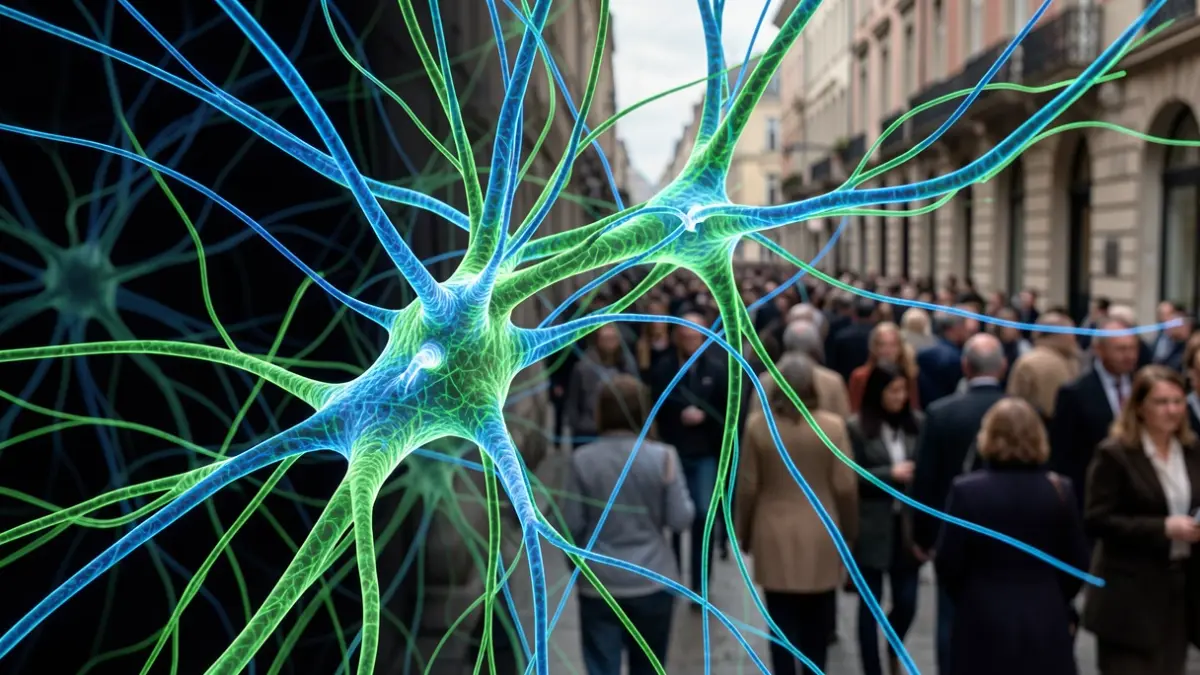
The research, co-led by the Institute of Neurosciences (CSIC-UMH) and the University of Warsaw, reinforces the role of the transcription factor AP-1 in changes associated with environmental stimulation. The study, published in the journal Molecular Neurobiology, analyzes gene expression in rodent brains exposed to enriched environments.
The complexity of identifying common molecular mechanisms in brain changes, due to varying experimental conditions in individual studies, is overcome by this meta-analysis. Jointly analyzing more samples allows for the detection of patterns that might be missed in isolated research, explains Federico Miozzo, a researcher at IN.
The team analyzed 20 studies based on RNA sequencing, a technique that measures gene expression. The goal was to find a 'molecular signature' associated with environmental enrichment, meaning consistent changes in gene expression detected across different studies.
Among the key findings, a prominent presence of genes related to synapses, the structures for neuronal communication, and synaptic plasticity, the ability of these connections to modify themselves, stands out. Also identified are genes for rapid response to neuronal activation, which encode proteins of the transcription factor AP-1.
This transcription factor regulates numerous genes involved in neuronal communication and plasticity. The reappearance of AP-1 reinforces previous findings from the same institute, which had already demonstrated its role in the mechanisms linking early life experiences with lasting cognitive changes, notes Ángel Barco, head of the laboratory at IN.
The researchers emphasize that the results, obtained in rodents, are not directly transferable to humans and that further studies are needed to determine the causal role of each mechanism.
To facilitate the exploration of the results, the team has developed mEEtaBrain, a free web application that allows users to query data on genes, brain regions, and analysis criteria, promoting the reuse of information for new research.
The study is part of the international EPI-3E project, funded by the JPND program, and is supported by the State Research Agency, the European Regional Development Fund, the ”la Caixa” Foundation, and the Generalitat Valenciana. The Institute of Neurosciences (CSIC-UMH) is a Severo Ochoa Centre of Excellence.