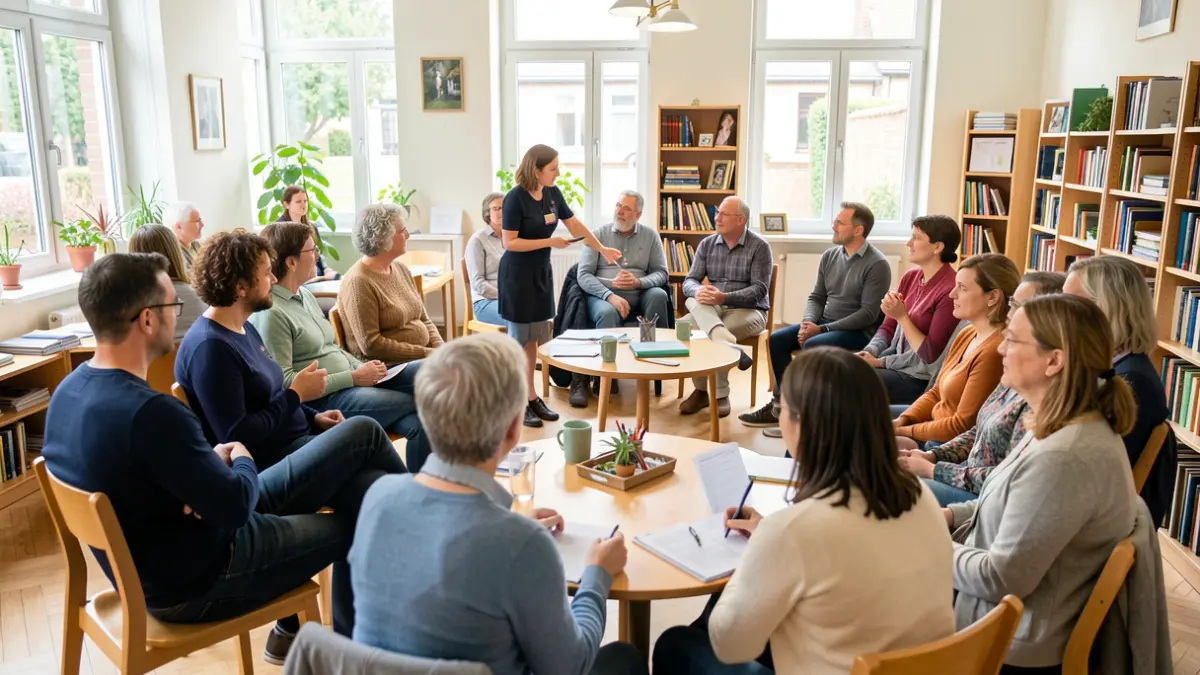

The "De CREA a Casa" program, driven by the spin-off Centro CREA of the Miguel Hernández University of Elche Science Park (PCUMH), aims to work with patients and their families on the difficulties and dynamics that may arise during family meals. It seeks to facilitate the transfer of tools worked on during treatment to the home environment.
This initiative combines psychoeducation sessions with practical dining room sessions, where patients participate alongside their families and receive guidance from CREA professionals. Centro CREA is a spin-off promoted by UMH researchers and professors Yolanda Quiles and María José Quiles, and offers comprehensive treatment to individuals with TCA.
The program's main feature is recreating situations similar to those in the home environment within CREA's own dining room. This allows professionals to directly observe family dynamics during meals, identify difficulties, and provide tools and feedback to encourage changes applicable at home.
Mealtimes can be complex moments in TCA treatment. Difficulties related to eating patterns, timing, communication, or coping with certain situations may not be fully visible in conventional consultations. This program aims to allow these circumstances to be observed and worked on practically and in a controlled manner in an intermediate space between the consultation and the home.
The program is based on the principles of Family Based Treatment (FBT), which has empirical efficacy in treating adolescent TCA, serving as a new tool within CREA's multidisciplinary approach, incorporating structured practical training for families during meals.
“"The main idea we want to convey with the "De CREA a Casa" initiative is that it seeks to bring treatment closer to the daily reality of families."
Héctor Hernández, director of Centro CREA, explains that the method focuses on observing, working on, and training the dynamics that occur during meals to help transfer acquired tools to the family environment. The program not only provides nutritional recommendations but also supports families in acquiring new strategies.