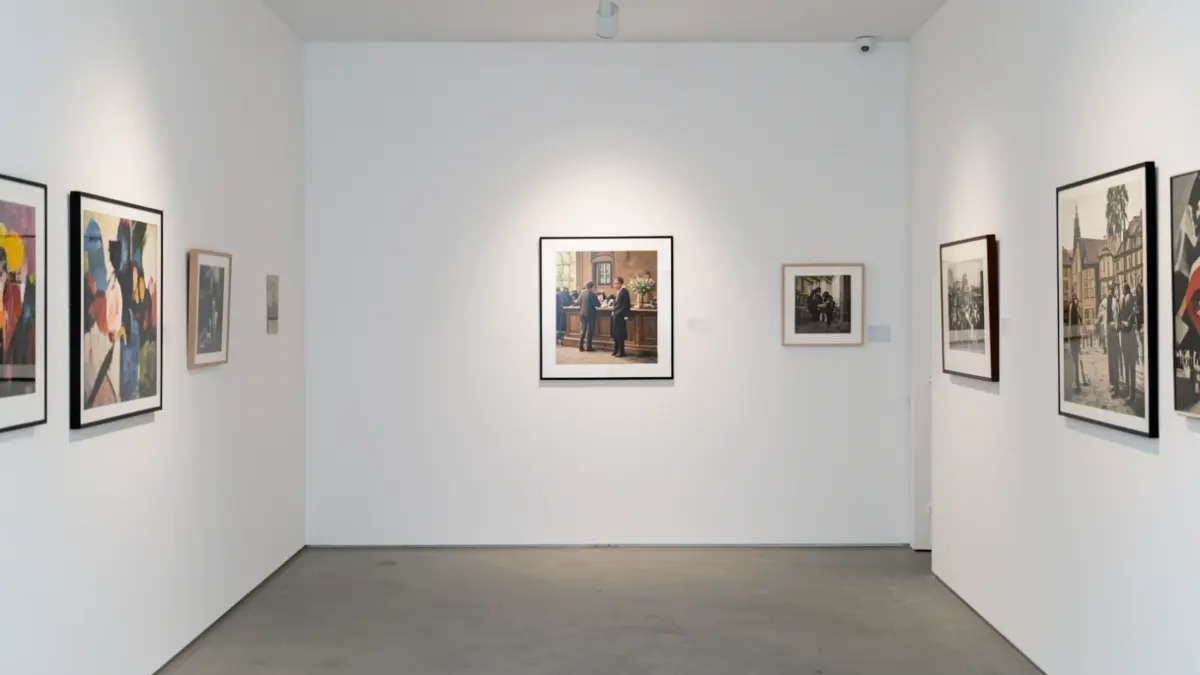
The exhibition, endowed with 2,000 euros, is an artistic production call from the UMH's Vice-Rectorate for Culture, Equality, and Diversity, aimed at graduates from Fine Arts faculties in Spain. García's work, encompassing drawing, photography, graphic art, jewelry, installation, and video projection, focuses on the consequences of the 1936 military coup. It addresses themes such as bombings of the civilian population, executions, mass graves, Republican exile, and deportation to Nazi camps, using documents and material traces to connect the past with the present.
The title, 'Meerschaum', refers to Aktion Meerschaum, a designation used by the Nazi repressive apparatus for certain arrests and deportations. García uses this idea as a metaphor for programmed disappearance and as an inverse artistic operation to recover names, traces, and historical archives. The 'Quaderns d´Art' collection will include a catalog of the exhibition.
Among the notable works are 'Krematorium', which displays a censored list of 5,159 Republicans who died in Nazi camps, and 'Exhumación n.º 1', where family members rubbed a thermosensitive surface to reveal 5,308 records of Francoist victims at El Terrer de Paterna. The series also includes pieces like 'Réquiem por la Segunda República II', a tribute to Alicantines murdered during European deportation, and a photographic archive of shrapnel marks preserved in Barcelona buildings.
Miquel García, a visual artist born in Barcelona in 1975, investigates in his artistic practice the mechanisms of memory construction and the relationships between history, power, violence, and territory. He frequently draws on archives and testimonies, reactivating them through material and symbolic operations. His career has been recognized with awards such as the Julio Antonio Sculpture Prize and the Pilar Juncosa and Sotheby's Grant. In this exhibition, García brings together several lines of research on the Civil War, Francoist repression, exile, and Republican deportation.