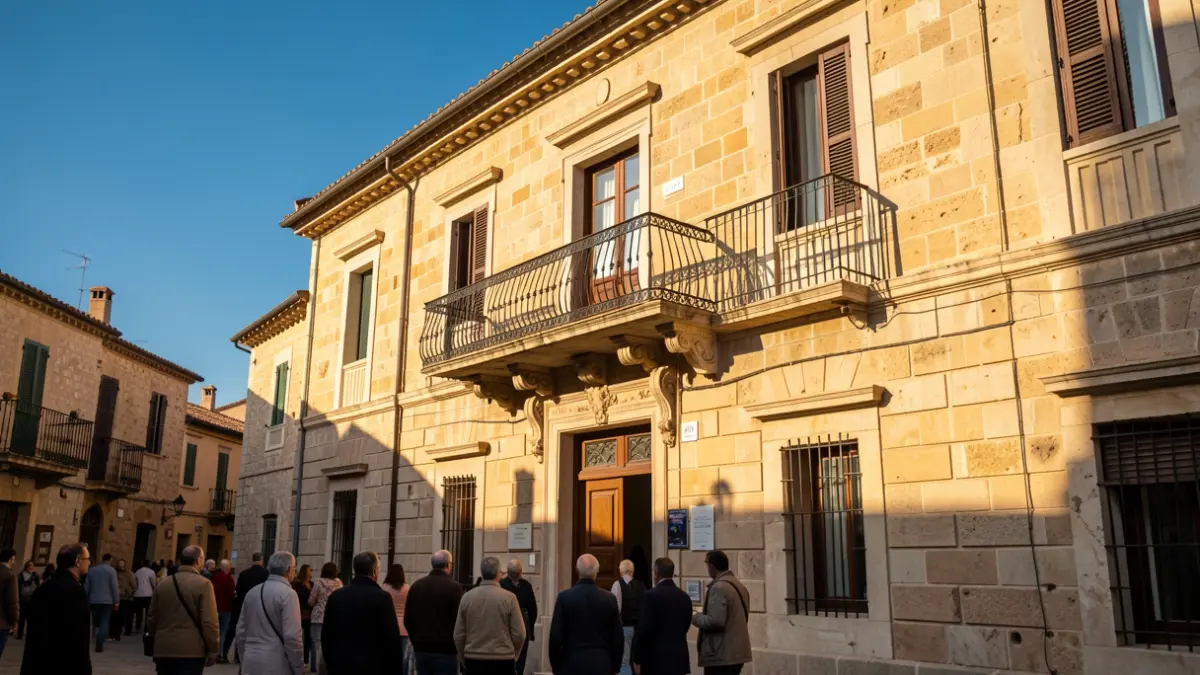
The exhibition brings together photographs, historical documents, personal objects, and testimonies to recover the stories of the victims and keep their memory alive. The mayor of Elche, Pablo Ruz, attended the inauguration, warning of the risk that the passage of time might make people forget the consequences of terrorism.
Ruz stressed the importance of transmitting what happened to new generations, stating that it is a "very serious problem for a democracy that wants to be mature" and that "it is immoral for us to forget it." He thanked the organizing entities for their work in keeping the memory of the victims alive.
The third deputy mayor, Aurora Rodil, highlighted that the exhibition constitutes "not only a display of memory, but also of tribute," and affirmed that remembering the victims is a collective obligation. "The victims never asked for revenge. Justice is simply requested," she stated.
Organized by the Center for the Memorial of Victims of Terrorism and the Foundation for Victims of Terrorism, with the collaboration of the Generalitat Valenciana and the City Council of Elche, the exhibition arrives in the city after being shown at the Orphans' College of the Civil Guard and the Nicolás Salmerón Cultural Center, in Madrid.
The president of the Foundation for Victims of Terrorism, Juan Benito, remembered the families of the murdered officers and the survivors, emphasizing that remembering the victims reaffirms democratic values and transmits what happened "with rigor, with truth, and always placing the victims at the center".
The director general of Victim Care of the Generalitat Valenciana, Francisco Javier Soler, thanked the Elche City Council for hosting the exhibition, which is part of initiatives to extend remembrance and knowledge activities throughout the territory.
The exhibition offers a journey through the lives of the twelve murdered officers, many of them young people just beginning their careers. The attack, carried out with a car bomb, caused more than sixty injuries and left a deep mark on Spanish society. Among the victims were two born in the Comunitat Valenciana: Miguel Ángel Cornejo Ros, from Burjassot, and Santiago Iglesias Godino, from Hondón de las Nieves.