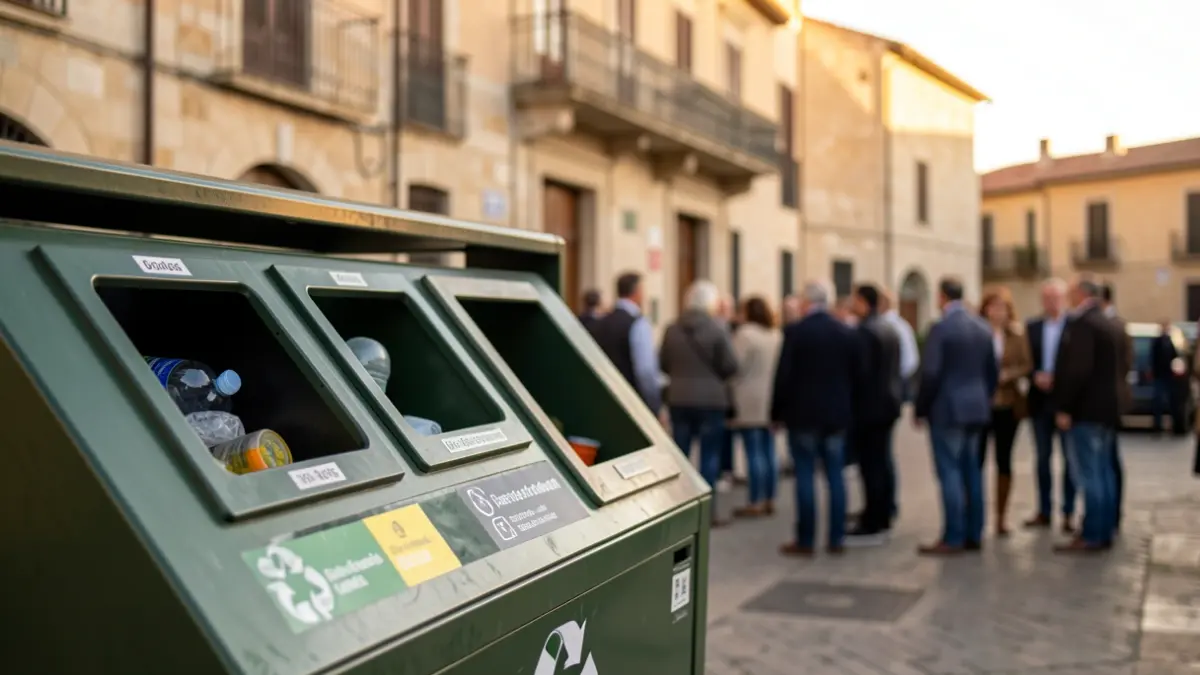
Ontinyent City Council's proposed tax ordinances for 2027 aim for a freeze on municipal taxes and fees. A notable new measure is a 20% reduction in the waste fee, lowering it from 136 to 108 euros for individuals who correctly separate their waste and meet the established requirements.
The mayor of Ontinyent, Jorge Rodríguez, explained that the proposal is guided by five principles: social protection, commitment to housing, climate change fight, rigor in measure preparation, and adherence to administrative deadlines. The 20% reduction in the waste fee, announced with the implementation of the new collection system, benefits those who separate correctly and penalizes uncivil behavior. The 108-euro tariff will apply to users who met the conditions in 2026, representing 70% of individual door-to-door users and 90% of those in community systems or closed collection areas.
The new fee differentiates between those who have correctly separated waste, those who improve their behavior, and those who continue to violate collection rules. Individuals with inadequate behavior in 2026 who participate correctly in 2027 will maintain the 136-euro tariff, while persistent offenders may see their bills increase. This fee exclusively covers the municipal waste collection and transport service, excluding the Waste Consortium's fee for treatment.
The Councilor for Finance, Juan Pablo Úbeda, detailed the technical modifications. The proposal maintains frozen property tax (IBI), vehicle tax, construction tax (ICIO), and economic activities tax (IAE), along with options for interest-free 12-month payment installments and discounts for low-income families. Regarding the IBI, the ordinance is adapted to legislative changes, specifying criteria for identifying large property holders and vacant homes. The 40% surcharge for properties vacant for at least two years remains, and a 100% surcharge is added for those vacant for over three years.
Úbeda emphasized that this measure is not for revenue generation but is part of the municipal plan to facilitate housing access, which includes support for rehabilitation, initiatives with Caixa Ontinyent, and mediation tools for property owners. The ordinance retains social discounts for vulnerable families and specific measures for large waste generators like bars and hospitals.
The Councilor for Sustainability, Sayo Gandia, added that the fee structure includes a fixed component for service costs and a variable component linked to user behavior, which can be zero for those participating correctly. Individuals opting for home composting may be exempt from the variable fee for three years. The system aims to comply with state waste regulations, requiring full cost recovery for the service while incentivizing source separation.