
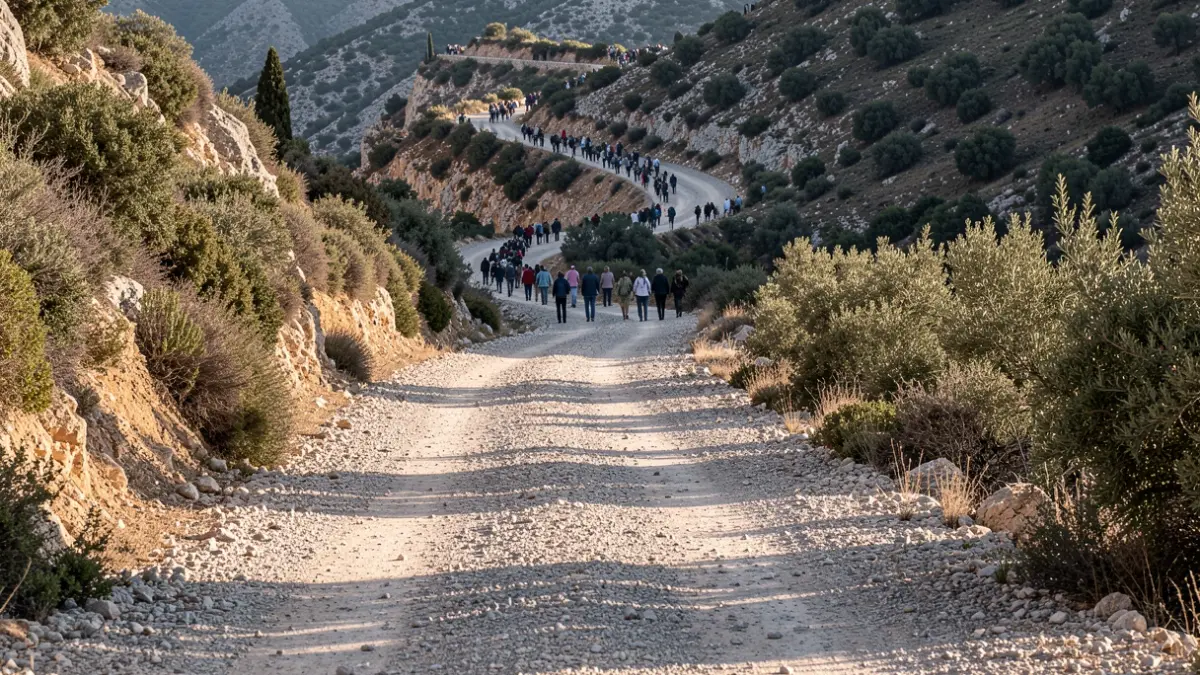
The route for the sixth stage, connecting Alcossebre and Castellón over approximately 176 kilometers, will include this challenge for Tadej Pogačar and the rest of the cyclists. The ‘sterrato’ will appear shortly before cresting the mountain, forcing riders to contend with a surface change in the final kilometers of the climb.
The term ‘sterrato’, of Italian origin, refers to unpaved roads, famously featured in races like the Strade Bianche and some stages of the Giro d'Italia. On this occasion, the uneven terrain will appear after cyclists have already conquered the climbs of La Serratella and La Bandereta.
El Bartolo has a profile of 9.4 kilometers with an average gradient of 7.1% and an elevation gain of 657 meters. Its summit is located just over 20 kilometers from the finish line in Castellón, making the dirt section a key point that could create significant differences in the general classification.
The Vuelta organization highlights this section as one of the stage's unique elements, anticipating it could become an iconic cycling venue. The main question is what gaps this dirt passage might create, especially with a rider like Tadej Pogačar, who is in excellent form after his performance in the Andorra stage.