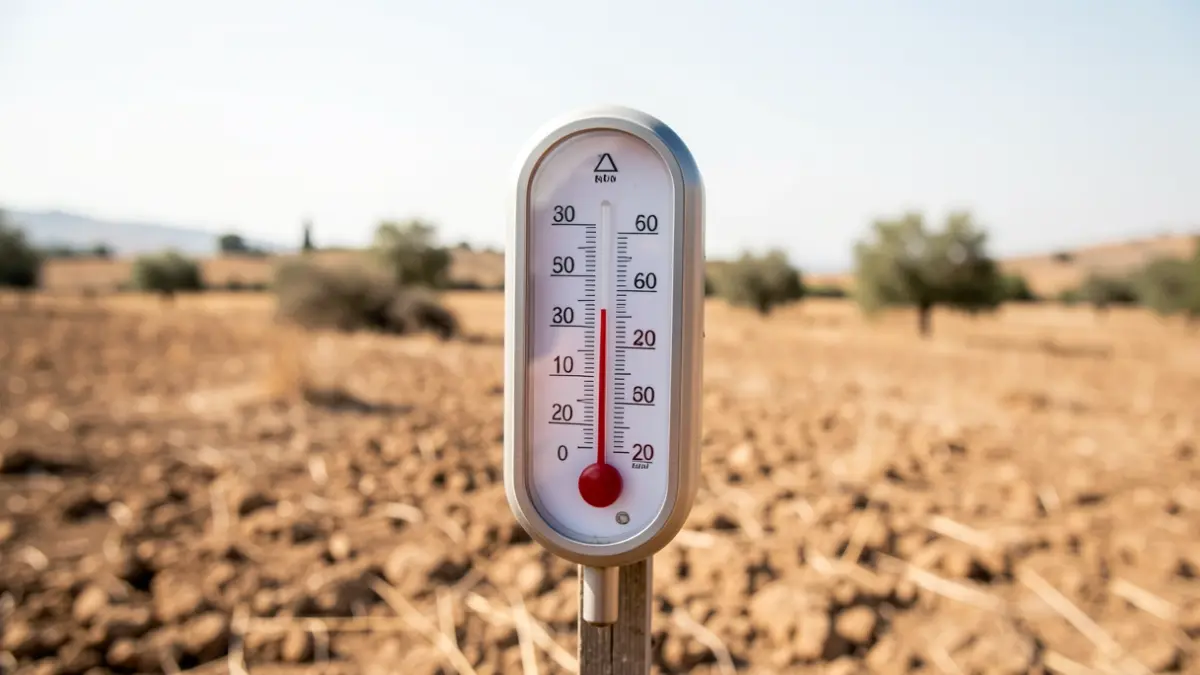
The first half of the 2026 meteorological summer has been described as unusual by the State Meteorological Agency (Aemet), which deems it the "warmest in the historical series" in Spain. The thermal anomaly has been 3.3 degrees above the average between 1991 and 2020, surpassing previous periods. Practically every day has registered temperatures above the normal average.
The Valencian Community has suffered four warm spells since June 1st, including two heatwaves (from June 21st to 24th and from July 6th to 9th). This amounts to seven days of extreme and persistent heat, three of them with active red alerts. This circumstance is unusual, as only in 2022 had two heatwaves been recorded before July 15th. In total, only 13 heatwaves have occurred before the midpoint of the meteorological summer in the Valencian Community, eight of which have taken place in the last decade, highlighting the intensification of heat in the Mediterranean.
Another historical event was the maximum temperature of 44.8 degrees Celsius recorded in Carcaixent on July 7th, the highest in Europe, surpassing the previous record of 44.2 degrees from 2015. The following day, Xàtiva registered 43.9 degrees, being the highest value in Europe for the second consecutive day. The city experienced three consecutive days with maximums above 43 degrees, an event described as "extraordinary" by Aemet.
The impact of extreme heat on the population has resulted in an excess mortality of 207 cases attributable to high temperatures, according to the System for Monitoring Daily Mortality (MoMo) of the Carlos III Health Institute. This figure is almost half of that recorded in 2025, the deadliest summer in history.
Experts indicate that the Mediterranean climate is changing at a rate 20% faster than in the rest of the planet. Climate change is also behind the weakening of the sea breeze, which has decreased by 11% since 1981 and an additional 4% during heatwaves. This phenomenon is attributed to the persistence of anticyclonic ridges, the entry of continental tropical air from the Sahara, and the heatwaves themselves.
The first month and a half of summer concluded with a red alert across the entire coast of Valencia province, with a maximum temperature of 44.4 degrees in Ontinyent. The thermal sensation reached 52 degrees in Carlet due to humidity. Despite isolated storms and intense wind recorded, there were no significant incidents.
For the coming days, heat is expected to continue to affect the interior of Valencia and southern Alicante, with orange alerts for maximums around 40 degrees Celsius. "Locally strong storms" are also predicted in Valencia. As the weekend approaches, maximum temperatures will slightly decrease, but a new thermal surge is expected at the beginning of the following week.