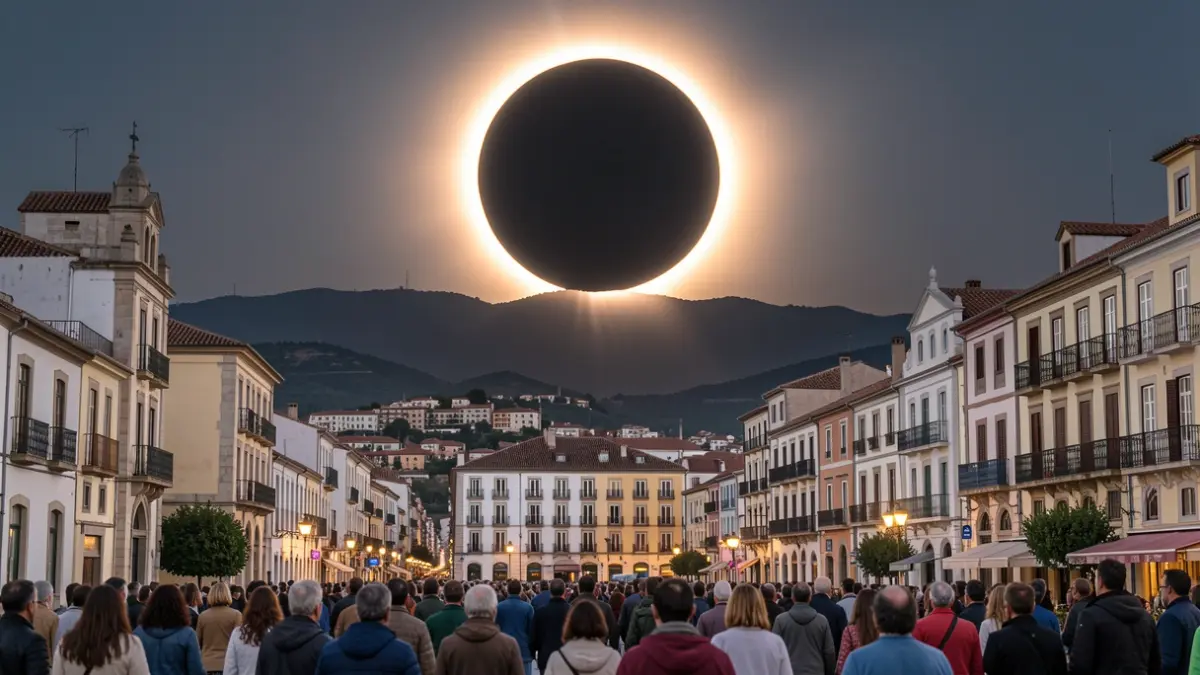
For one minute and thirty-five seconds, the city of Castellón was able to enjoy a total solar eclipse at 8:28 PM on August 12th. This event, not witnessed in the Valencian Community since 1905, occurs on average once every 300 years, and experts predict it won't be seen again across the entire autonomous territory until 2180.
Expectation was at its peak, leading to a technical full house in the province, with all 25,000 available beds occupied, according to Miguel March, representative of the Valencian Community Business Association of Hotels and Tourism (Hosbec). However, March clarifies that the tourism market was similar to any other August month, as the event coincided with the peak week of the high season. The main beneficiaries of the phenomenon were, according to March, the bars and restaurants.
Internationally, Japanese and North American tourists were the ones who most booked hotel rooms, according to Yolanda González, from the Provincial Association of Hospitality and Tourism Entrepreneurs (Ashotur). Additionally, a community of eclipse chasers was detected, mainly Japanese, who book well in advance in locations where good visibility is expected. In campsites, the French market was dominant, although domestic visitors remain the primary segment.
Benassal, Onda, Peñíscola, and Castellón were the official observation points designated by the Generalitat Valenciana, which estimated a maximum capacity of 68,000 people distributed to avoid crowds and incidents.
Beyond the eclipse, numerous City Councils organized complementary activities. Castellón set up stages and food trucks, featuring science communicators like Javier Santaolalla and Josep Calatayud. In Benicàssim, Enrico Grossi, president of Adepla, celebrated the success of the promotion campaign, with concerts and special activities at the beach bars. Onda transformed the Castle of the 300 Towers into a balcony for scientific dissemination and quality tourism, with a special security and accessibility plan.