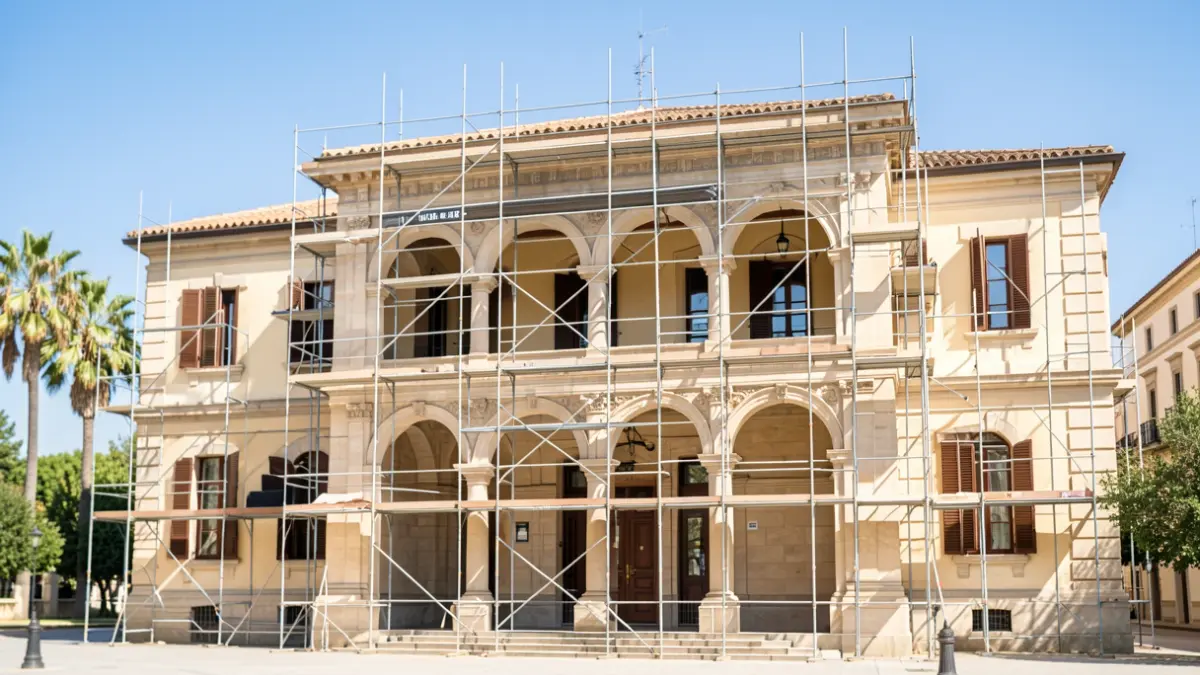
The Castelló City Council plenary session has taken steps towards the reform of the Pérgola, located in Parc Ribalta. The process to modify the building's record in the General Plan has begun, with the goal of its rehabilitation. Final approval will rest with the Territorial Commission of Urban Planning of the Generalitat Valenciana, but the council will submit the documentation for public information for 45 days. The project is funded by the European Union and aims to transform the property into a space for citizen activities, congresses, or professional meetings.
The approval has caused disagreements among the groups. The PP and Vox voted in favor, while the PSOE and Compromís opposed it. PP councilor Vicent Sales criticized the previous progressive government, stating that the reform's paralysis led to a compensation of nearly 60,000 euros to the awarded company. Sales recalled that the previous executive proposed demolition, whereas now the intention is to adapt and rehabilitate the building with authorization from the Conselleria de Cultura. Vox councilor Arantxa Miralles highlighted that the modification removes the Pérgola's classification as an inappropriate element for the park and advocates for its preservation and modernization for citizen use.
For their part, Compromís spokesperson Ignasi Garcia expressed concern over the heritage value of Parc Ribalta and questioned the urban planning model. Socialist councilor José Luis López explained the 'no' vote, arguing that the original record classified the building as inappropriate, that the modification alters the park's heritage values, and that there was insufficient dialogue or consensus. He also warned that this decision could set a dangerous precedent.
In other matters, the plenary unanimously approved Castelló's request to join the Spanish Association of Destinations for the Promotion of Gastronomic Tourism, aiming to boost the gastronomy of La Plana. This decision is part of a credit modification amounting to 3,059,473.12 euros.
The fight against asbestos and fires also united the council. The creation of the Municipal Plan Castelló without Asbestos was unanimously approved, along with an institutional declaration calling for aid for asbestos removal in various buildings and operations. Councilors such as Vera Bou (Compromís), Mónica Barabás (PSOE), and Sergio Toledo (PP) emphasized the importance of protecting public health.
Finally, unanimous approval was given to guarantee the labor rights of parcel and courier delivery workers, and the Spanish Government and the Generalitat were urged to strengthen the fight against fires. The mayor of Castelló, Begoña Carrasco, began the session by expressing support for residents affected by a recent fire and thanking the institutions and security forces.