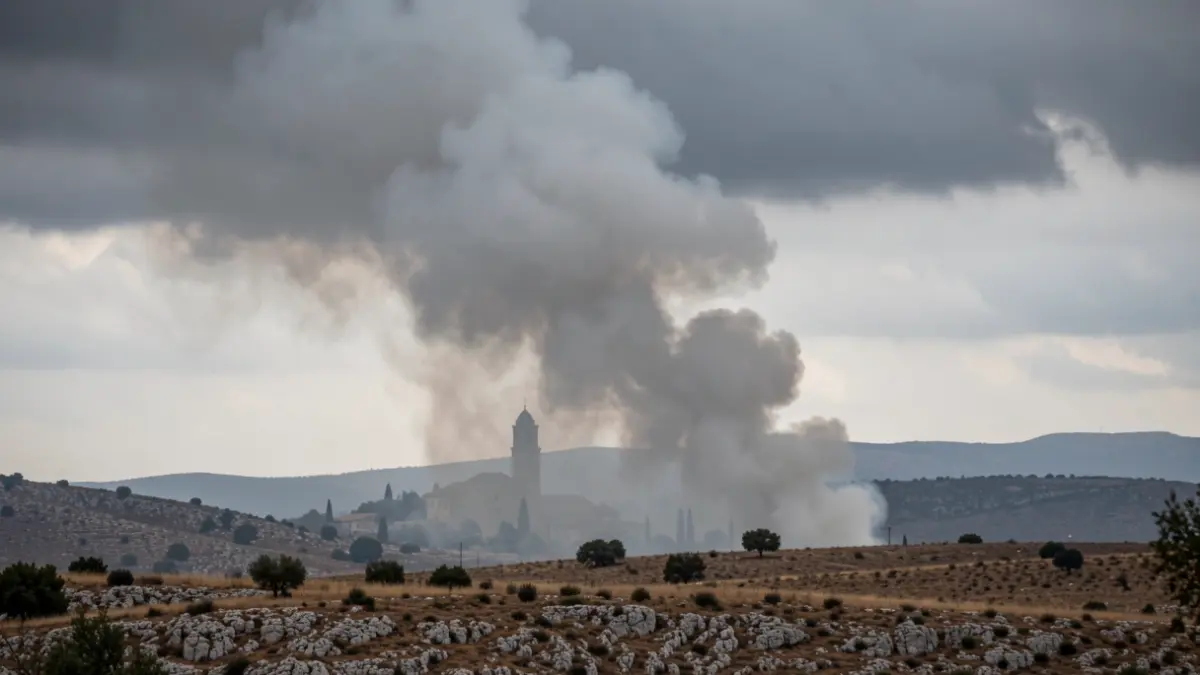
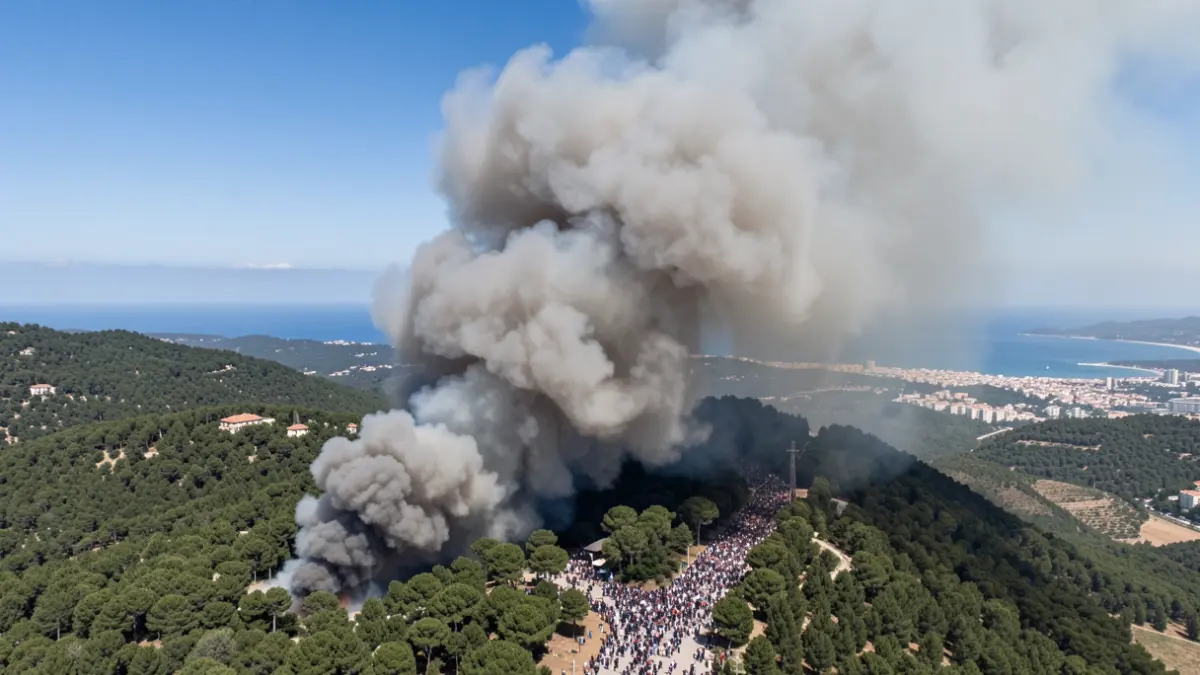
The dense haze produced by the third day of active fire in Vall d'Uixó is spreading across the north of the Valencian Community, with a notable expansion towards coastal areas, affecting air quality. The lack of wind yesterday caused the smoke to occupy the lower atmospheric layers, reaching highways like the A-7 and AP-7. Images captured by the Sentinel 3 satellite show the advance of the haze.
The extinction team insists that, despite the lack of flames in many areas, the incandescent ground continues to produce smoke and heat. The Conseller of Emergencies, Juan Carlos Valderrama, is optimistic about the extinction, highlighting the positive meteorological conditions during the night, although the expected humidity level was not reached.
Authorities urge maximum caution from residents, as the fire remains active and uncontained. The head of the operation, Fernando Pérez, warns that the sense of calm may be deceptive, as the fire has growth potential if thermal conditions change. Ground resources have been reinforced to contain the flames.
The Sentinel satellite has also captured active fires in the provinces of Madrid, Ávila, and Toledo. These fires, active since last Friday, are advancing slowly and complicated by strong wind gusts. The Ministry of Health recommends confinement and the use of an FFP2/95 mask and protective goggles if going outdoors is necessary.