
Valencian extensive livestock farming is undergoing a technological transition, with the initial implementation of 'virtual fencing'. This process is affected by a generational gap and connectivity limitations in certain areas, posing a challenge for managing the vast amount of data generated by devices and for shepherds and farmers. Furthermore, key questions arise regarding technologies that can promote the social sustainability of grazing and the environmental sustainability of landscapes, crucial elements for the future of rural life.
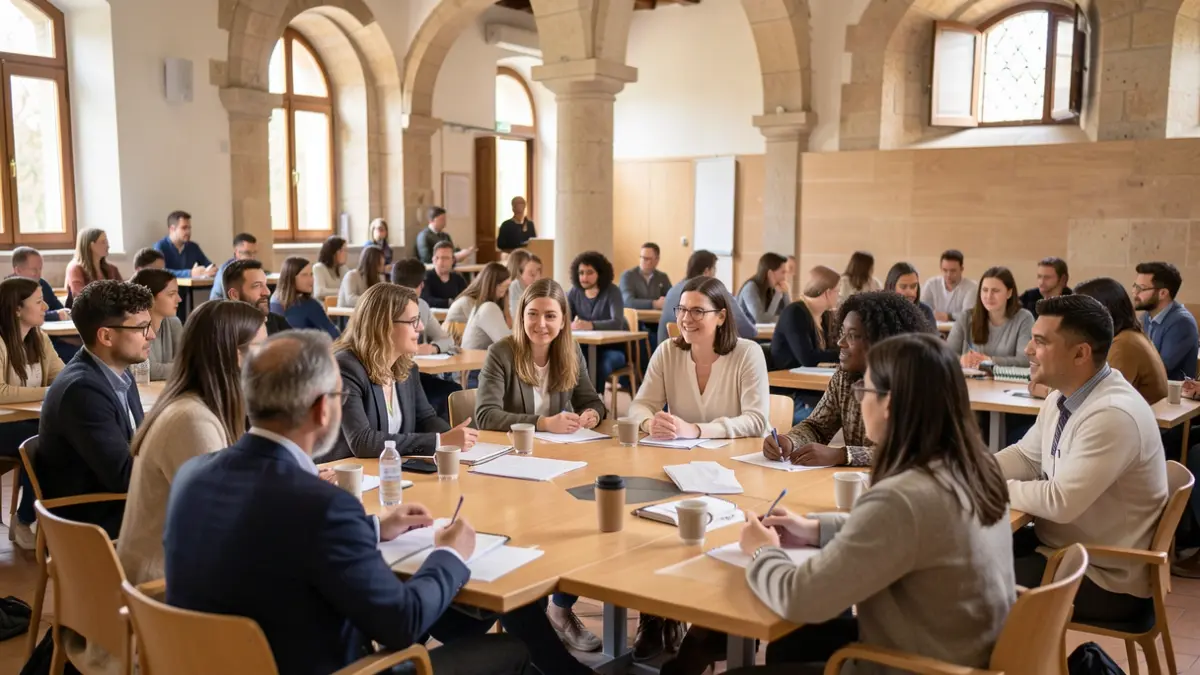
These conclusions were drawn from the conference 'The digitalization of extensive Valencian livestock farming: a critical approach from the digital divide and territory', held at the Higher School of Technology and Experimental Sciences (ESTCE) of the Universitat Jaume I (UJI). The event, organized by the Chair of Digital Divide and Territory of the UJI in collaboration with the Generalitat Valenciana (through the Observatory of the Digital Divide), brought together researchers, institutional representatives, and specialists to discuss the impact of technological transformation on the extensive livestock sector and the inequalities it may generate in rural areas.
In the opening session, Modesto Fabra, UJI's delegate for Digital Strategy and Artificial Intelligence, emphasized the importance of ensuring that digitalization 'leaves no one behind', recalling that livestock farming, despite fixing population and boosting the rural economy, often falls outside digitalization agendas. Meanwhile, the regional secretary for Innovation, Eduardo Pascual, advocated for adapting digital solutions to the rural environment to reduce inequalities and improve the competitiveness of extensive livestock farming, noting that 'having access to technology does not necessarily mean having the capacity, knowledge, or resources to leverage it'.
Researcher Arantxa Villagrá (CITA-IVIA) presented the evolution of digitalization in extensive livestock farming, detailing the applications of geodigitalization and sensorization for livestock management, aiming to support decision-making.
Finally, Vicent Querol, co-director of the Chair, reviewed the Chair's trajectory, while researchers Raül Beltran and Joan Sanfèlix presented preliminary results from a study on the potential and limitations of 'virtual fencing'. The report aims to ensure that digital transition policies do not penalize small producers and foster technological sovereignty, enabling Valencian rural municipalities to maintain their decision-making capacity and population retention.