
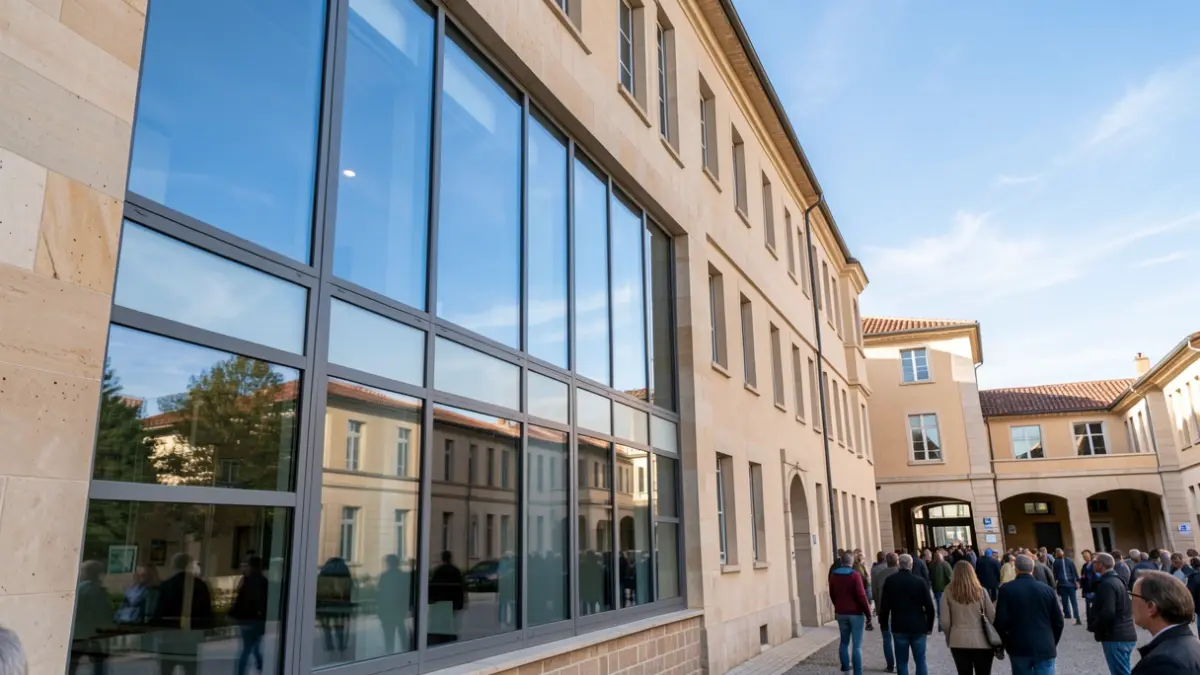
The session was inaugurated by the Vice-Rector for Degrees, Internationalization, and Multilingualism, Pilar Ezpeleta Piorno, who highlighted that «European cooperation goes beyond universities. It is an opportunity to connect knowledge with the needs of society as a whole». Ezpeleta emphasized the importance of offering European values and principles to build joint responses to challenges such as digitalization, sustainability, employability, and social inclusion.
The Vice-Rector presented a balance of UJI's participation in the Erasmus+ program. Since 2021, 215 applications for cooperation actions have been submitted, with a notable increase in the annual number of proposals. Of those submitted between 2021 and 2025, 32 have received funding, and this year 10 new proposals have been approved, pointing towards projects of greater strategic scope in an increasingly competitive context.
Special attention was given to EDUC (European Digital UniverCity), the university alliance of which UJI has been a part since 2022. This alliance, bringing together eight universities from seven countries, has secured new funding of approximately 4.27 million euros for the next two years, ensuring the continuation of cooperation until 2028 and promoting new formats of teaching, digital education, and joint degrees.
The forum included contributions from Joakim P. Berg, Senior European Adviser at the Oslo Region European Office, on the transversal priorities of Erasmus+ for 2027, and advice on developing competitive proposals from Rubén García, project manager at INIT-UJI. UJI researchers such as Inmaculada Remolar, Linda García, Javier Sánchez-García, and Lluis Callarisa presented success stories of Erasmus+ projects.
Jakub Grodecki, Head of Higher Education Policy at EURASHE, concluded the program with a session on «The Future of Erasmus+ 2028-2034», encouraging attendees to use the 2027 Erasmus+ calls as a pilot and preparation for the upcoming financial period.
Vice-Rector Pilar Ezpeleta closed the event, summarizing UJI's commitment to Erasmus+ as a means to build «more open, more connected, more inclusive, and more European universities and societies», looking ahead to the 2028-2034 period.