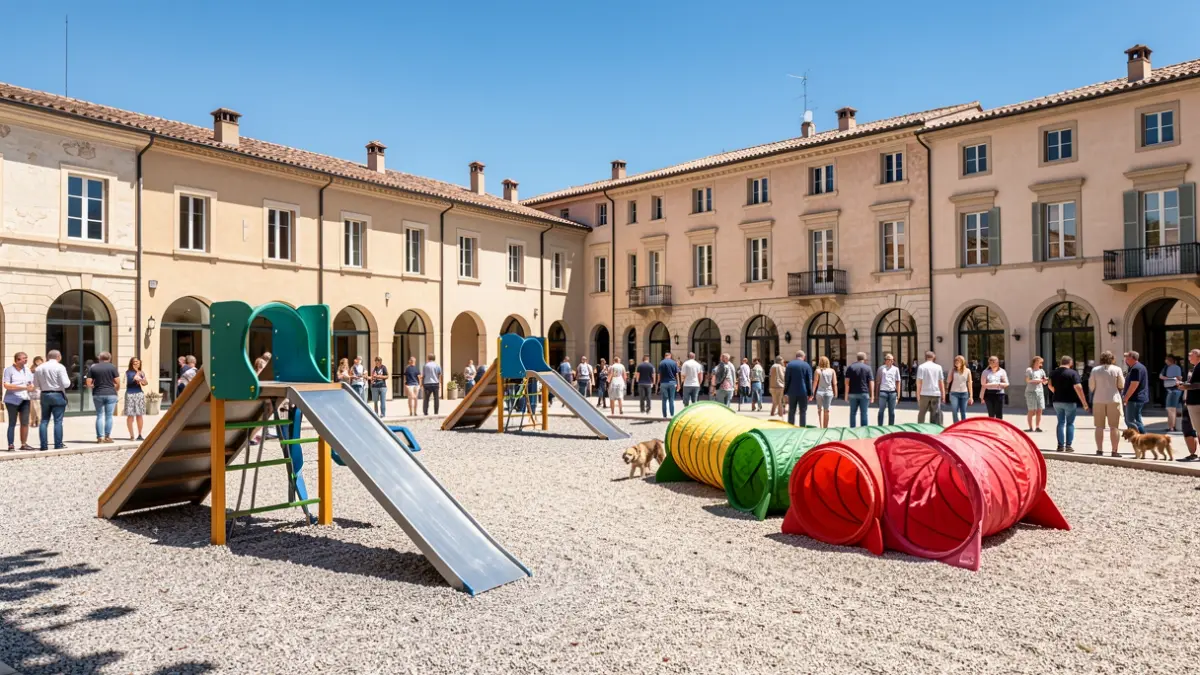
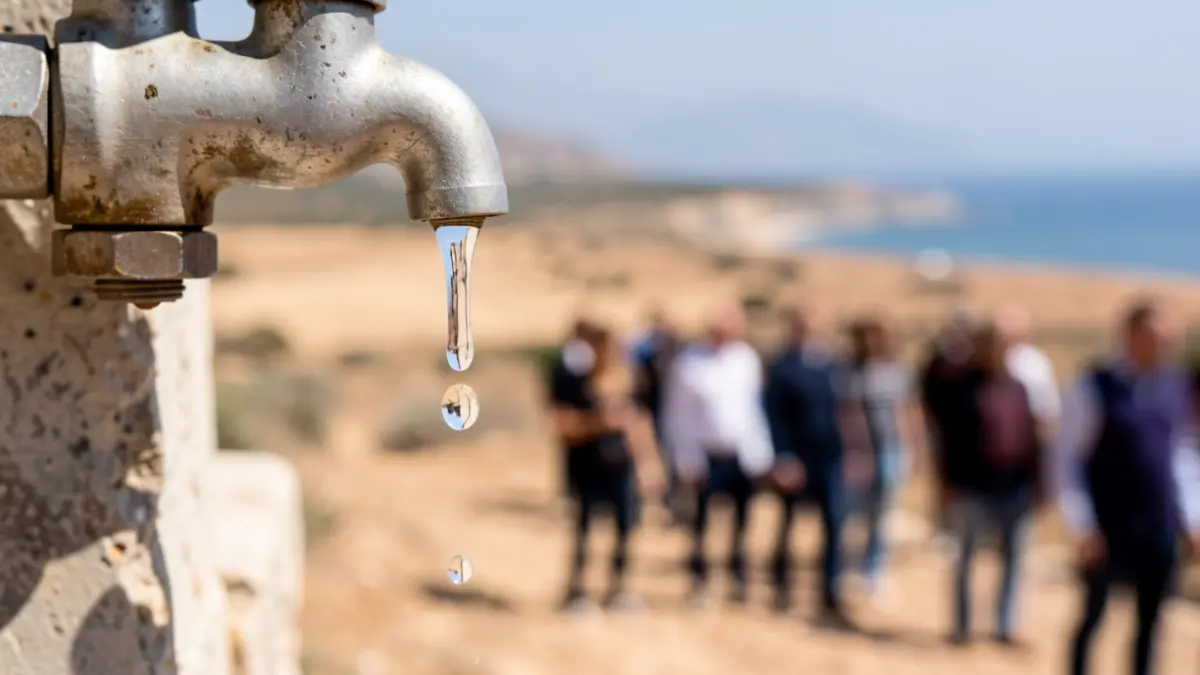
The Plaza de la Constitución in Dénia was the setting where the mayor, Vicent Grimalt, spoke at the panel “Water Management in the Mediterranean Arc: Valencian Community, Region of Murcia, and the Balearic Islands”. At this meeting, public officials discussed water resource scarcity, tourism pressure, and infrastructure adaptation.
Grimalt emphasized that Dénia's General Plan is based on the premise that the city's growth must align with available water resources. “Water conditions our present, but above all, we must guarantee it thinking about the city we want to be in the future,” he stated.
This challenge is exacerbated by the municipality's high seasonality, as its population can increase from 50,000 inhabitants to over 200,000 during the summer. This multiplies demand and requires sizing and managing the service to respond during periods of highest consumption, which include nearly 500 kilometers of supply network and about 150 kilometers of sewage system.
Looking ahead, the mayor proposed diversifying water resources as a key strategy to enhance supply security. In this regard, he advocated for the future incorporation of desalinated seawater as a complementary resource. “We need a diversified supply, with different available resources, that gives us full guarantee even in periods of highest demand,” he explained.
Grimalt also highlighted the joint management with Aqualia since 1992, which has allowed for service improvements and addressing the needs of a city with variable demand. “Today we can speak of a situation of greater tranquility, and my commitment is that the difficulties we have experienced in the past do not happen again,” he affirmed.
The mixed-company model was highlighted as a key tool to combine the private partner's knowledge with the local administration's participation. “The mixed company provides us with direct communication and shared decision-making capacity,” he stressed, allowing for investments and financing without excessive impact on citizen bills.
Digitalization is another fundamental pillar, with 100% of Dénia's meters equipped with remote reading. This technology improves efficiency and facilitates a more agile relationship with users, allowing for the detection of anomalous situations and better decision-making.
The Spain Smart Water Summit panel also included participation from Rafael Triguero (Mayor of Ibiza), José Sandoval Moreno (Director General of Water for the Region of Murcia), Cristina Sola (Water Commissioner of the Júcar Hydrographic Confederation), and Pedro Ángel Roca (Mayor of Torre Pacheco).
Grimalt concluded his speech by emphasizing the need for anticipation: “The best way to guarantee the water of the future is to prevent today the problems that could arise tomorrow.”