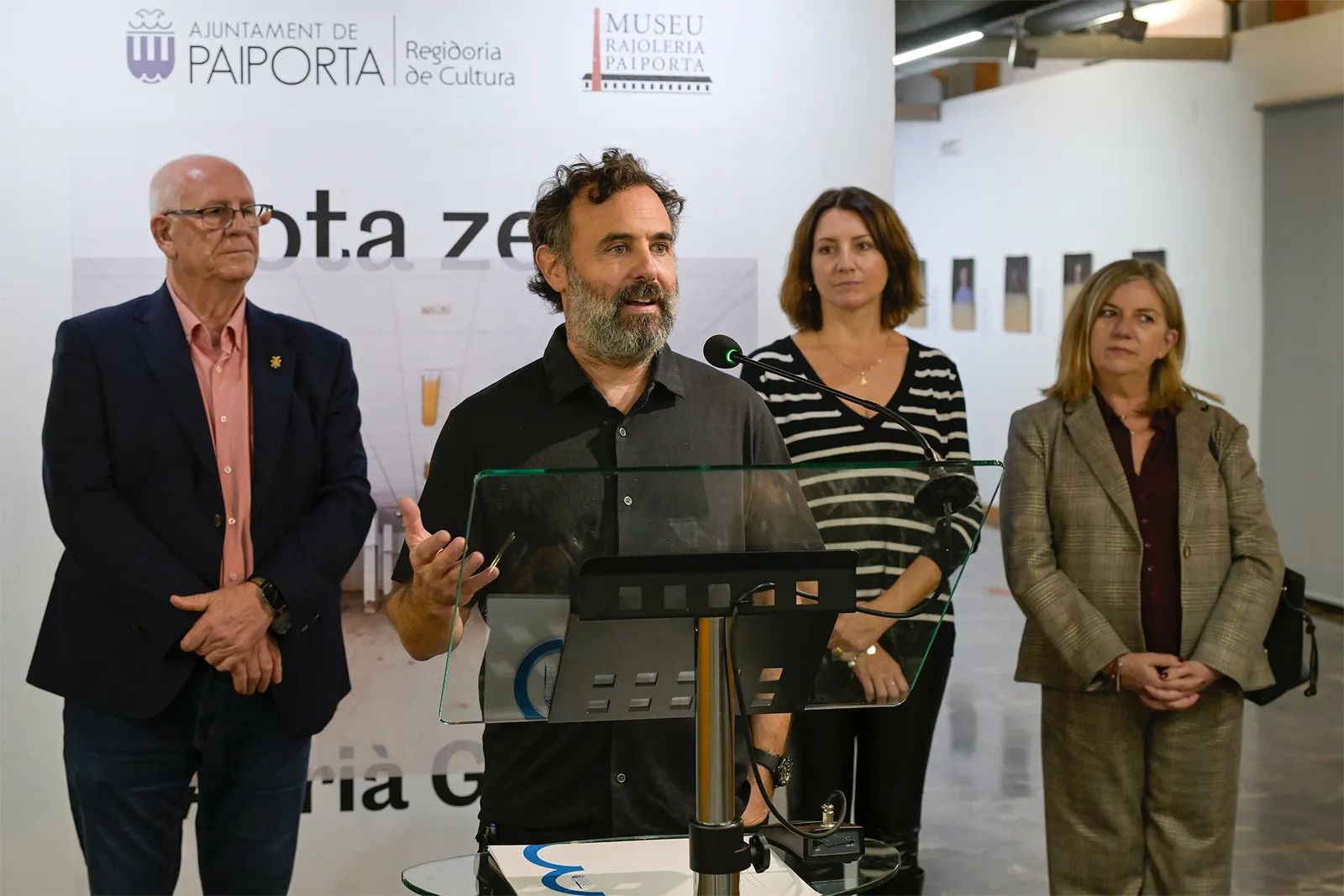
The exhibition, by photographer and architect Adrià Goula, will be open until November 21st and offers an artistic and human perspective on the traces left by the flood, both on buildings and on the affected people.
The project is based on the physical mark that indicated the water level, a footprint that also exists in the people who lived through that day but is not always visible. The Councilor for Culture, Esther Torrijos, highlighted that the exhibition is "a space for memory, reflection, and recognition" that gives voice to the stories of those affected.
The mayor, Vicent Ciscar, pointed out that, unlike the marks on the walls, people retain memories, fear, and experiences, and that the exhibition shows the emotional wound and the invisible mark that the DANA left on many residents.
The exhibition consists of two photographic series. The first documents the affected areas and the water marks, while the second focuses on people and the consequences of the experience. To make the inner wound visible, Adrià Goula has intervened the photographic prints with mud recovered from the flood, thus connecting the wounds of the buildings with those of the people.
Adrià Goula, an architect by training, combines architectural photography with multidisciplinary personal projects exploring memory and the relationship between built spaces and their environment. His career has been recognized with awards such as the Golden Lion at the Venice Architecture Biennale in 2016.