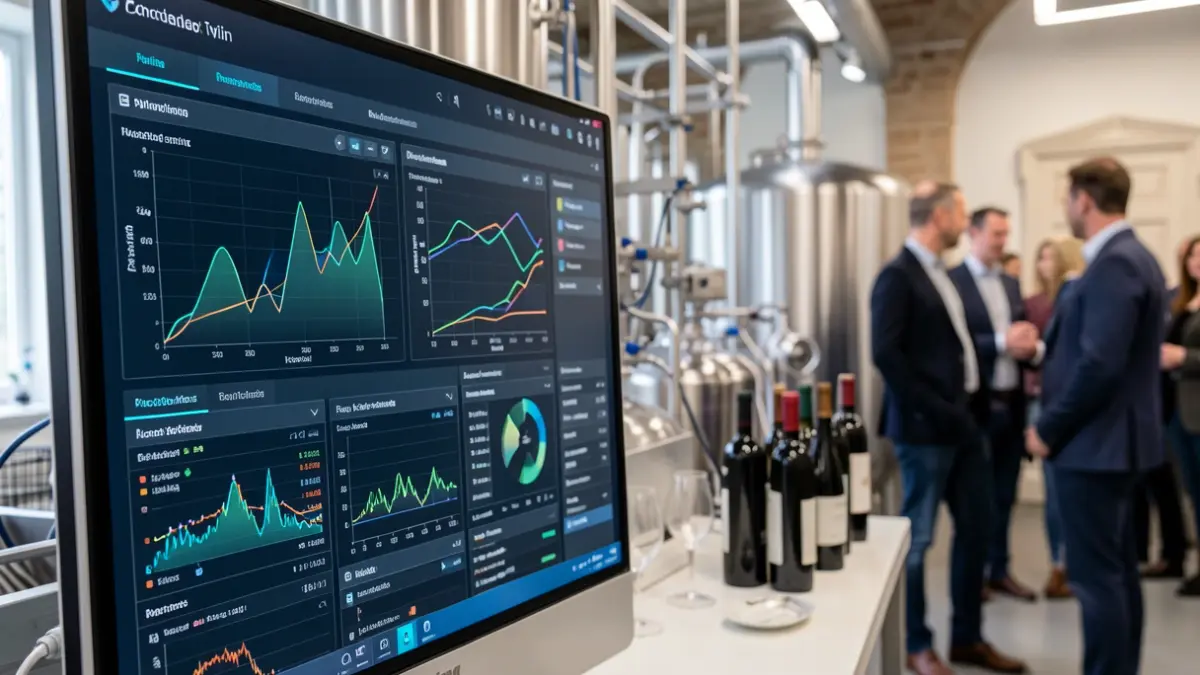
This public-private collaboration initiative aims to advance towards more precise, sustainable, and competitive wine production. Fermentation is a key stage in winemaking, and the project seeks to enhance predictive capabilities, real-time monitoring, and variable optimization, which currently rely heavily on empirical expertise.
The digital twin will integrate real fermentation process data with computational models and artificial intelligence algorithms. This will enable anticipation of fermentation evolution, monitoring of its development, and support for decision-making. According to Amparo Querol, researcher at IATA-CSIC and scientific lead for the project, advanced tools are necessary to address challenges posed by climate change and international market competition.
VINPRECISE will focus on four lines of innovation: a predictive model for aromatic profile, the design of an intelligent sensor network (NIR spectroscopy and electronic nose), process optimization and automation through algorithms, and the industrial validation and scalability of the solutions.
The project is led by Bodegas Ramón Bilbao and involves IATA-CSIC, the Instituto de Investigaciones Marinas (IIM-CSIC), Bodegas Roda, Lallemand Bio, INCONEF, and the University of Zaragoza. This collaboration combines scientific and technological capabilities with industrial experience for knowledge transfer.
With an expected duration of 36 months, VINPRECISE is part of the public-private collaboration project call from the State Research Agency (AEI). The ultimate goal is to improve process control, optimize the use of raw materials and resources, reduce energy consumption, and promote more efficient and sustainable production in the wine sector.