
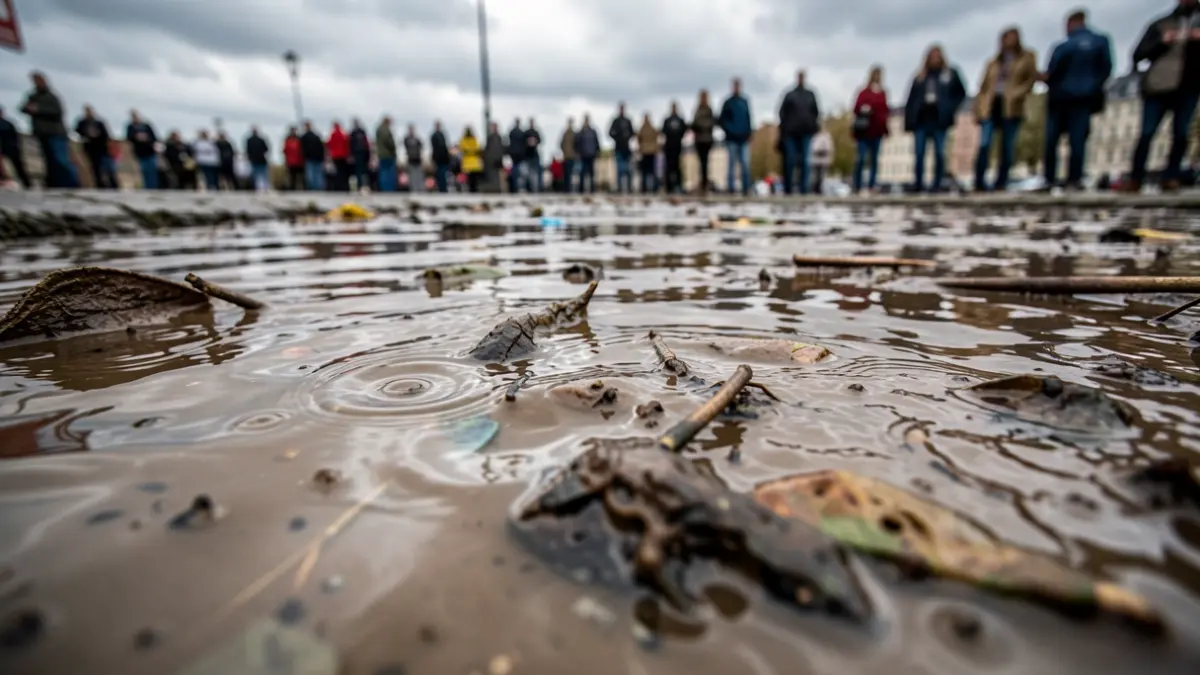
The floods caused by the DANA on October 29, 2024, left a significant environmental footprint on L'Albufera and its surroundings. Although the situation improved over time, six months later, signs of fecal and chemical contamination derived from the floods and the collapse of sanitation infrastructure were still detected. This is highlighted by a study from the Spanish National Research Council (CSIC).
The research, led by the Center for Edafology and Applied Biology of Segura (CEBAS-CSIC) and the Institute of Agrochemistry and Food Technology (IATA-CSIC), shows that analyzing only the water is insufficient to assess an ecosystem's recovery. It is also necessary to study the sediments, which can act as contaminant reservoirs.
As a consequence of the flood, failures occurred in treatment plants and sewage networks, releasing large amounts of untreated wastewater into the environment. The study monitored for six months the impact of these discharges on the water quality and sediments of L'Albufera Natural Park and the Poyo and Picassent ravines. Microbiological analyses detected an immediate increase in fecal contamination indicators, such as Escherichia coli and certain enteric viruses.
“"These results confirmed a significant input of wastewater after the floods. Although contamination levels decreased over time, several indicators remained higher than normal six months later."
Another conclusion is that the recovery was uneven. Surface water quality showed partial recovery, but sediments retained localized contamination hotspots that could be remobilized by new rainfall and flood events.
Although general chemical contamination was at low to moderate levels by the end of the study, specific points with higher contaminant accumulation were identified, particularly in areas influenced by urban and agricultural activity along the Poyo ravine. The work, published in the Journal of Hazardous Materials, demonstrates the vulnerability of Mediterranean wetlands like L'Albufera to extreme weather events.
Furthermore, a complementary study analyzed the presence of microplastics and microbiological contaminants in sediment and dust samples. Results indicate that dust concentrated more microplastics, while sediments accumulated more potentially dangerous microorganisms, such as Salmonella spp. and E. coli.
“"The work highlights that floods not only displace contaminants but can also redistribute them among different environmental compartments, creating exposure pathways for people and ecosystems."
The CSIC activated the Disaster and Emergency Advisory Group (GADE) to support response and reconstruction efforts with scientific and technical knowledge. Since then, it has provided support through environmental monitoring projects and developed practical solutions, such as a thickening agent for mud removal and a new treatment to eliminate mold from affected homes.