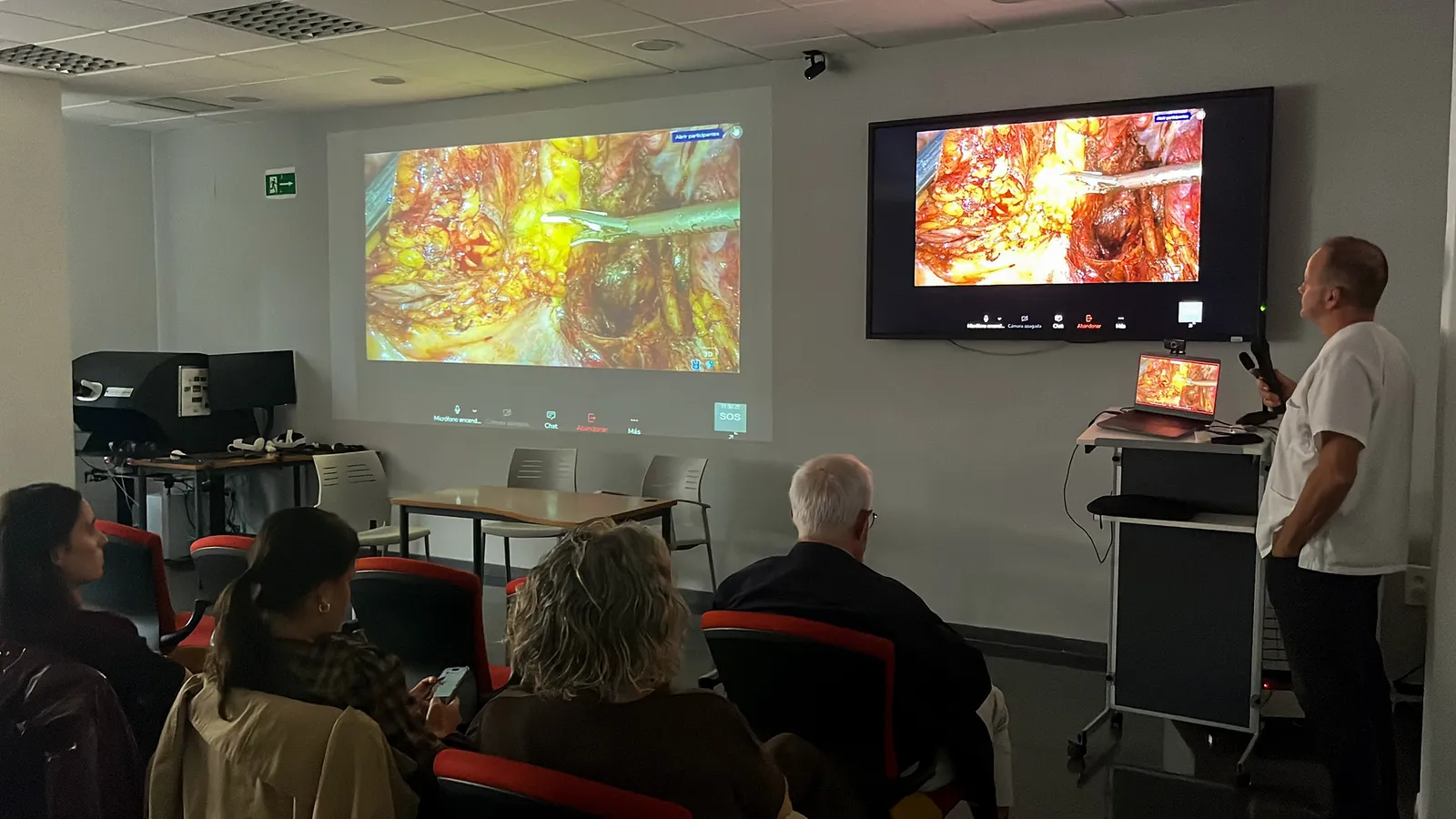
The conference, organized by the Chair of Robotic and Advanced Surgery in collaboration with the University of Valencia, addressed technological advancements in this field. The highlight of the event was the live connection to two surgical interventions performed at hospitals in Rome (Italy) and Elche (Alicante).
The assistant medical deputy director, Altea Esteve, inaugurated the conference, emphasizing the evolution of robotic technology and its practical application. Esteve recalled that the General Hospital of Valencia was the first public center in the Valencian Community to use robotic surgery and highlighted the benefits for patients, such as increased precision and better recovery.
From the Gemelli University Hospital in Rome, a complex deep endometriosis surgery directed by specialist Giorgia Gaia was broadcast. The intervention, which required the coordination of four specialties, was performed using the HUGO RAS robotic system. The transmission utilized the DS-1 platform, allowing real-time monitoring and knowledge exchange with the head of the Obstetrics and Gynecology Service, Juan Gilabert.
The conference also included a robotic pelvic floor surgery from the University Hospital of Elche and a presentation by Antonio Arroyo (Miguel Hernández University) on the implementation of the HUGO RAS system and its results.
Juan Gilabert discussed the possibilities of artificial intelligence, virtual reality, and telesurgery in minimally invasive surgery, highlighting how AI can improve diagnosis and planning. He also mentioned the hospital's collaboration with research centers for innovation.
The event concluded with a debate panel on communication technologies applied to robotic surgery and a presentation of the Master's in Robotic Surgery from the University of Valencia by Eva García del Olmo. The final round table addressed the implementation of telesurgery with the participation of Enrique Artigues and Emilio López.