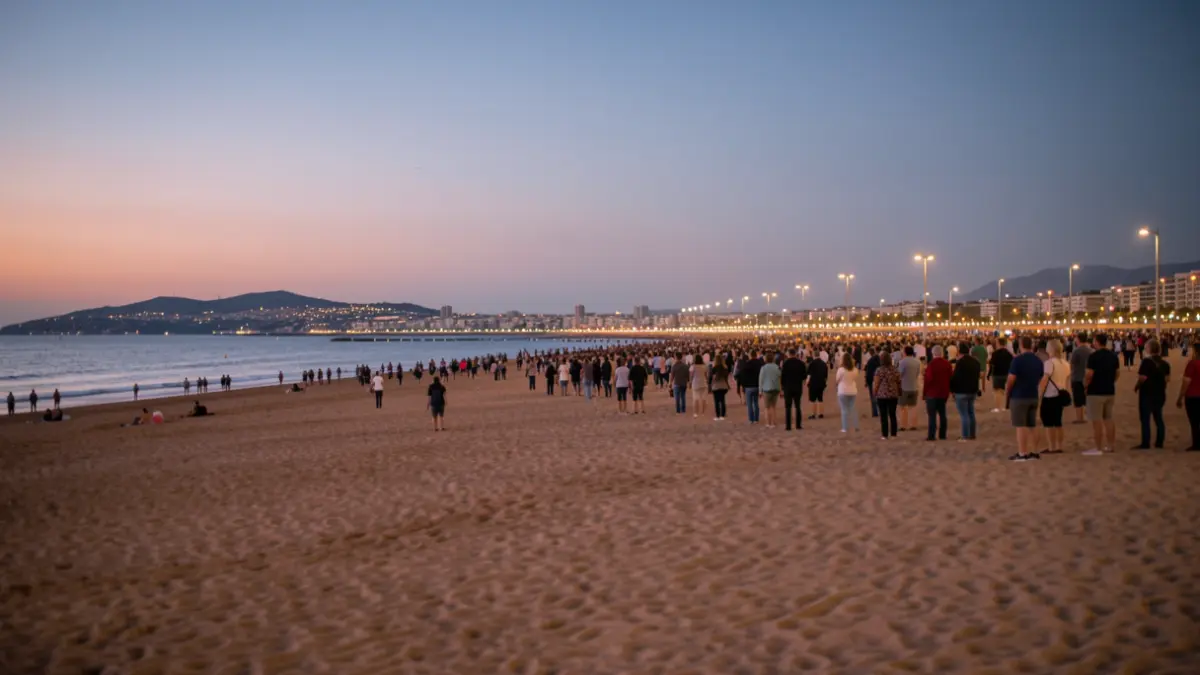
The citizens of Valencia experienced the recent solar eclipse with notable tranquility and civility, as highlighted by the mayor, María José Catalá. The city council deployed an operation with over two hundred people, planned for months, which ensured the event's smooth running, especially in the La Malva-rosa area.
It is estimated that around 50,000 people attended the official observation point at La Malva-rosa beach, and approximately 900 more opted for the Gola del Pujol pier. Local Police and Valencia Firefighters reported no significant incidents, and Civil Protection had to evacuate twenty people from the El Saler forest due to high fire risk.
Traffic management was effective, with the closure of the CV-500 from six in the evening to control access to the L’Albufera Natural Park, and the road reopened without incident at 9 PM. The Municipal Transport Company (EMT) Valencia reinforced lines towards El Saler and Tarongers avenue to facilitate attendees' return.
The Red Cross provided twelve minor medical assists, with no hospital transfers, during a night they described as "calm." Regarding waste, the Valencia City Council collected 7.2 tons from the beaches of La Malva-rosa, El Cabanyal, Pinedo, and El Perellonet, a significantly lower figure than during the Nit de Sant Joan, despite similar attendance.
One of the most notable aspects was the decrease in water consumption. Emivasa recorded a 41% drop during the minutes of maximum darkness of the eclipse (at 8:32 PM), falling from 1,900 liters per second to 1,100 liters per second. This punctual reduction in water consumption is particularly striking during a period of peak summer activity.