
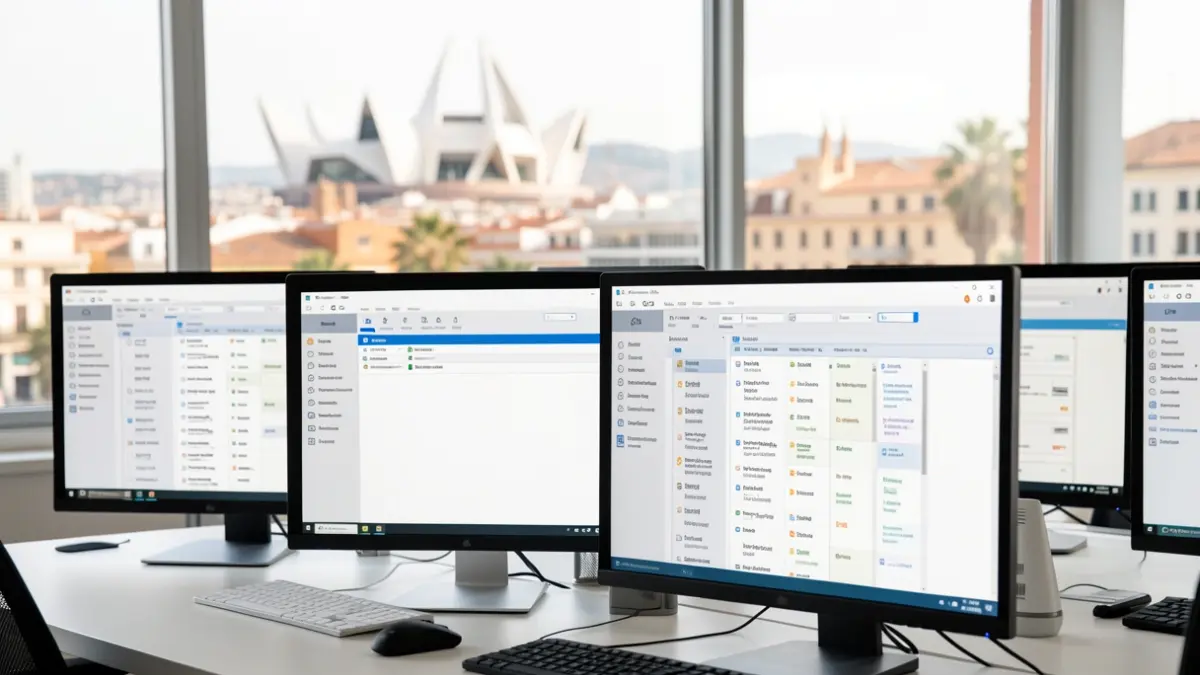
Labora's artificial intelligence system is currently being tested in three Espai Labora offices located in Valencia, Alicante, and Torrevieja. The primary goal is to enhance access to employment services for individuals who do not speak Spanish or Valencian, thereby eliminating the need for in-person interpreters.
The First Vice-President and Minister of Housing, Employment, Youth, and Equality, Susana Camarero, visited the Felipe Rinaldi Espai Labora in Valencia to personally observe the functionality of this innovative tool.
As reported by the Generalitat, the technology enables real-time, two-way communication between Labora staff and users. The system goes beyond simple word translation, aiming to incorporate conversational context to adapt interpretations to specific situations.
The project includes two usage modes. The first, designed for longer orientation interviews or consultations, requires two connected devices: one for the professional and one for the user. The second mode, intended for brief inquiries at service desks, uses a single device.
The technological infrastructure comprises tablets, microphones, and audio systems, along with the associated technical support for the project's development. The tool can currently interpret 47 languages, including some dialects, with plans to progressively expand this catalog.
The pilot project is being developed at the Alicante-Los Angeles, Torrevieja, and Valencia-Felipe Rinaldi Espai Labora locations, chosen by the Generalitat due to the high influx of foreign population. Since the contract was awarded on June 11th, 600 processes have been analyzed to improve both translation and contextual interpretation of conversations.
The Generalitat has not specified the contract's budget, the pilot's exact duration, the winning company, or the metrics for evaluating its effectiveness. Furthermore, the system's current accuracy rate or how potential translation errors in administrative procedures are handled remains undisclosed.
Camarero emphasized that the initiative aims to dismantle linguistic barriers hindering access to public employment services. According to the vice-president, technology should facilitate access to orientation, training, and support in job searching, particularly for individuals facing communication challenges.
This project is part of the annual work plan of the Center for Orientation, Entrepreneurship, Support, and Innovation for Employment in the Valencian Community (COE CV).
Labora's network consists of 55 Espai Labora locations and 325 employment orientation professionals across the Valencian Community. The regional administration links the development of new tools to an increase in foreign users, associating it with extraordinary regularization processes, although specific figures on the evolution of these users are not provided.
Other measures to enhance accessibility include an interpretation service for Spanish Sign Language for training activities and the 'Puntos Violeta' (Violet Points), with over 80 professionals specializing in assisting victims of gender-based or sexual violence. Additionally, two Labora buses travel to various municipalities to bring employment services closer to areas without a nearby office.