
The summer of 2026 will be remembered as a "very warm" summer, the hottest to date according to the State Meteorological Agency (Aemet). The thermal anomaly for the June-July period exceeds three degrees. The Valencian Community has experienced four heatwaves and six warm spells, with highs of 44.8 degrees in Carcaixent and up to 21 tropical nights in Valencia city. These persistent high temperatures increase the risk of mortality, with over 310 estimated deaths, and the risk of forest fires.
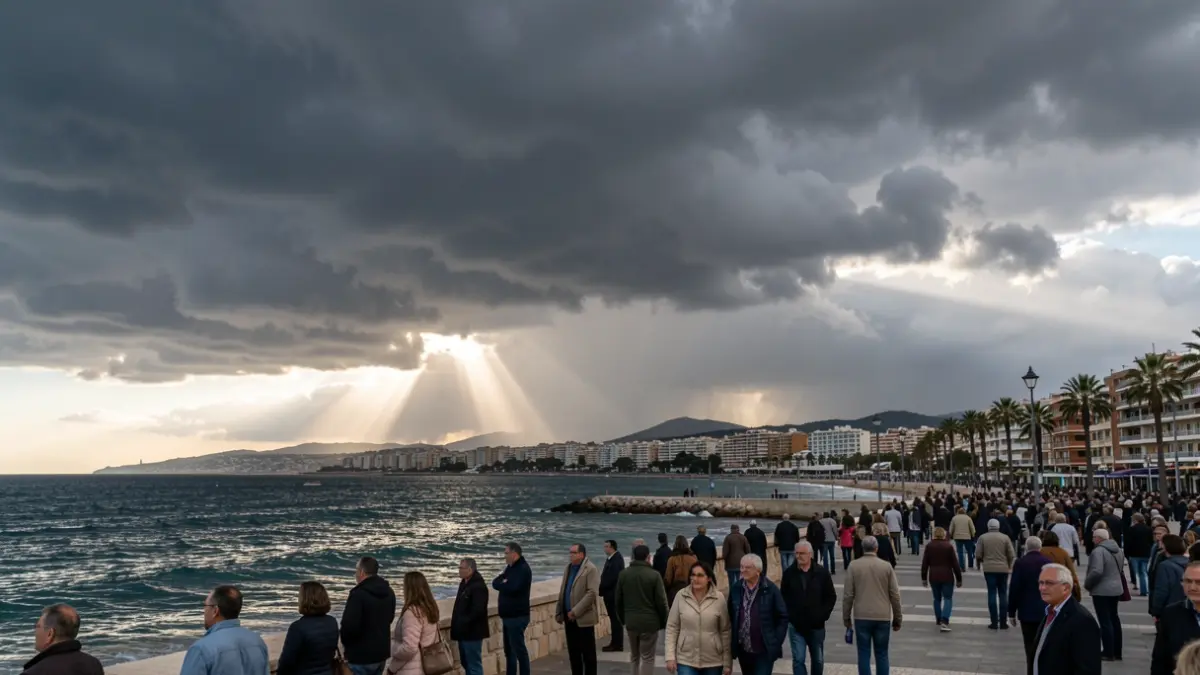
The transition towards autumn brings the forecast of torrential rains, known as DANA (Isolated Depression at High Levels), an explosive phenomenon that already caused four red-level warnings last year.
The Valencian forest mass has faced two major forest fires: the one in Vall d’Uixó, which consumed 9,600 hectares, and the one in Tírig, with nearly a thousand hectares. Other fires in Soneja and the Calderona mountain range (Segorbe and Gátova) have also affected the territory.
Despite better green conditions in spring, the lack of rain since May has dried out the vegetation, turning the forest into a "tinderbox." The soil began August with humidity below 10%.
The impact on health is significant. June and July have been the deadliest months due to heat since 2015, with 62 and 234 deaths respectively. High nighttime temperatures, with over twenty tropical nights in Valencia, hinder rest and worsen the situation.
The temperature of the Mediterranean Sea remains three degrees above average, exceeding 29 degrees in some areas, a factor that enhances explosive rainfall. Although September may superficially cool the sea, the accumulated heat in deep layers maintains the risk.
Climate change is altering the Mediterranean climate, warming 20% faster than the rest of the planet. The combination of extreme climate events, such as heat and torrential rains, multiplies their impact, claiming lives more silently or explosively.