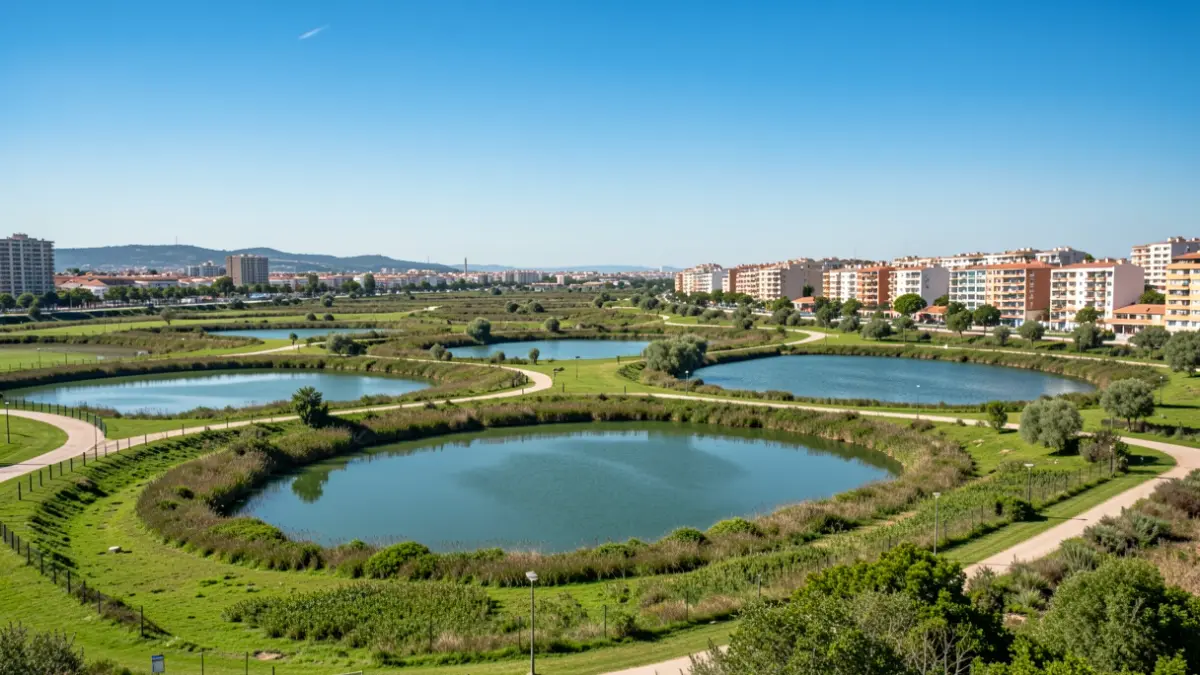
Green infrastructures, such as urban parks or wetlands, are crucial for biodiversity conservation and enhancing resilience to climate change. These nature-based solutions (NbS) help manage rainwater and regulate urban temperatures. The La Marjal Floodplain Park, operational for 10 years in Alicante, can retain up to 45,000 m³ of rainwater and is now at the technological and environmental forefront as a testbed for the IRIS and BIOVERA projects.
The IRIS project, a public-private collaboration led by Veolia with participation from Cetaqua-Water Technology Center, Aguas de Alicante, and Aigües d’Elx, aims to enhance green infrastructures through optimal management and increased public awareness. Meanwhile, BIOVERA, led by Cetaqua with support from the Catalan Institute for Water Research (ICRA), focuses on identifying, quantifying, and monitoring the ecosystem services these spaces provide.
IRIS integrates a digital layer into the park's management using new sensors, cameras, and weather stations. The use of artificial vision and artificial intelligence will enable real-time monitoring of biodiversity, visitor counts, and detection of invasive species, as well as anticipating extreme weather events. This technology will improve efficiency and decision-making at La Marjal and the Clot de Galvany (Elche).
The BIOVERA project, supported by the Biodiversity Foundation of the Ministry for Ecological Transition, assesses the environmental, economic, and social benefits that La Marjal offers to citizens. Over its 3-year duration, it will evaluate services such as greenhouse gas absorption, habitat provision for fauna, environmental education, and recreational spaces. The goal is to strengthen climate resilience and biodiversity protection in the Mediterranean region.
The synergy between IRIS and BIOVERA at La Marjal represents a cross-cutting innovation model. While IRIS provides advanced technological tools for precise data collection, BIOVERA uses these indicators to quantify the real impact. Together, they aim to ensure greater resilience and operational efficiency against climate change, while also promoting societal recognition of the value of green infrastructures.