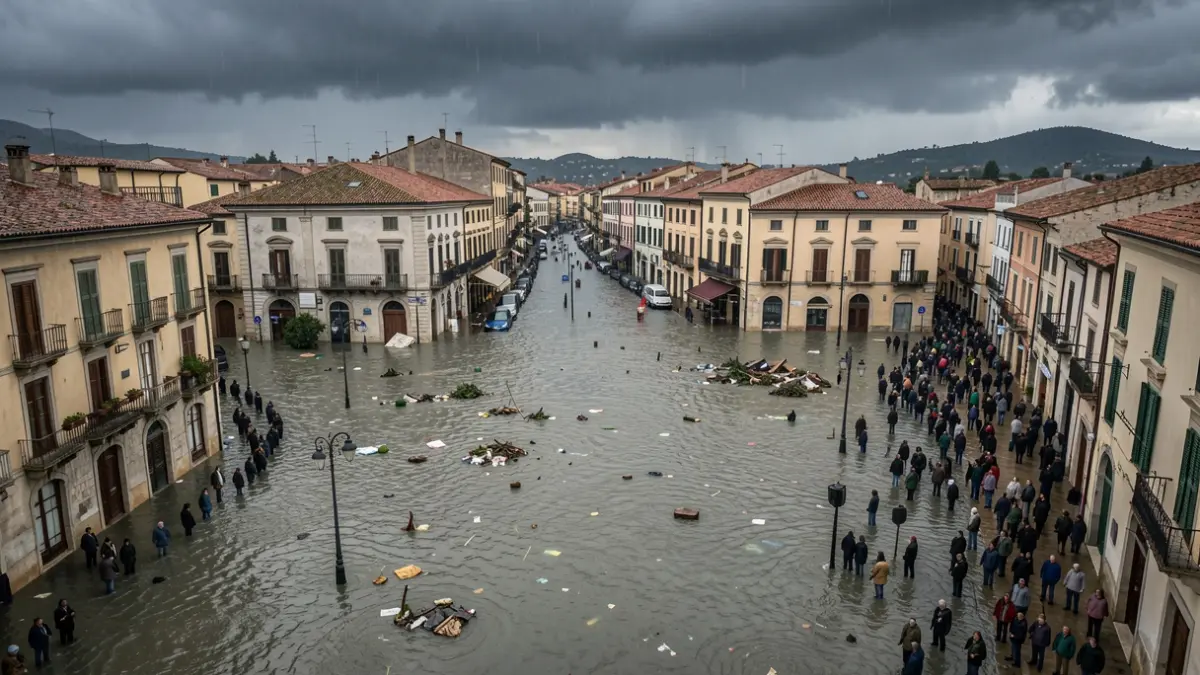
In September 2019, Vega Baja suffered an unprecedented human, social, environmental, and economic tragedy due to an Isolated High-Level Depression (DANA). Between September 9th and 14th, rainfall volumes exceeded 500 liters per square meter in 48 hours, particularly affecting municipalities like Orihuela, considered the epicenter of the disaster. This phenomenon underscored how climate change is already shaping the risk and vulnerability of entire territories.
The DANA was extremely intense and rapid. Although DANA events are common in the Mediterranean, the violence and simultaneity of their effects on a populated area with agricultural activity were exceptional. Municipalities such as Orihuela, Almoradí, Bigastro, Benejúzar, Dolores, Daya Vieja, and San Fulgencio saw their streets turn into rivers, their homes flooded, and their communications cut off. The overflow of the Segura River and the rupture of riverbanks worsened the situation, forcing thousands of evacuations and leaving some towns isolated for days.
The figures defined the disaster's magnitude: the 2019 DANA is considered the most costly meteorological event in Spain's history, with an economic impact exceeding 1.3 billion euros. Thousands of hectares of crops were destroyed, infrastructure suffered severe structural damage, and over 80 roads were cut in the province of Alicante. Beyond human suffering, thousands of families lost their sense of security.
In response, the Plan VegaRenhace was launched, an integral strategy for recovery and resilience against climate change. This plan was based on four pillars: institutional coordination among administrations, social and territorial consensus, support from scientific evidence, and territorial resilience. The goal was to go beyond simple damage repair, aiming to improve land management and risk prevention.
However, the implementation of the Plan VegaRenhace faced obstacles. The scale of investments, the complexity of interventions, and political tensions slowed its progress. Five years after the DANA, many planned actions remained pending, such as river dredging and the improvement of floodgates, causing concern among residents and technicians due to the persistence of vulnerable points.
The consequences of the DANA are still felt today. Key infrastructure like riverbeds and ravines have not been fully restored, and maintenance and cleaning remain a concern. The agricultural sector, the backbone of Vega Baja's economy, has also suffered residual effects, with soil alterations and production losses. Public perception of risk has changed, and the memory of 2019 causes unease during intense rainfall events.
The 2019 DANA was a turning point for Vega Baja, placing climate change at the center of the debate on territorial planning. The Plan VegaRenhace symbolizes the search for a comprehensive response. Climate change adaptation, sustainable water management, and disaster risk reduction are tasks requiring continuity, resources, and long-term vision. The challenge is to be better prepared for the future.