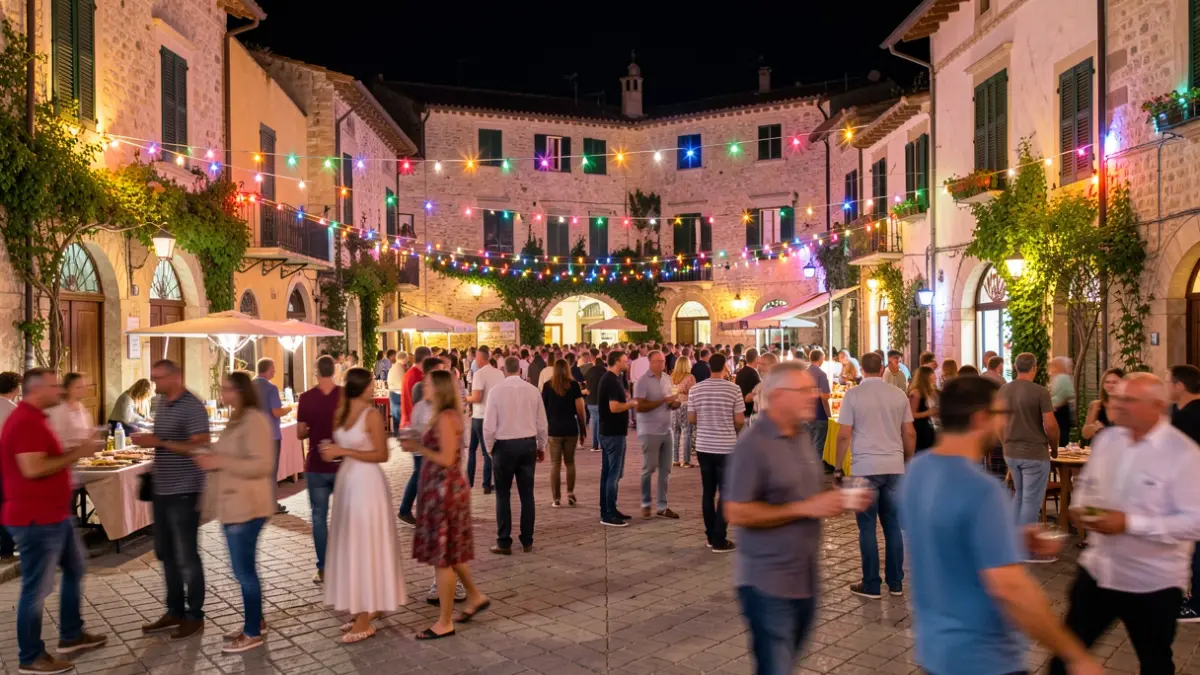
The Fogueres de Sant Joan festival is facing a change of direction. The Alicante City Council has decided to review the leisure model that had become established around the festival, particularly after the 2025 edition, which highlighted contradictions such as the proliferation of 'racós', their transformation into nightlife businesses, and problems with coexistence, safety, and cleanliness. The municipal response aims to restore balance between the festival, economic activity, and the use of public space.
The main modification, set to take effect in 2027, will limit each hoguera to a single 'racó' and will ban spaces operated by third parties, ticket sales, and advertising from companies external to the festival. This measure, announced by councilor Cristina Cutanda, goes further, as the council also plans new municipal leisure spaces, a review of safety conditions, simplification of procedures, and improvements in the financing of festival committees.
The objective is to protect and grow the Fogueres towards its Centenary. The challenge will be to see if this new regulation manages to correct excesses without diminishing the economic capacity of the committees or excessively conditioning the festival through regulations. The aim is to maintain the tourist and economic appeal without leisure overpowering the festival and citizen coexistence, thus responding to complaints from residents and the hotel sector.
The most significant measure is the limitation to a single 'racó' per hoguera from 2027, aiming to end the proliferation of spaces and return the 'racó' to its function of coexistence for the committee itself. Furthermore, operation by third parties, functioning as nightclubs, ticket sales, and external advertising will be prohibited, thus separating private business from nightlife leisure from the festival space.
The council also proposes creating new municipal leisure spaces distributed throughout the city, subject to specific conditions for safety, cleanliness, and coexistence. This strategy aims to shift some of the pressure from the hoguera areas to spaces prepared to host leisure activities, maintaining the festive offer but with greater control. A second important implication is that these municipal spaces are intended to contribute to financing the Festival itself, reinforcing aid to the committees.
Safety is another key point. The conditions for installations in 2027 will be reviewed, including distances, pedestrian walkways, music schedules, and 'cremà' conditions, seeking a balance between safety and economic viability. Measures to prevent large public gatherings in areas like Luceros will also be studied.
To combat bureaucracy, procedures will be simplified, calls for applications will be brought forward, and working groups with festival entities will be created. The review will also affect other municipal ordinances related to cleaning, noise, and accessibility, seeking transversal coordination between municipal departments.
Regarding financing, aid has been increased, and an advance payment of up to 75% of the subsidy is proposed for committees that meet the requirements. In 2026, 820,900 euros were approved for the 92 committees. The reform aims for a portion of the revenue generated by the new regulated leisure model to revert to the festival.
Finally, municipal coordination will be strengthened to improve city management during the main festival days, addressing issues of cleaning, logistics, and coexistence. The challenge is to prevent the festival's benefits from being privatized while its costs are socialized. The reform also aims to increase the number of festival participants, with the goal of achieving 7,000 new registrations.