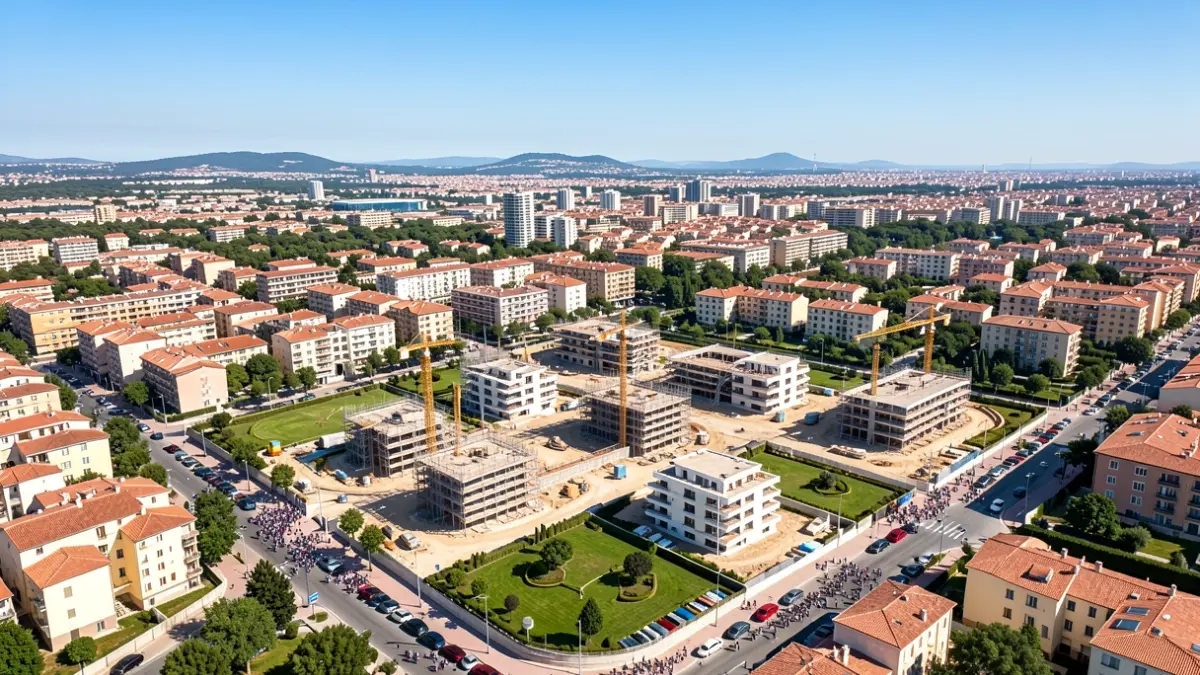
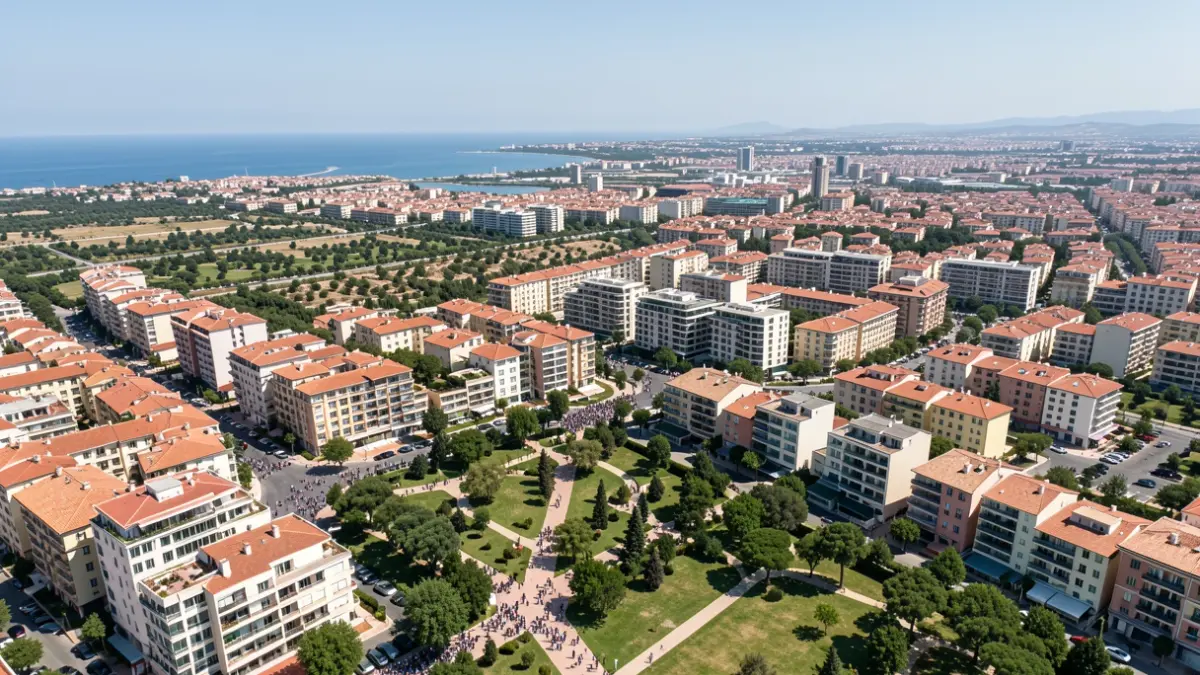
The municipality of Alicante has begun the process for its new General Structural Plan, an urban development initiative that anticipates the possibility of building up to 44,900 homes within the next 25 years. This plan projects a considerable demographic rise, estimating a population of nearly 470,000 inhabitants, about 100,000 more than the current figure. To address this growth, land has been allocated for new housing and urban expansion.
The municipal document outlines various urban growth strategies. 5,000 new dwellings are planned for the completion of already urbanized residential areas, with an additional 2,000 in areas slated for near-term execution. Furthermore, 1,900 homes are included as part of structural regeneration operations in areas such as the Parque Central, Sangueta, and Parque del Mar.
The neighborhoods of Florida-Babel and Polígono Rabasa will concentrate a significant portion of the growth, with nearly 12,800 homes planned. New residential sectors will contribute approximately 23,200 additional units. The project emphasizes that this figure represents potential capacity, not an immediate or complete construction forecast.
One of the most notable developments is Fondo Piqueres, located between the extension of Vía Parque and the green network of the Lagunas de Rabasa. This sector, spanning around 147 hectares, anticipates up to 8,200 homes and will integrate strategic facilities. Among these are the planned location for Alicante's third hospital, a major sports complex, and the expansion of the University of Alicante and its science park. The Alicante Norte transport hub, featuring a Cercanías station, is also included.
The plan also incorporates new neighborhoods such as Guijarro-Villafranqueza, Lomas de Garbinet, Vistahermosa-Juncaret, Ciprés, Vista Alegre, Alameda, and Pino Ruano. These new developments will help consolidate the city and reduce urban discontinuities, particularly around the city center and the beach areas.
The sectors of Sangueta and Condomina will be consolidated as a cluster for health and the care economy, with reserved space for the future expansion of the Miguel Hernández University, thereby strengthening the educational and healthcare offerings.
The plan estimates an average occupancy of 2.23 inhabitants per dwelling, reflecting a trend towards smaller households. This figure addresses both the projected demographic increase and the needs arising from university, healthcare, and economic activities.
In parallel with residential growth, the General Structural Plan enhances the green infrastructure. Land is reserved for the expansion of the Vía Litoral, and actions are planned to restore ravines and dry riverbeds. The Agrarian Park of Alicante will be created, along with a large park in the Lagunas de Rabasa and a peri-urban park connecting existing green areas.
Regarding mobility, the plan includes new TRAM lines, such as one that will run along the Gran Vía, accompanied by park-and-ride facilities. A high-capacity rapid transport line between Alicante and Elche is also contemplated to improve connectivity between the two municipalities.
The document received initial approval on Thursday, August 5th, during an extraordinary Local Government Board meeting and will now undergo the mandatory regional processing before its final approval.