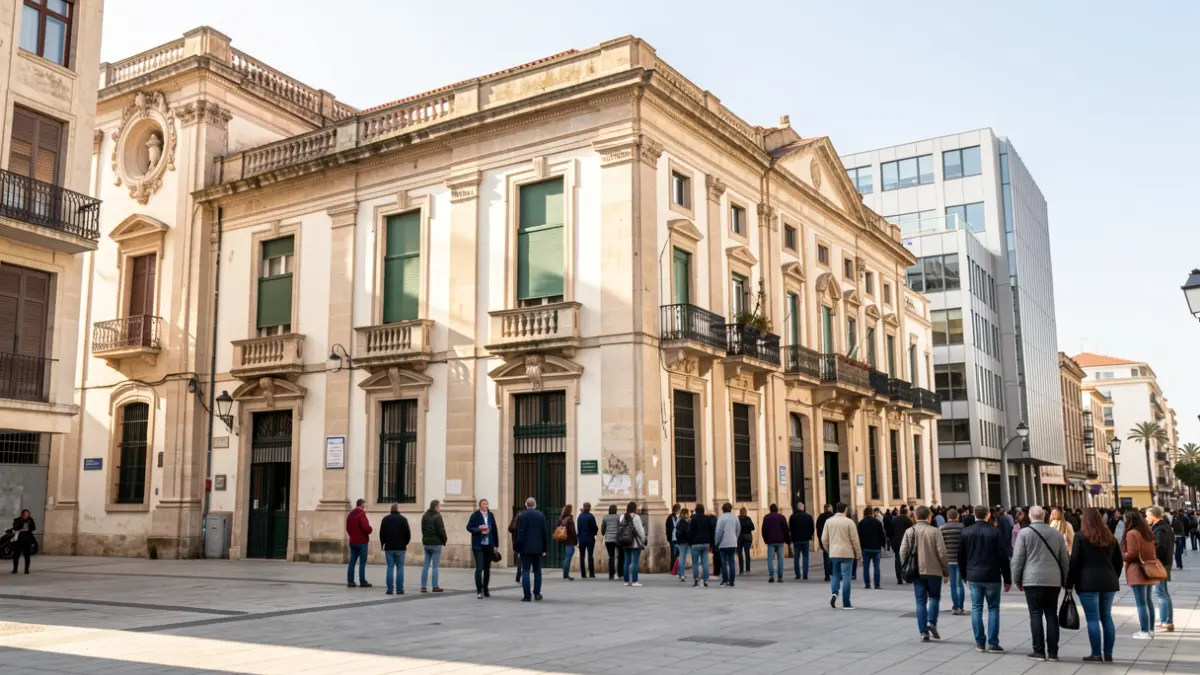
The Benalúa Sur neighborhood in Alicante is entering a new administrative phase with the modification of the Partial Plan, potentially allowing the start of initial works before the end of 2027. The Governing Board approved the preliminary version of this modification, which solidifies the protection of the heritage buildings of the former Harinas Bufort and Harinas Cloquell factories.
The plan includes the construction of two residential buildings, one with 16 to 18 stories and another with 6 stories, along with a plaza featuring green areas and underground parking. However, the definitive purpose for the preserved buildings remains to be determined.
The Bufort building, spanning 3,752 square meters, could accommodate tertiary uses such as accommodation (e.g., a hotel or flex living) or administrative functions for businesses. Meanwhile, the Cloquell building, which is municipally owned, will be designated for community use. The governing team, the Partido Popular (PP), has expressed openness to collaborations with private entities, foundations, public organizations, or universities for cultural, educational, or innovation purposes.
Public-private collaboration models are being considered, such as shared management agreements or usage concession agreements, similar to projects like the Campus 42 or the Basketball City.
Deputy Mayor Manuel Villar indicated that the fate of the Cloquell building is not finalized and various ideas are being explored. The idea of a centralized music conservatory headquarters has been ruled out, and the proposal for an ethnographic museum is under consideration.
The municipal commitment includes dialogue with residents to reach a consensus on the final use of the property. In the meantime, doors and windows have been boarded up to prevent unauthorized access.
The plan will be open for public exhibition for 45 days for objections and will require sectoral reports before final approval. The modification outlines a maximum indicative buildable area of 14,117.87 square meters, potentially corresponding to around 161 housing units.
The agreement maintains flexibility for tertiary and special tertiary uses, including hotels, convention centers, event spaces, cultural, educational, technological, or restaurant activities, compatible with heritage protection and the residential and community environment.