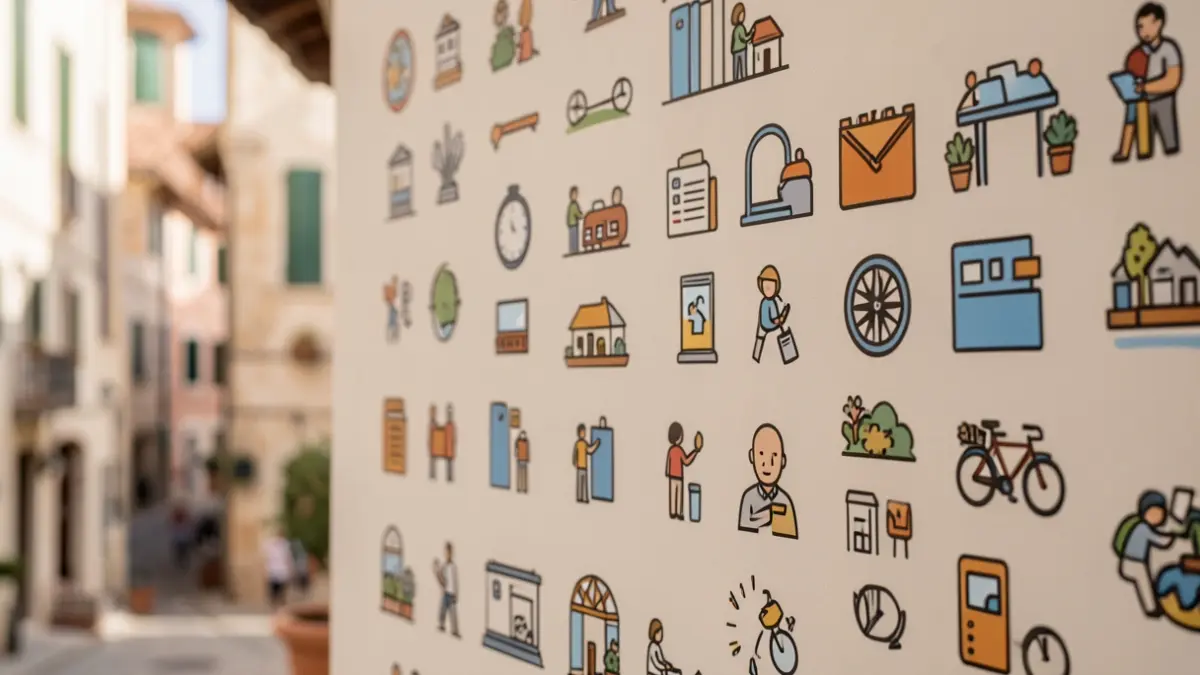
The initiative, driven by professor Esther Heredia Oliva in collaboration with library director Ana Belén Miquel Abril, uses visual resources to enhance understanding of spaces and services, also benefiting individuals with intellectual disabilities and communication challenges.
The project stems from Heredia's experience in autism and specific educational support needs (SEN), aiming for university spaces to serve as practical examples of diversity support. "We teach our students how to support diversity, but our own spaces must also be accessible," Heredia explains.
Primarily, ARASAAC pictograms, a benchmark in augmentative and alternative communication, have been used. Specific images were created with artificial intelligence where suitable pictograms were unavailable. The development took nine months and concluded in September 2026.
The resources, available in Spanish and Valencian, identify spaces, services, collections, and library rules, promoting autonomy and participation for individuals with ASD and other needs.
The initiative has an educational dimension, allowing future teachers to observe how visual aids remove barriers and foster inclusion in everyday environments. "The University must be the first place where diversity is understood, respected, and addressed," Heredia states.
Ana Belén Miquel highlights the importance of this experience at the Education Library, particularly due to its activities with schoolchildren and the presence of ASD students at the university, viewing it as a first step towards extending the project to other UA libraries.