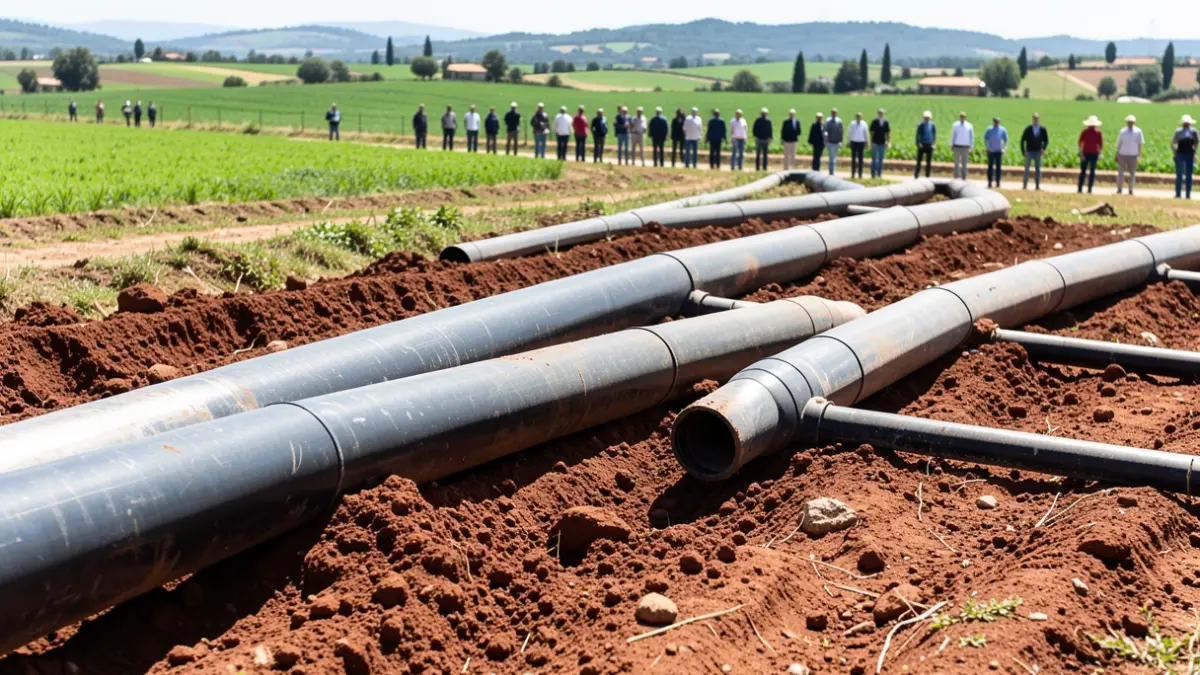
The urgent interventions are being carried out on non-urban public hydraulic domain sections. Due to the lack of action by the Júcar Hydrographic Confederation (CHJ), which is responsible for the watercourses, and the urgency of the situation, the City Council has obtained the necessary authorization and is undertaking the work with municipal resources.
Dense vegetation and invasive species, such as reeds, had blocked the watercourses. In the case of the Barranc de Nàquera, this situation prevented proper drainage of water from the industrial estate's treatment plant, causing permanent water accumulation on the road, posing a traffic hazard and damaging the pavement.
“"Governing also means anticipating. Cleaning the ravines before the rains arrive is the best way to protect people and their property, which is why we have processed these actions with the utmost urgency, always with the CHJ's authorizations."
The Councilor for Environment, Gloria Campomanes, explained that reeds are being removed to an authorized landfill and native vegetation is being shredded on-site, always respecting the watercourse and its banks.
The work includes clearing, pruning, and removing dead trees and excess vegetation obstructing the watercourse, as well as regularizing the ground level and banks without excavation or damage to the watercourse. It also involves the immediate removal of reeds and other invasive species.
Work on the Barranquet began this week and is expected to last approximately one week. The work on the Barranc de Nàquera will commence once the intervention on the Barranquet is concluded. The total investment amounts to 32,663.95 euros, entirely funded by municipal resources.
The mayor emphasized that the City Council is paying with municipal funds for cleaning that corresponds to another administration, "because the safety of our residents comes first," adding that they hope the CHJ will assume its responsibility for maintaining the watercourses.