
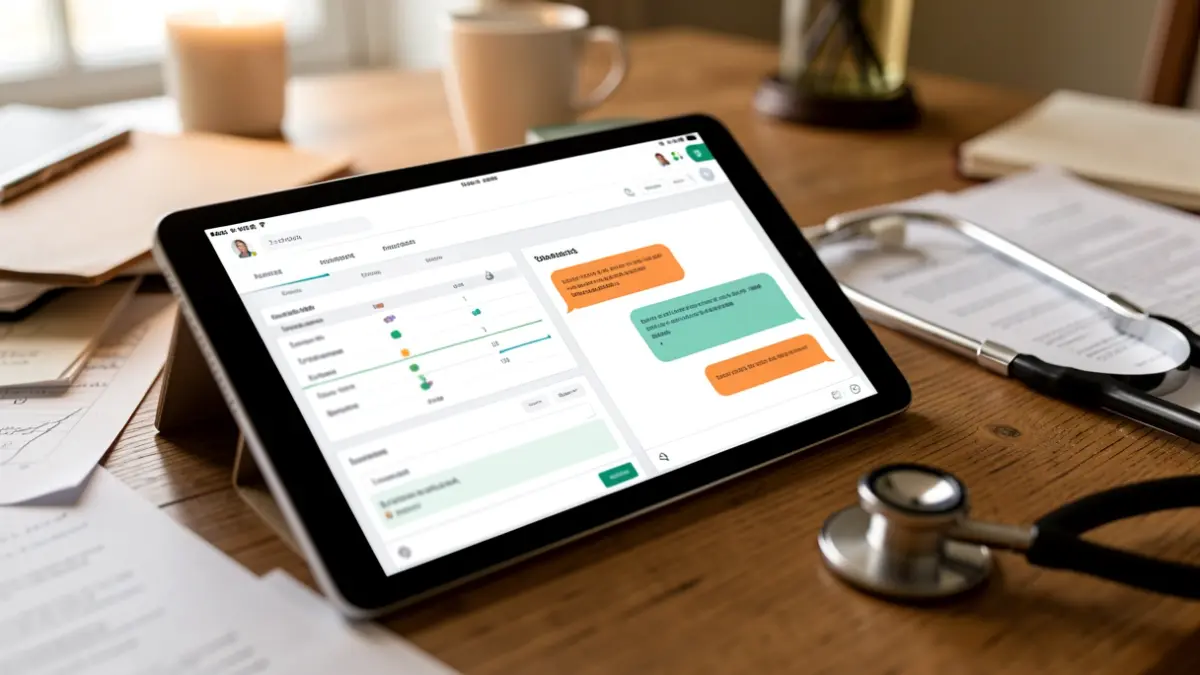
The research, published in the Journal of Educational Evaluation for Health Professions, analyzes the acceptance of this innovative methodology. Virtual patients allow students to simulate clinical situations and hold open conversations with AI-generated characters, facilitating practice in interviewing parents of pediatric patients.
In the study, 70 fifth-year Medical Degree students from UMH participated in two clinical cases. 99% considered working with virtual patients beneficial for their learning, and 97% rated the activity as a good experience. Key useful aspects highlighted included practicing patient history taking, clinical case formulation, differential diagnosis, and the realism of the conversations.
Researchers, including Francisco Sánchez Ferrer, César Fernández Peris, and María Asunción Vicente Ripoll, note that these systems allow for active and repeatable practice in a safe environment. They observed that a higher number of interactions improved the rating, although no significant differences were found based on gender, age, or prior AI knowledge. 44% of students preferred virtual patients over actors.
Virtual patients are not intended to replace contact with real patients but to expand opportunities for students to train skills such as clinical interviewing and diagnostic reasoning. Students suggested improvements like incorporating physical examination and greater flexibility in clinical information.
The work is part of a research line at UMH focused on AI-based methodologies for healthcare professional training, funded by projects such as AIHEALTHTRAINER and PATIENTIA.