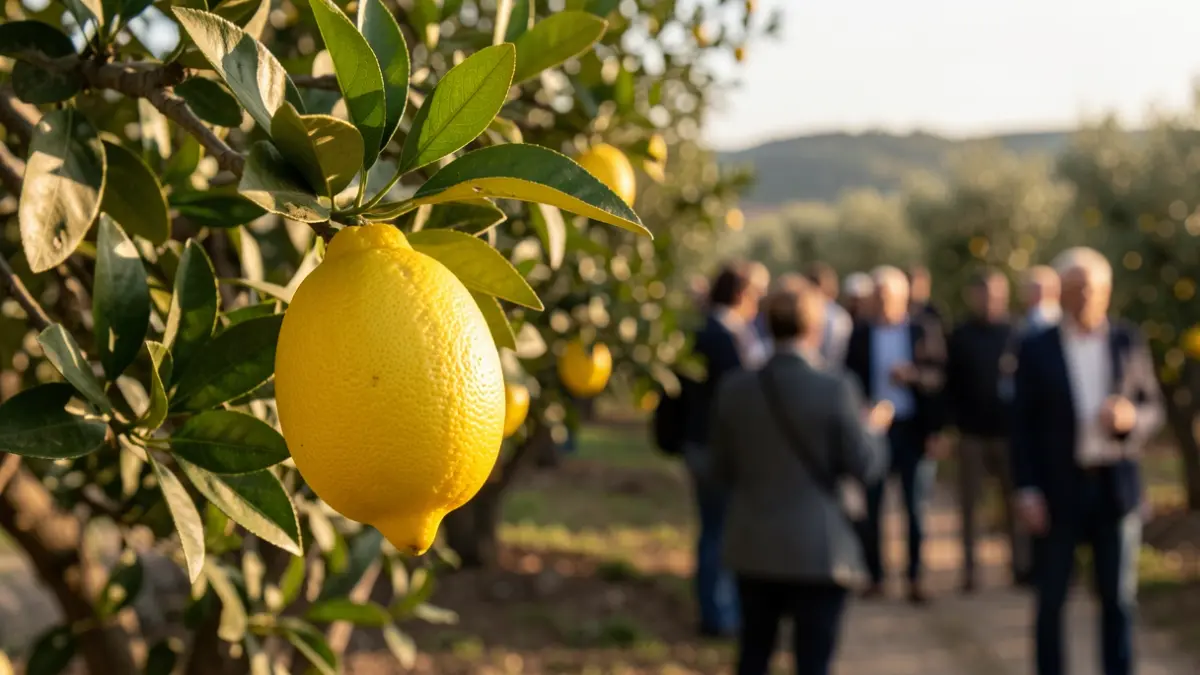
The Generalitat Valenciana, through the Conselleria de Agricultura, celebrated this Wednesday the first edition of the ‘Corte del Limón’ in Orihuela. The event, which welcomes the new lemon cultivation campaign, also aimed to recognize the economic, social, and cultural importance of this crop, as well as the work of farmers, producers, and companies in the sector.
The first ‘Corte del Limón’ was performed by the Minister of Agriculture, Miguel Barrachina, accompanied by José Bernabé, judge of the Juzgado Privativo de Aguas de Orihuela, an institution chosen as the godparent for this first edition due to its historical connection with the traditional orchard and irrigation.
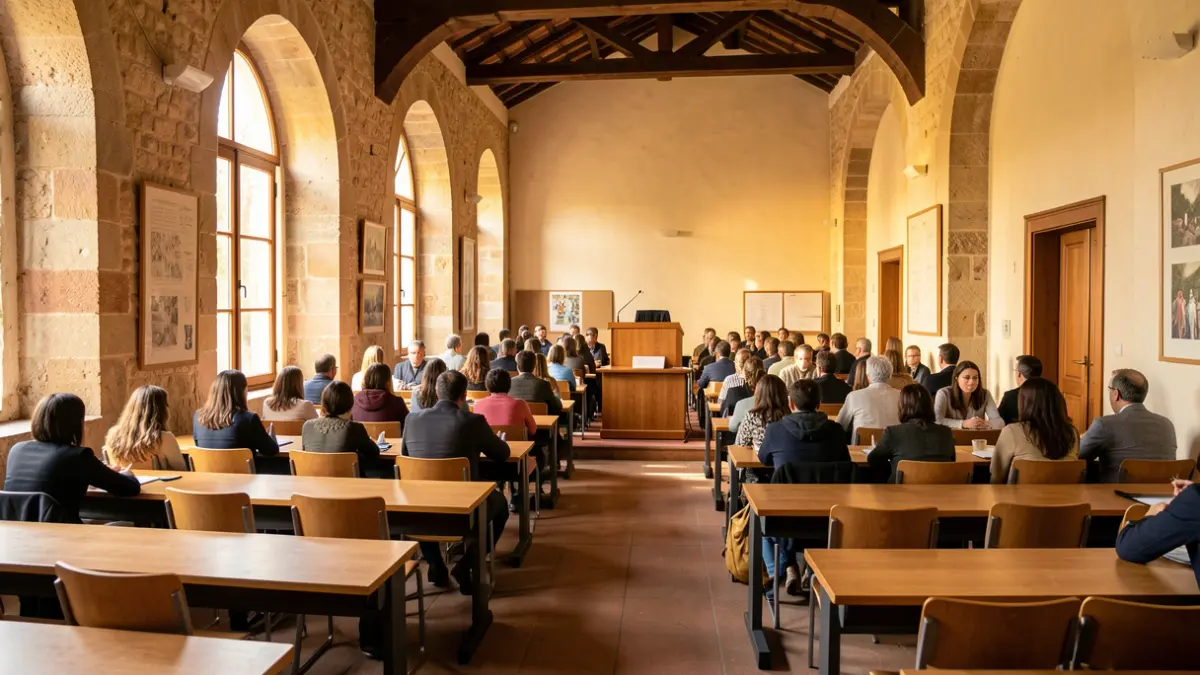
The event, held at the Finca Dehesa de Pinohermoso, was attended by a broad institutional and agricultural sector representation. Alongside the mayor of Orihuela, Pepe Vegara; the Councilor for Agriculture, Noelia Grao; Minister Miguel Barrachina; and the event's godfather, José Bernabé, other officials attended, including the regional secretary for Environment and Territory, Sabina Goretti Galindo; the director general of Agricultural and Livestock Production, Mª Àngels Ramón; the territorial director of Agriculture in Alicante, Juan Planelles; the first vice-president of the Provincial Council of Alicante, Ana Serna, and the second vice-president, Marina Sáez; the rector of the Miguel Hernández University, Juan José Ruiz; the director of the Higher Polytechnic School of Orihuela, Juan Martínez; the president of ASJA Alicante, José Vicente Andreu, as well as members of the Municipal Corporation, farmers, producers, transporters, and sector professionals.
Mayor Pepe Vegara highlighted that this event was “a pending matter we had with our land and our municipality,” recalling that Orihuela has over 4,000 hectares dedicated to lemon cultivation, a product that has carried the city's name throughout Spain and beyond its borders. Vegara emphasized that numerous families depend on this crop and that it represents a fundamental part of Orihuela's economy and way of life.
Vegara also addressed the sector's challenges, such as high production costs, competition from third countries, and the need to ensure fair profitability for farmers. “It is of little use to have an extraordinary lemon if the farmer who produces it does not obtain fair profitability,” he stated, emphasizing the importance of generational succession and the need to guarantee sufficient water resources.
The first vice-president of the Provincial Council of Alicante, Ana Serna, valued the work of farmers and recalled the sector's challenges, including adverse weather conditions and production costs, underlining the commitment of administrations to collaborate with the agricultural sector.
Minister Miguel Barrachina concluded the speeches by highlighting the recognition of the daily effort of those who work in the fields and recalled the aid for young farmers to start their activity, as well as those for modernizing farms. “If we abandon the countryside, we abandon many things,” he affirmed, emphasizing agriculture's role in land conservation and fire prevention.
After the symbolic cutting, the Councilor for Agriculture, Noelia Grao, presented a recognition plaque to the Juzgado Privativo de Aguas de Orihuela for its historical connection with the Orihuela orchard and water management. The event is launched with the intention of continuity, aiming to consolidate itself as an important date for Orihuela and the Vega Baja region.