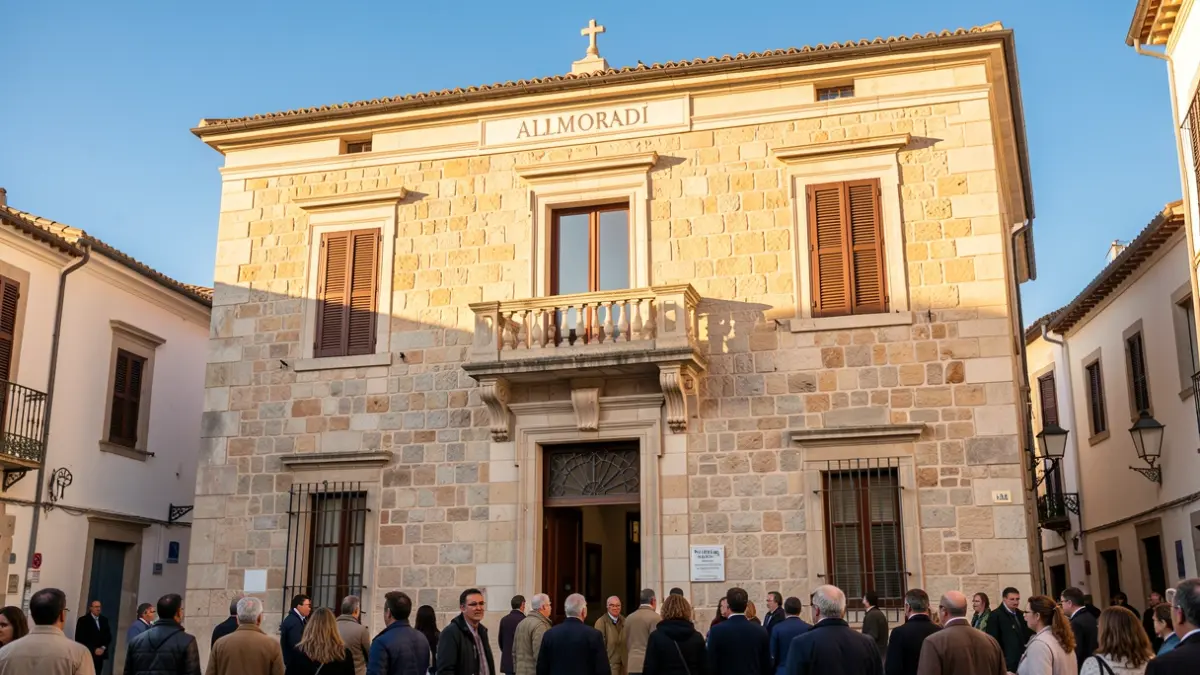
A technical review has confirmed that the Strategic Plan ‘Almoradí, Heart of the Vega Baja’, approved in April 2021, exceeded expectations. The initial projected investment was 38,746,500 euros, but ultimately 64,036,248.70 euros were executed, representing 25.28 million more than budgeted.
Mayor María Gómez positively assessed the results, highlighting that Almoradí not only met its general objectives but also expanded projects and mobilized more resources to improve the municipality. The plan was structured into six main areas: Economic Promotion; Territory Management, Urban Agenda, and Water; Climate Action and Ecological Transition; Social Welfare and Healthy Living; Open Government and Digitalization; and Almoradí Future.
These areas encompassed around a hundred actions focused on enhancing municipal management, strengthening public services, modernizing infrastructure, boosting the local economy, advancing digital transformation, and improving citizens' quality of life. Key interventions include urban and commercial renewal projects, sidewalk and accessibility improvements, the creation of new roads and cycle-pedestrian routes, and work on the sanitation network.
In the hydraulic sector, a new wastewater treatment plant was constructed with an investment exceeding 22 million euros, funded by the Generalitat Valenciana, along with a new potable water intake connecting the Mancomunidad de los Canales del Taibilla reservoirs. Service modernization also progressed with a new waste collection system, the establishment of the Ecopark, and the upgrade of public lighting to energy-efficient LED technology.
Regarding Social Welfare and Healthy Living, sports and cultural infrastructures were improved, including the comprehensive renovation of the Pabellón Venancio Costa, the transformation of the former Conservatory into a youth hub, and the redevelopment of the sociocultural and sports block towards Dolores. Educational infrastructure also saw significant investment, with the construction of the new CEIP El Gabato (approximately nine million euros) and upgrades at IES Azud de Alfeitamí and schools like Canales y Martínez and Manuel de Torres, totaling over 14 million euros in educational investments.
Securing external funding was crucial, with nearly 85% of the over 64 million euros coming from grants and investments by the European Union, the Spanish Government, the Generalitat Valenciana, and the Provincial Council of Alicante. Gómez emphasized the municipality's capability to present projects and convert resources into tangible actions, underscoring the importance of planning.
The plan was conceived during a complex period, marked by the 2019 DANA flood and the COVID-19 pandemic, aiming to foster a planned and resilient response for the municipality's recovery, modernization, and transformation. The Town Hall will now begin drafting the new Strategic Plan for 2026-2030, building on acquired experience and addressing new municipal challenges.
The mayor concluded that the positive outcome reflects the coordinated efforts of municipal departments, the dedication of public employees, and collaboration with other administrations, expressing the commitment to continue building a more modern, sustainable, and accessible Almoradí.