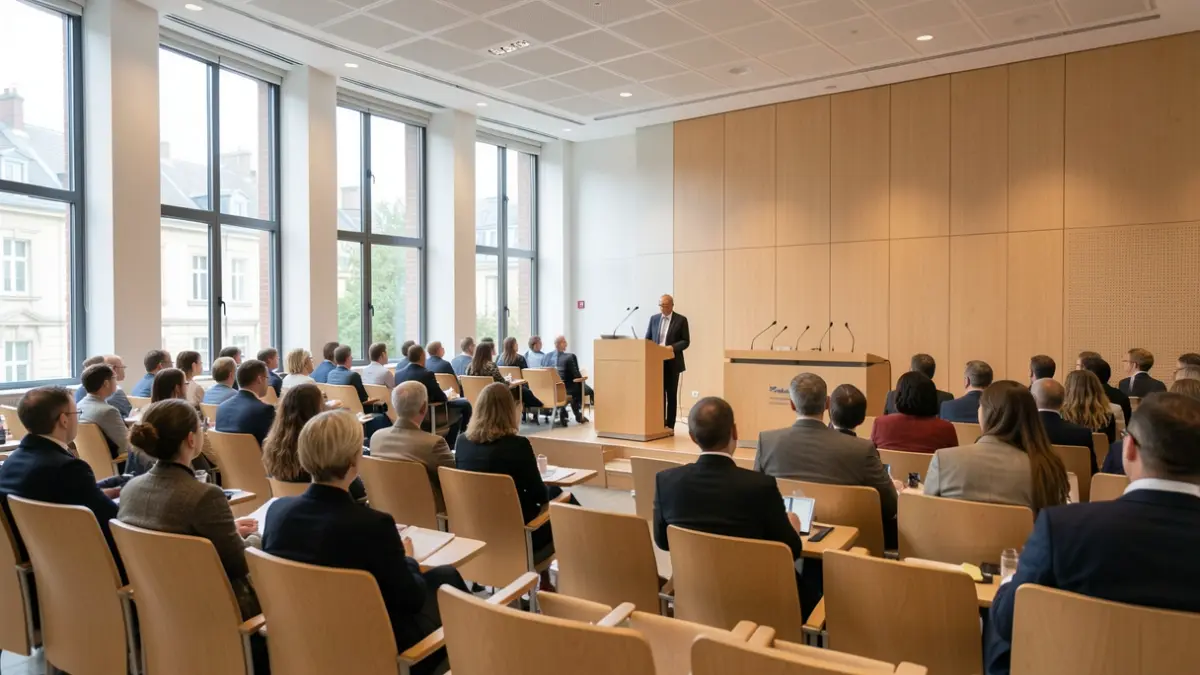

The event, held in the Mancomunitat's assembly hall, was introduced by the entity's president, Jordi Puig, and the Councilor for Linguistic Policy of the Gandia City Council, Esther Sapena. The round table was moderated by Rosa Mengual, director of the Fundació Bromera.
Authors Lluís Miret, with Crònica de la Fundació, and Lourdes Boïgues, with Tu em vas donar la terra, shared the creative process of their works, emphasizing that the characters were real people with problems and doubts similar to those of today. Both agreed that the era of Jaume I is often seen as a succession of historical events, when in reality it was inhabited by flesh-and-blood individuals.
The two novels are set in neighboring territories of La Safor: Miret, born in Gandia, narrates the town's founding from the Bairén castle, while Boïgues, from Simat de la Valldigna, sets her story in the ancient Alfàndec. Reading them together offers two perspectives on the same conquest.
Historian and archaeologist Joan Negre highlighted the importance of materializing history into narrative accounts to make it accessible beyond the scientific community, thanks to the authors' in-depth research.
The meeting is part of «Llegir en Valencià» (Reading in Valencian), an initiative by the Fundació Bromera that has been running for twenty years and serves both to start reading in Valencian and to learn about the regions and the founding of our territories.
The Literary Autumn program continues today, Tuesday, and tomorrow, Wednesday, at 5:30 PM with storytelling sessions by Jordi el Teatrer, dedicated to two books that won the Premi Carmesina de la Safor: Tinc una vida al·lucinant, by David Navalón, at the Grau de Gandia Library, and Berta i la col·lecció d’objectes prestats, by Octavio Ferrero, at the Central Library of Gandia.
The activities are organized by the Mancomunitat de Municipis de la Safor, in collaboration with the Gandia City Council, AVIVA (Agency for the Promotion of Valencian), IMAB (Municipal Institute of Archives and Libraries of the Gandia City Council), and the Fundació Bromera.