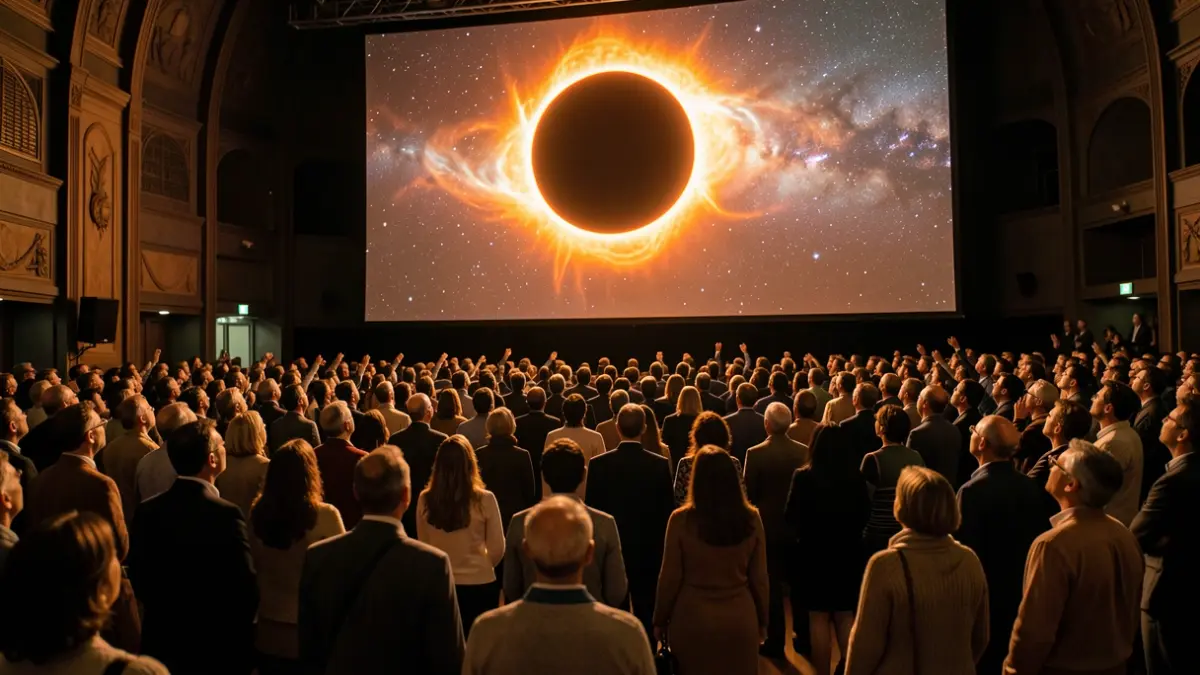
The city of Castellón saw a large influx of the public from early morning, with the Planetarium becoming a hub of activities and anticipation for the solar eclipse. Participation was constant, reflecting public interest in the phenomenon.
The inaugural talk, featuring science communicators Javier Santaolalla and Josep Calatayud, alongside Mayor Begoña Carrasco, filled the venue. Santaolalla highlighted the eclipse as one of three essential life experiences, stating that Castellón "hit the lottery" due to its privileged position. Calatayud emphasized that the minute and a half of totality will remain in memory, but stressed the importance of the activity program to promote science.
Mayor Begoña Carrasco described the day as "historic for Castellón," noting how the city has leveraged the eclipse as a tourism and economic boost, evidenced by the large number of visitors.
The Planetarium's facilities saw continuous activity throughout the morning, with many attendees seeking information and participating in the events. The reception area was particularly busy, with people queuing for information and to learn about the program. Long queues also formed for the screening of the film "3clipse en el Planetario" and to visit the special exhibition.
The family program was another major attraction, with the "Build the Solar System in the Sand" workshop as the inaugural activity for children. Kids learned astronomical concepts practically by building planets using ropes to mark their sizes.
Information points were set up along the coast, where attendees could get details about the eclipse and collect certified viewing glasses. A "young astronomer's kit" was also distributed to children. The general atmosphere in Castellón was one of celebration and collective enthusiasm for the anticipated peak moment.